Provenance
A. and C. Blum; Albert and Clara Blum, Switzerland and Short Hills, New Jersey (according to departmental card, Lugt Supplement 79b, not stamped)
Accession Number
1967.184.a
Medium
pen and black ink and brush and brown and gray wash over graphite; framing lines in black ink
Dimensions
Sheet: 39.4 x 29.8 cm (15 1/2 x 11 3/4 in.)
Classification
Drawing
Credit Line
Gift of Rosenberg & Stiebel, Inc.
Tags
Drawing Neoclassical & Romantic (1751–1850) Ink Graphite & Pencil Dutch Color: Gray
Background & Context
Background Story
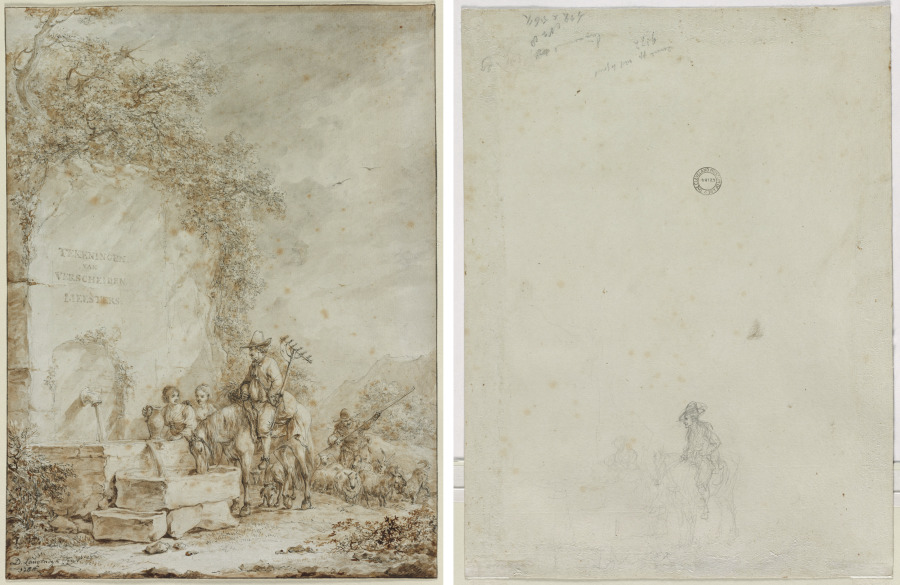
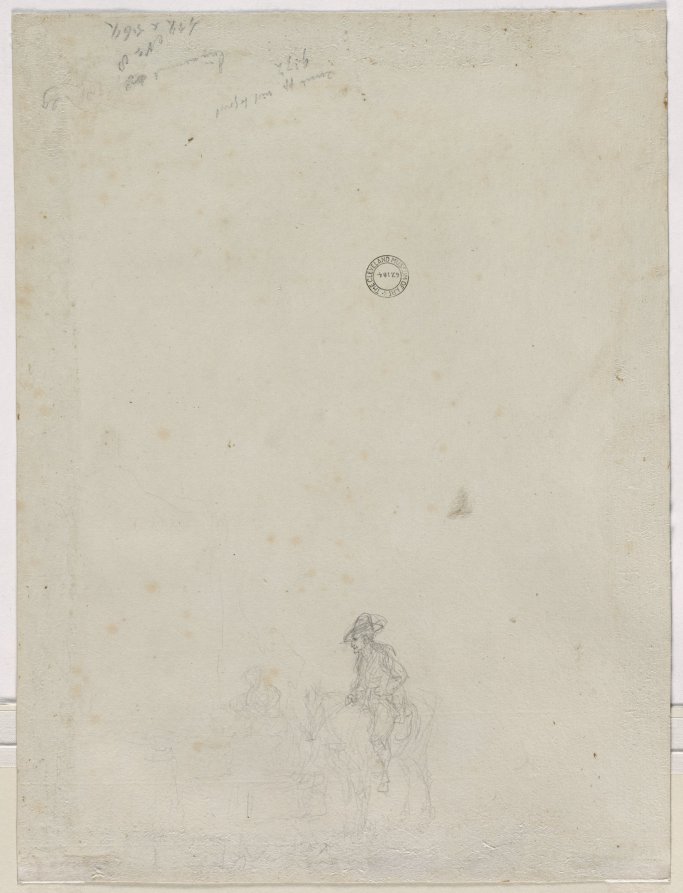
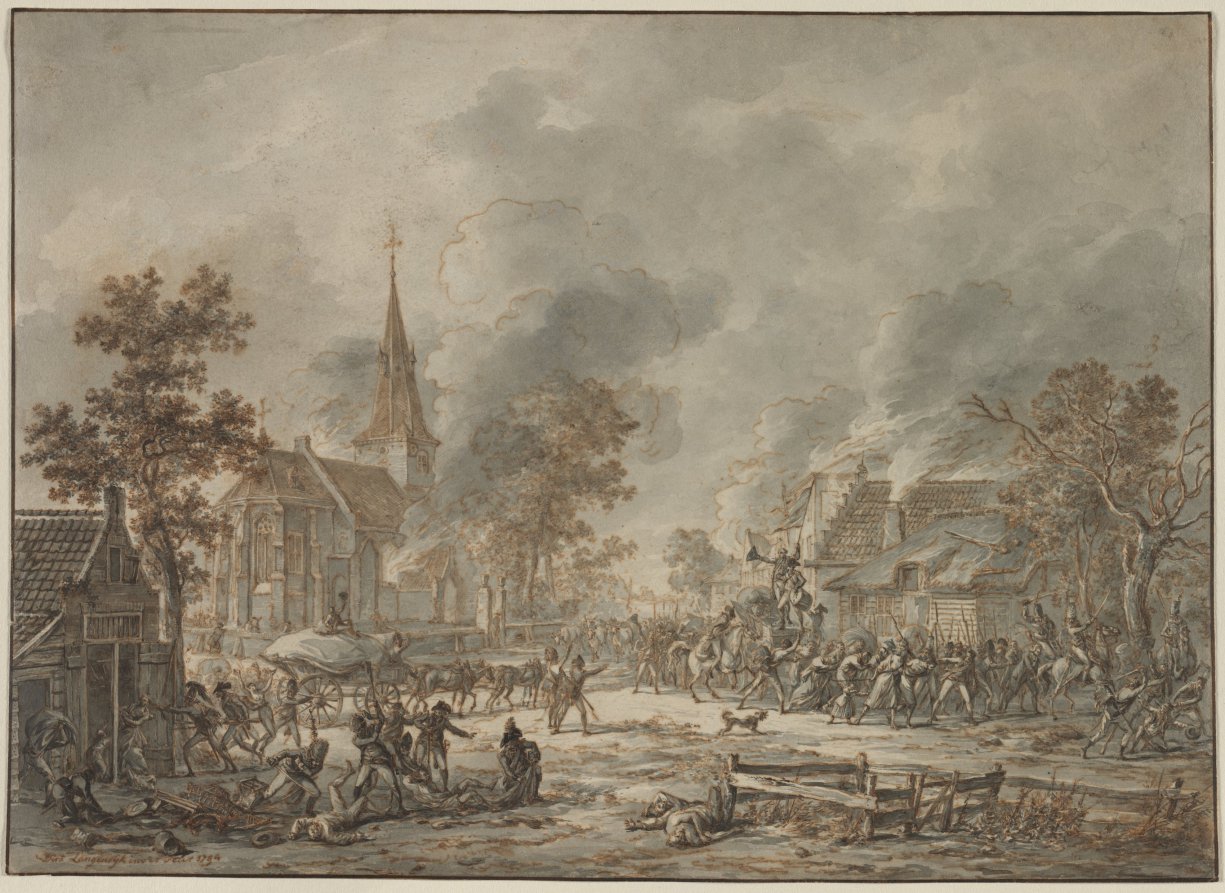
Frontispiece for an Album of Drawings: Peasants at a Fountain (recto) by Dirk Langendijk, dated 1784, is a work by one of the most distinctive Dutch artists of the late eighteenth century. Langendijk, born in Rotterdam in 1748, was primarily known for his scenes of military life, but this frontispiece reveals his ability to work in a more pastoral mode. The designation as a frontispiece indicates that this drawing was intended as the opening image for a bound collection of drawings—an album that would have been assembled by a collector and often displayed to visitors. In the eighteenth century, such albums were treasured possessions that demonstrated the owner's taste and connoisseurship, and the frontispiece set the tone for the entire collection. The subject—peasants at a fountain—combines the pastoral tradition with the genre tradition, depicting rural figures engaged in the everyday activity of drawing water from a communal fountain. Fountains in European art carried rich symbolic associations, from their classical connections to the muses and poetic inspiration to their Christian symbolism as sources of spiritual refreshment. For a collection frontispiece, a fountain scene would have signaled both the refinement of the collection and the natural, life-giving qualities of art itself. Langendijk's drawing style combined precise linear work with atmospheric washes, creating images of remarkable clarity and spatial depth. The 1780s found the Netherlands in a period of political upheaval, as the Patriot movement challenged the authority of the Stadholder.
Cultural Impact
Langendijk's frontispiece reveals how eighteenth-century drawing albums functioned as curated visual statements, where the opening image set the tone for an entire collection and signaled the owner's connoisseurship.
Why It Matters
This frontispiece demonstrates the intersection of artistic composition and collecting culture in the eighteenth century, showing how artists created works specifically designed to introduce and frame curated collections.