Description
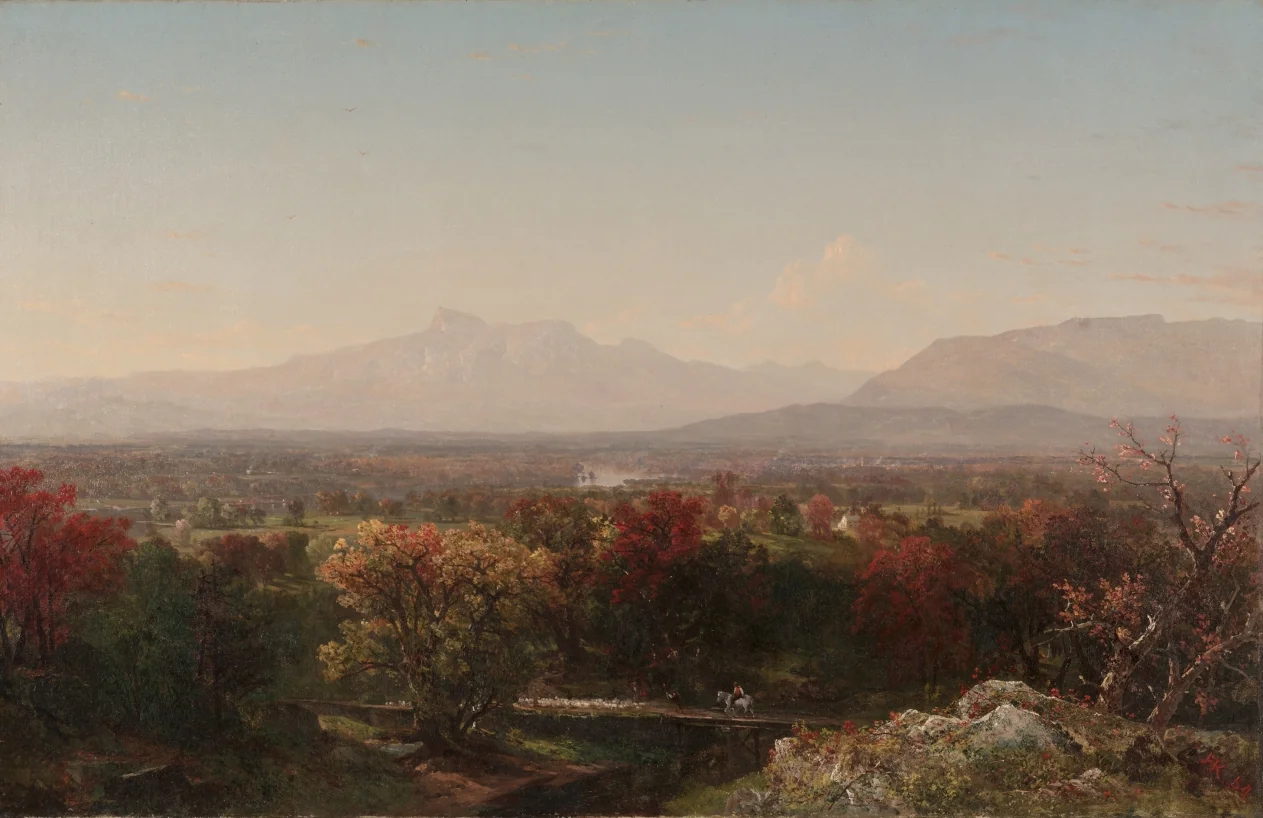
After railroad service to the area was improved in the early 1850s, the White Mountains in New Hampshire became a favored destination for tourists and artists seeking to commune with nature. New York-based Kensett painted several views, including this distant rendering across the Saco River of Mount Chocorua, one of the most distinctive peaks in the region.
Provenance
(Sloan & Roman, Inc., New York, NY, sold to the
Cleveland Museum of Art (UNtil 1967); George Talbot Olyphant [1819-1873], New York (by 1858?); Robert Morrison Olyphant [1824-1918], New York, NY, probably to his brother, George Talbot Olyphant (1855-probably 1858)
Accession Number
1967.5
Medium
oil on canvas
Dimensions
Framed: 107.6 x 152.1 x 12.7 cm (42 3/8 x 59 7/8 x 5 in.); Unframed: 79.8 x 123.5 cm (31 7/16 x 48 5/8 in.)
Classification
Painting
Credit Line
John L. Severance Fund and various donors by exchange
Tags
Painting Impressionist & Modern (1851–1900) Oil Painting Canvas American Color: Orange Color: White
Background & Context
Background Story
An October Day in the White Mountains (1854) exemplifies the Hudson River School's fascination with New Hampshire's White Mountains as a landscape of sublime beauty and spiritual significance. The White Mountains, accessible from Boston by railroad, were among the most popular destinations for Hudson River School painters, who found in their dramatic peaks, deep valleys, and rushing streams subjects worthy of the American wilderness's growing reputation. Kensett's October view likely captures the autumn color that drew tourists and artists to the White Mountains—the foliar display that was becoming a significant cultural phenomenon. The year 1854 places this painting during the period when White Mountain tourism was expanding rapidly, driven by railroad access and the growing middle class's desire for wilderness experiences. Kensett's Luminist approach to the White Mountains differs from the more dramatic treatments of Church and Bierstadt: where they sought sublimity, Kensett sought serenity; where they painted storms and peaks, he painted clear days and gentle valleys. This difference represents not a failure of ambition but an alternative vision—the White Mountains as a landscape of contemplative beauty rather than overwhelming power.
Cultural Impact
Kensett's White Mountain paintings influenced how the New Hampshire landscape was represented in American art, offering a Luminist alternative to the dramatic treatments of other Hudson River School painters. The paintings influenced tourism for the White Mountains and contributed to the region's identity as a destination for both dramatic scenery and serene beauty. The October subject influenced how American autumn was visually represented, establishing conventions for depicting fall color that persist in popular imagery.
Why It Matters
This painting matters because it demonstrates the range of the Hudson River School's engagement with American landscape—drama and serenity, sublimity and beauty, could coexist within the same tradition. Kensett's White Mountains offer an experience of landscape that complements rather than contradicts the dramatic visions of his contemporaries, expanding our understanding of how American artists responded to the continent's natural beauty.