Provenance
(Hotel Drouot, Paris, Fromentin sale, Feb. 3, 1877, no. 152) (1877); Private Collection, New York (?-?); (Wildenstein & Co., New York, sold to the Cleveland Museum of Art, Cleveland, OH) (?-1973); The Cleveland Museum of Art, Cleveland, OH (1973-)
Accession Number
1973.7
Medium
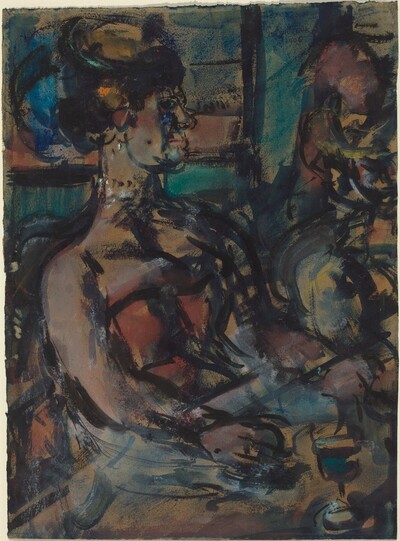
watercolor with pen and brown ink
Dimensions
Sheet: 31.4 x 22.9 cm (12 3/8 x 9 in.)
Classification
Drawing
Credit Line
Norman O. Stone and Ella A. Stone Memorial Fund
Tags
Drawing Impressionist & Modern (1851–1900) Watercolor Ink French Color: Orange Color: Brown
Background & Context
Background Story
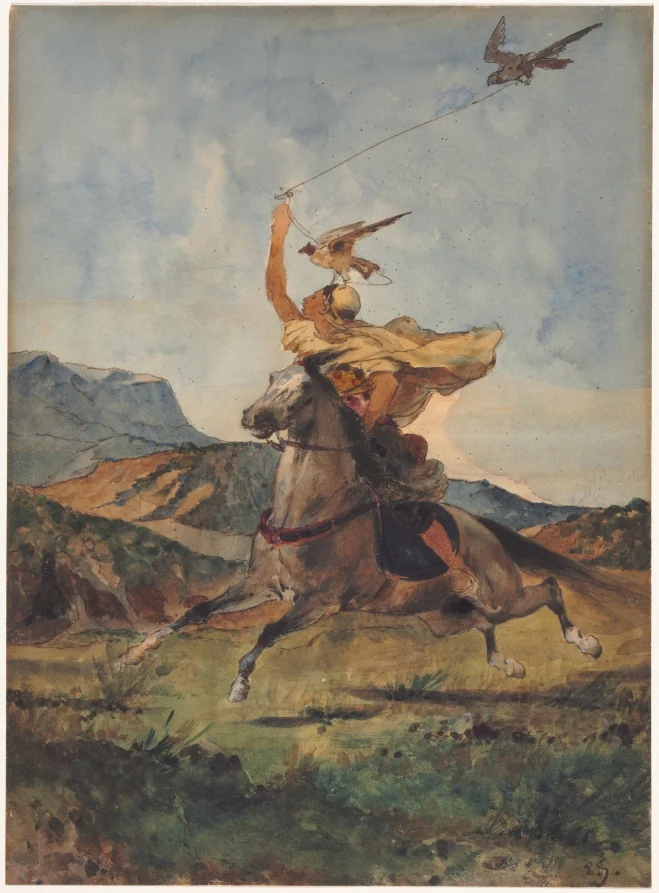
The Falconer from c. 1864 is one of Fromentin's most accomplished watercolors, depicting a falconer in North African dress with the precision and atmospheric quality that distinguish his work in the medium. Falconry was a subject that combined Fromentin's interest in North African life with the aristocratic hunting tradition that had been practiced in both Europe and the Arab world for centuries, and the watercolor medium allows the spontaneity and directness of on-site observation that the more deliberate oil paintings sometimes lack.
Cultural Impact
The Falconer is important in Fromentin's oeuvre because it demonstrates his skill in watercolor—a medium that rewards the spontaneity and direct observation that first-hand experience in Algeria provided. The falconry subject combines Fromentin's Orientalist interests with the aristocratic hunting tradition, creating a subject that bridges European and North African culture in a way that distinguishes Fromentin's Orientalism from the purely imaginative work of Orientalist painters who never visited North Africa.
Why It Matters
The Falconer is Fromentin's watercolor at its most accomplished: a falconer in North African dress rendered with the spontaneous precision and atmospheric quality that distinguish his work in the medium. The c. 1864 watercolor combines Orientalist observation with the aristocratic falconry tradition, bridging European and North African culture.