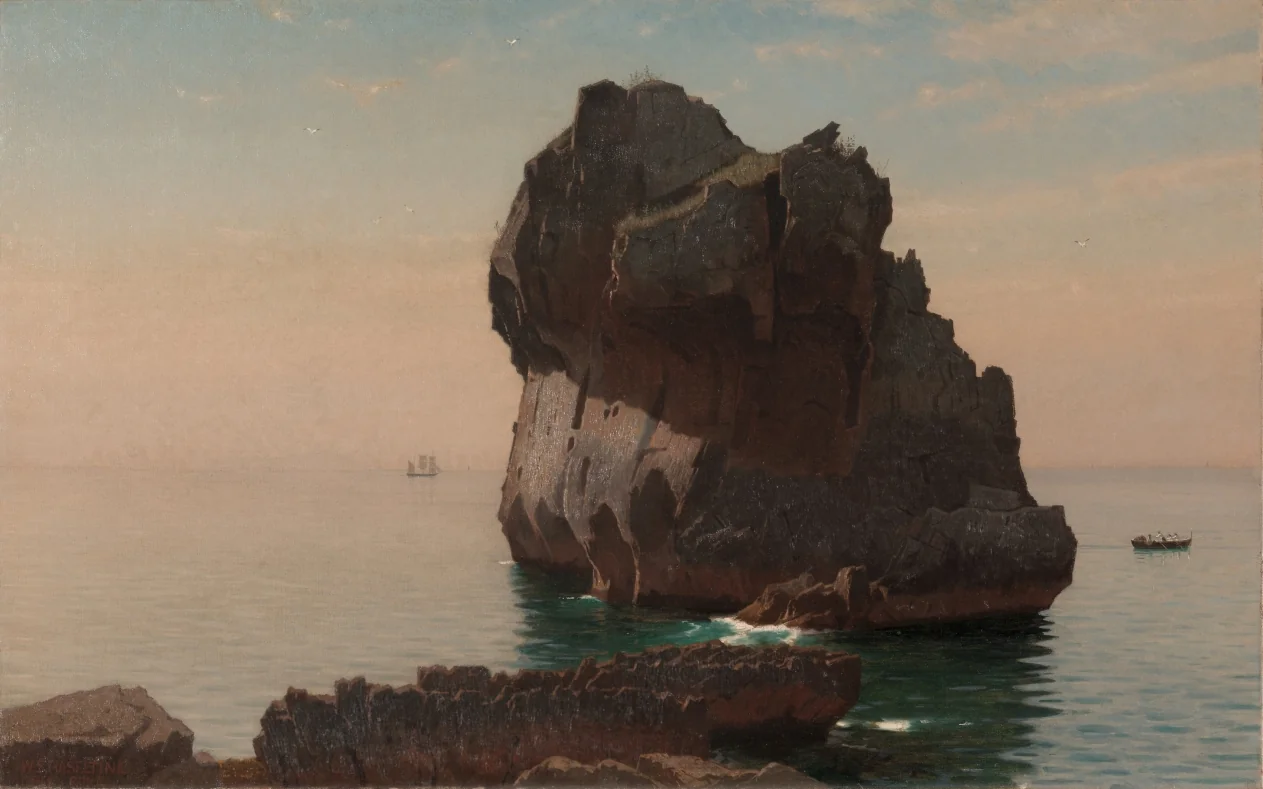
Description
The Philadelphia-born Haseltine favored images of coastal rocks, painting them on both sides of the Atlantic throughout his career. Best known for his scenes of Maine and Massachusetts shorelines, Haseltine based this painting on volcanic rocks from the uninhabited eastern end of Capri, an island off the southwestern coast of Italy.
Provenance
New York, Sotheby Parke Bernet Inc, 29 September 1973, no. 86; Bernard & S. Dean Levy, Inc., New York; (Levy Gallery, New York, NY, sold to the Cleveland Museum of Art) (1975); The Cleveland Museum of Art, Cleveland, OH (1975–)
Accession Number
1975.4
Medium
oil on canvas
Dimensions
Framed: 69.5 x 99.5 x 9 cm (27 3/8 x 39 3/16 x 3 9/16 in.); Unframed: 50 x 80 cm (19 11/16 x 31 1/2 in.)
Classification
Painting
Credit Line
Mr. and Mrs. William H. Marlatt Fund
Tags
Painting Impressionist & Modern (1851–1900) Oil Painting Canvas American Color: Gray
Background & Context
Background Story
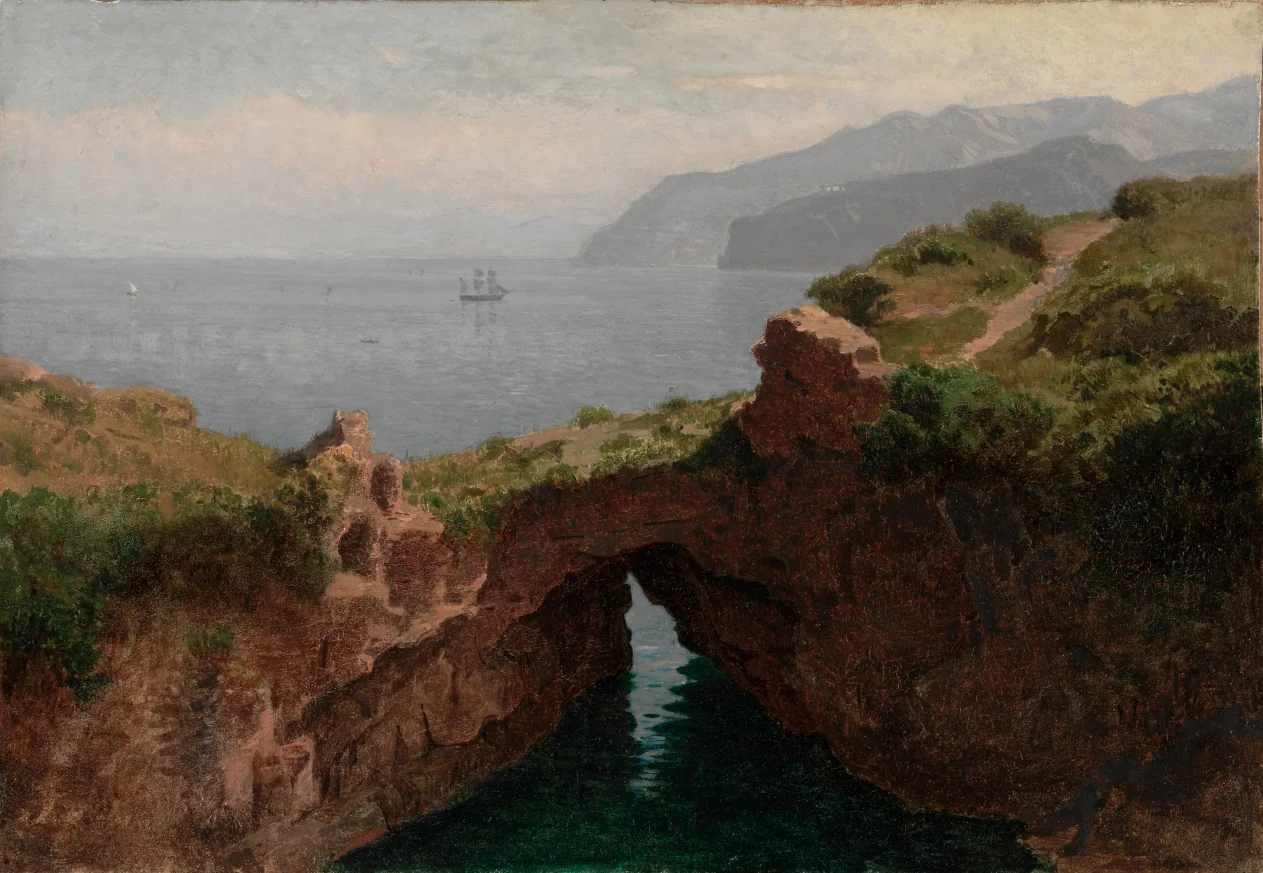
Capri from 1869 is a mature work by Haseltine, depicting the island of Capri with the Luminist clarity and geological precision that distinguish his best coastal landscapes. The 1869 date places this in Haseltine's mature period, when he had been painting the Italian coast for over a decade and his style had achieved the balance between geological observation and Luminist luminosity that defines his most accomplished work. Capri was Haseltine's most frequently painted Italian subject—the island's dramatic coastline and clear Mediterranean light provided the perfect combination of geological interest and luminous atmosphere.
Cultural Impact
Haseltine's Capri paintings are among the most accomplished works in the Luminist tradition because they combine geological precision with atmospheric luminosity in a way that neither pure geology nor pure atmosphere painting can achieve. Capri from 1869 shows Haseltine at his most confident: the geological formations rendered with the precision of a naturalist, the Mediterranean light captured with the clarity of a Luminist, and the composition organized with the precision of a painter who knows exactly what he wants to say.
Why It Matters
Capri is Haseltine's mature Luminism at its most confident: the island rendered with geological precision and Mediterranean luminosity that defines his best work. The 1869 painting shows that a decade of painting the Italian coast had given Haseltine the mastery of his subject—geological formations rendered with naturalist precision under Luminist clarity.
![Saint Bernard and Saint Catherine of Alexandria with the Virgin of the Annunciation [right panel]](https://api.nga.gov/iiif/e6890364-4d99-4684-a62b-5060ee3c3446/full/400,/0/default.jpg)