
Description
Rejecting the preference for the landscape and architecture of Italy, as seen in the work of many of his contemporaries, Domenico Quaglio portrayed the buildings of his native Germany. Here, Quaglio depicted a man, woman, and child who are dwarfed by the immense scale of a Gothic cathedral’s ruined arch, within which the figures appear. Overrun by vines and set within a dense forest, the architecture signifies the magnitude of God in the Christian faith and the smallness of mankind.
Provenance
[]
Accession Number
1980.218
Medium
gray and brown wash and framing lines in pen and black ink
Dimensions
Sheet: 24.1 x 16.8 cm (9 1/2 x 6 5/8 in.); Image: 23.2 x 15.2 cm (9 1/8 x 6 in.)
Classification
Drawing
Credit Line
Anonymous gift in honor of Leona E. Prasse
Tags
Drawing Neoclassical & Romantic (1751–1850) Ink German Color: Brown
Background & Context
Background Story
Domenico Quaglio (1787-1837) was a German painter of Italian descent known for the precisely observed, atmospheric paintings of Gothic architecture that make him one of the most accomplished architectural painters of the early 19th century. Outer Staircase of a Gothic Ruin from 1830 depicts the outer staircase of a Gothic ruin in the precisely observed, atmospheric manner that distinguishes Quaglio's best work from the more general architectural painting of his contemporaries. Quaglio was one of the most important painters of the Gothic Revival, and his precisely observed, atmospheric paintings of Gothic ruins were among the most accomplished works in the tradition of architectural painting.
Cultural Impact
Outer Staircase of a Gothic Ruin is important in the history of architectural painting because it demonstrates the precisely observed, atmospheric manner that Quaglio brought to Gothic subjects as one of the most accomplished architectural painters of the early 19th century. Quaglio's precisely observed, atmospheric paintings of Gothic ruins—combining the precise observation of architecture with the atmospheric effect of ruins—represent one of the most accomplished traditions in architectural painting, and the 1830 painting shows this tradition at its most precisely observed.
Why It Matters
Outer Staircase of a Gothic Ruin is Quaglio's precisely observed architectural painting: the outer staircase of a Gothic ruin rendered in the atmospheric manner of one of the most accomplished architectural painters of the early 19th century. The 1830 painting shows the combination of precise observation with atmospheric effect that makes Quaglio one of the most important painters of the Gothic Revival.
Related Artworks
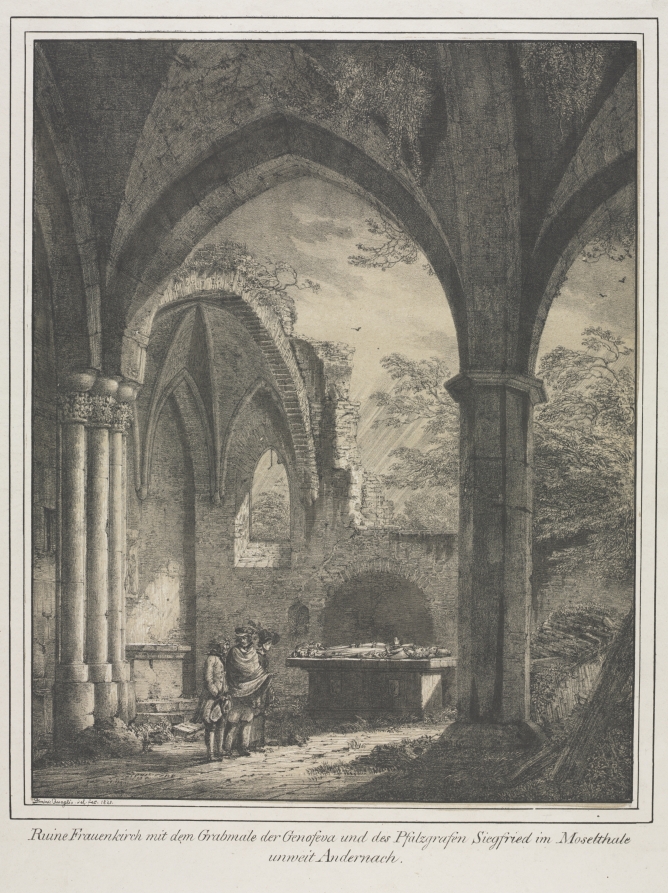
Notable Buildings of the Middle Ages in Germany: Ruins of the Church of the Virgin with the Tomb of Genevieve and Siegfried, Count Palatine of the Rhine, in the Moselle Valley near Andernack
Domenico Quaglio
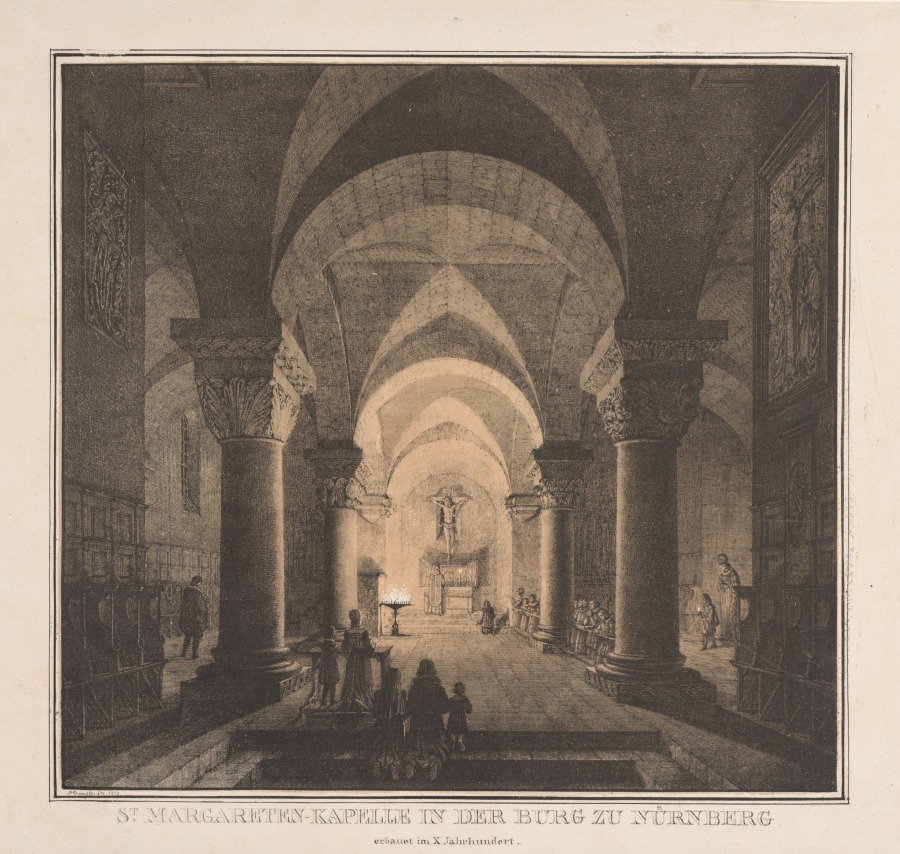
Notable Buildings of the Middle Ages in Germany: St. Margaret's Chapel in the Imperial Castle at Nuremberg
Domenico Quaglio
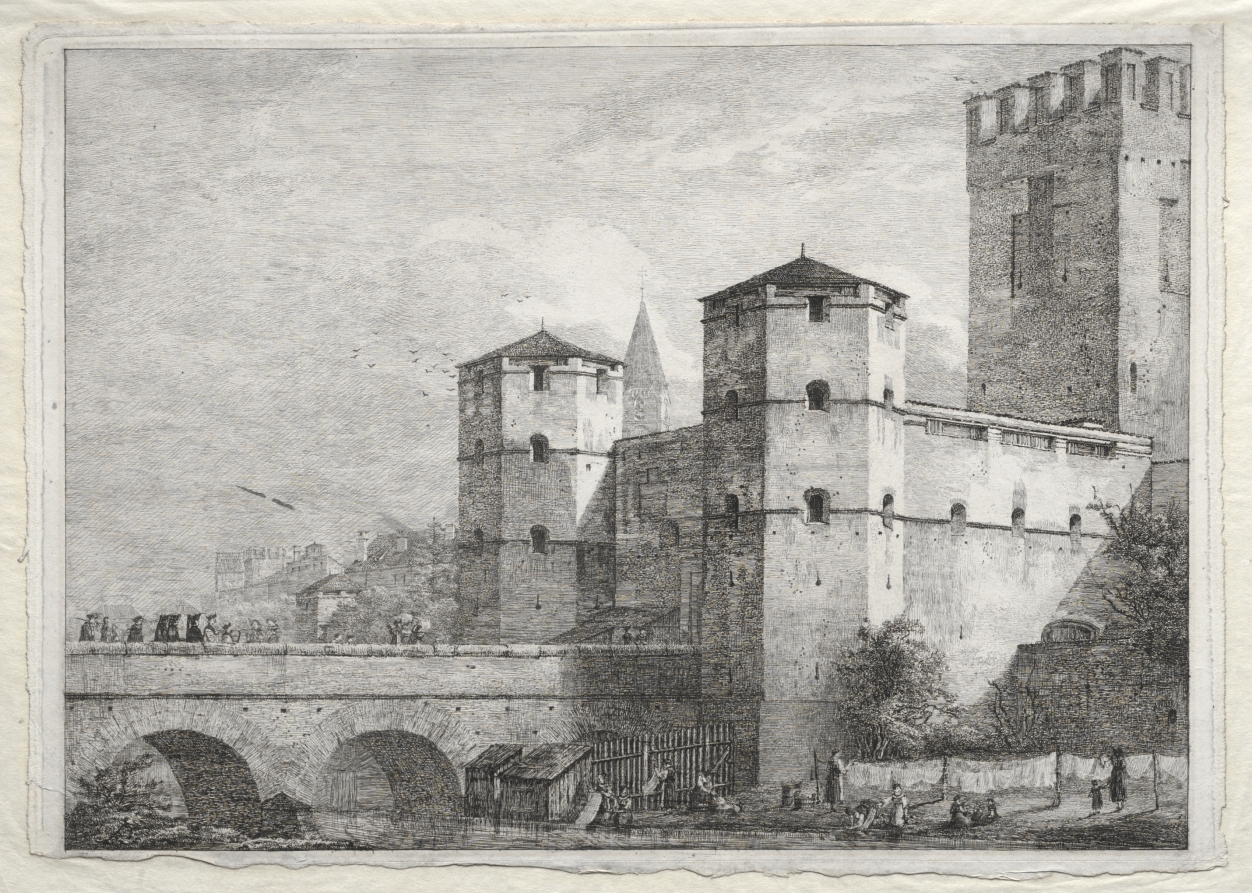
Munich-Hohenschwangau, Bavaria
Domenico Quaglio
Drawing for a Ceiling Fresco
Anonymous Artist