Accession Number
1980.57
Medium
black chalk and watercolor heightened with white gouache
Dimensions
Sheet: 39.3 x 26.6 cm (15 1/2 x 10 1/2 in.); Secondary Support: 45.6 x 32.3 cm (17 15/16 x 12 11/16 in.)
Classification
Drawing
Credit Line
Delia E. Holden Fund
Tags
Drawing Impressionist & Modern (1851–1900) Watercolor Gouache French Color: Orange Color: Gray
Background & Context
Background Story
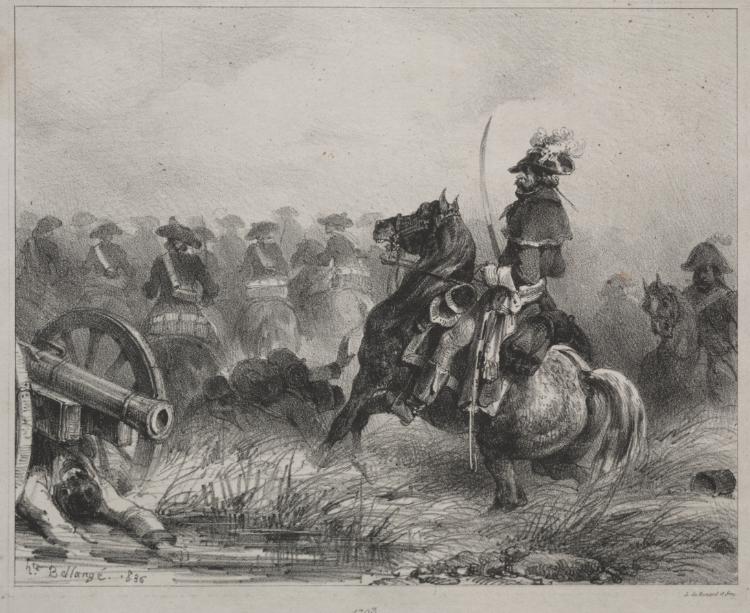
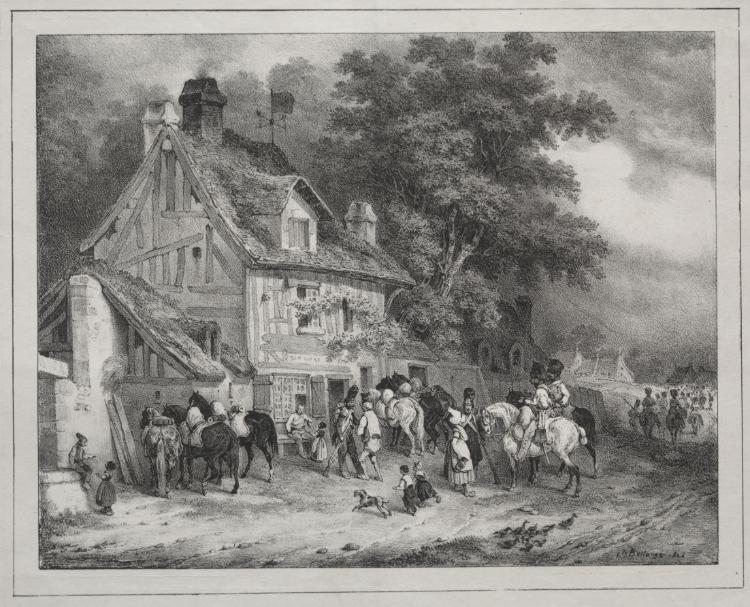
Joseph-Louis-Hippolyte Bellange (1800-1866) was a French painter known for the precisely observed, characterful military paintings that make him one of the most accomplished military painters of the 19th-century French tradition. Soldier with Dog from 1853 depicts a soldier with a dog in the precisely observed, characterful manner that distinguishes Bellange's best work from the more general military painting of his contemporaries. Bellange was known for his precisely observed, characterful depictions of military life—particularly the everyday aspects of soldiering rather than the grand battles—and his work provides one of the most accomplished records of French military life in the 19th century.
Cultural Impact
Soldier with Dog is important in the history of French military painting because it demonstrates the precisely observed, characterful manner that Bellange brought to military subjects as one of the most accomplished military painters of the 19th-century French tradition. Bellange's precisely observed, characterful depictions of the everyday aspects of military life—rather than the grand battles—provide one of the most accomplished records of French military life, and the 1853 painting shows this tradition at its most precisely observed.
Why It Matters
Soldier with Dog is Bellange's precisely observed French military painting: a soldier with a dog rendered in the characterful manner of one of the most accomplished military painters of the 19th-century French tradition. The 1853 painting shows the everyday aspects of military life that make Bellange's work distinctive.