
Provenance
(Frank Caro [1904–1980], New York, NY, sold to the Cleveland Museum of Art) (?–1982); The Cleveland Museum of Art, Cleveland, OH (1982–)
Accession Number
1982.68.1
Medium
album leaf, ink and light color on paper
Dimensions
Album, closed: 15.4 x 18.5 x 3.1 cm (6 1/16 x 7 5/16 x 1 1/4 in.); Each painting: 11.2 x 13.1 cm (4 7/16 x 5 3/16 in.)
Classification
Painting
Credit Line
Edwin R. and Harriet Pelton Perkins Memorial Fund
Tags
Painting Baroque (1600–1750) Ink Paper Chinese Color: Gray
Background & Context
Background Story
Hua Yan (1682-1756) was one of the outstanding individualist painters of the Yangzhou School, known for his eccentric style that combined refined technique with unconventional composition. This album leaf from 1745 illustrates an old poem through the image of a scholar seated beneath a pine tree — one of the most ancient motifs in Chinese painting, representing the literatus in communion with nature. But Hua Yan's treatment is characteristically restless: the pine is not a symbol of constancy but a living, twisted organism, and the scholar's posture suggests restlessness rather than repose.
Cultural Impact
The Yangzhou School, to which Hua Yan belonged, was defined by its rejection of orthodox academic painting in favor of a more personal, expressive approach. Yangzhou in the early 18th century was a wealthy commercial city where salt merchants became patrons of unorthodox artists, creating a market for the kind of individualist painting that the Qing court would never commission. Hua Yan's pine tree scholar participates in this tradition: it is a classic subject rendered with unclassic energy.
Why It Matters
Scholar under a Pine Tree takes the most conventional subject in Chinese painting and makes it new. The pine is alive, the scholar is uncomfortable, and the result is a painting that questions the tradition it inherits — exactly what Yangzhou individualism demanded.
Related Artworks
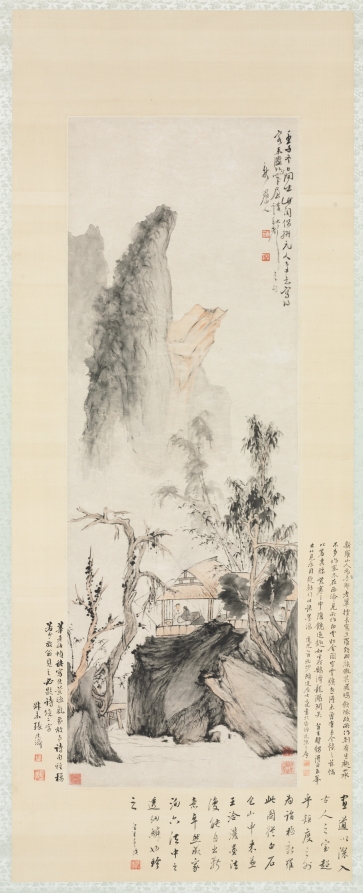
Conversation in Autumn
Hua Yan
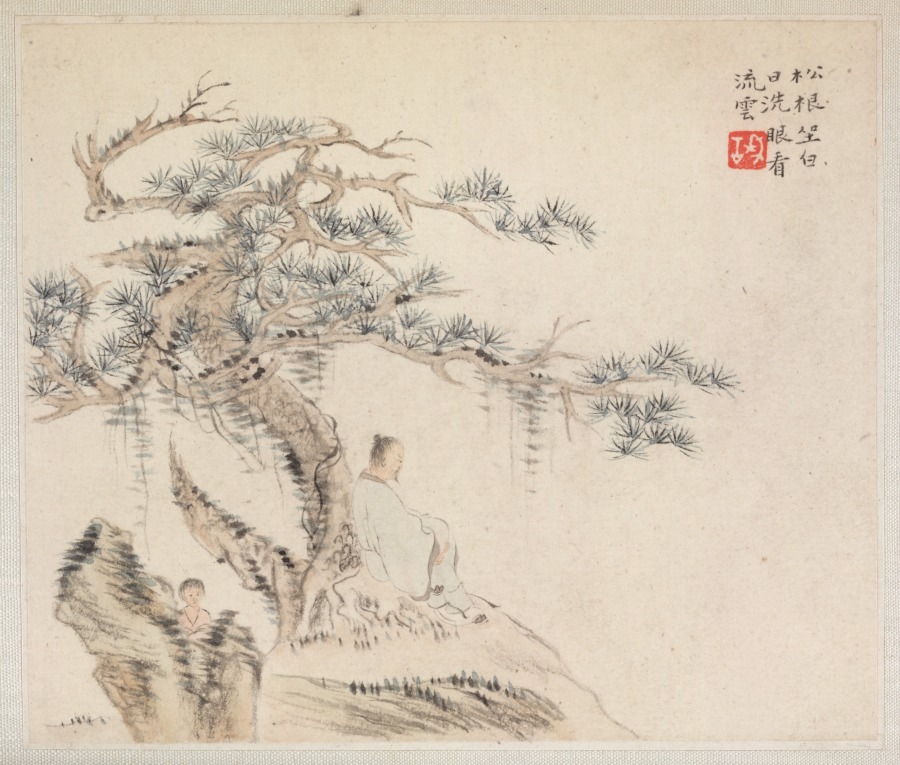
Album of Landscape Painting Illustrating Old Poems
Hua Yan
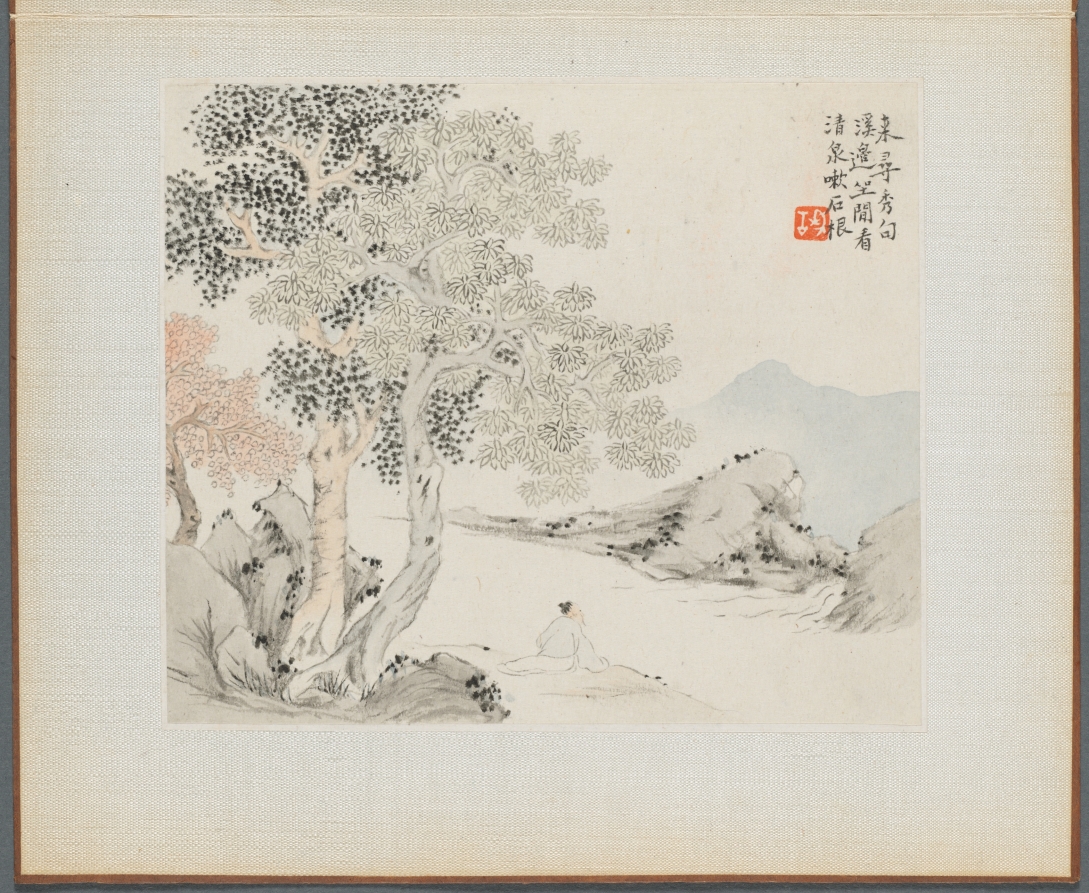
Album of Landscape Paintings Illustrating Old Poems: Three Big Trees, a Stream with an Old Man Sitting on the Bank
Hua Yan
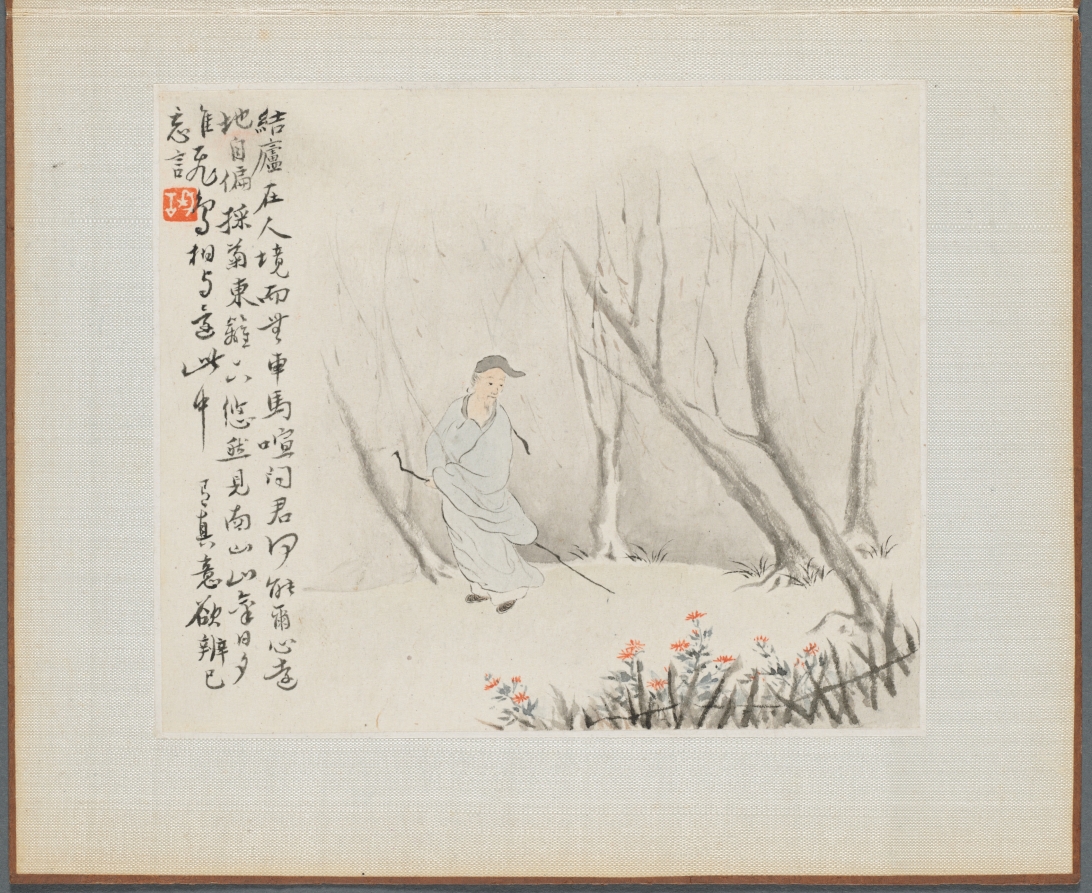
Album of Landscape Paintings Illustrating Old Poems: Man with a Staff Admires Chrysanthemums at a Fence
Hua Yan