Provenance
Sayn-Wittgenstein; Freiherr von Godin; Hirsch, Munich, auction 26 Nov. 1921, cat. no. 296 (according to Bierhaus-Rödiger 1978, p. 374, no. 583). Sayn-Wittgenstein (according to Bierhaus-Rödiger 1978, p. 373, no. 583). Freiherr von Godin (according to Bierhaus-Rödiger 1978, p. 373, no. 583). Private collection, Munich (according to Bierhaus-Rödiger 1978, p. 373, no. 583). [Mr. and Mrs. Walter Feilchenfeldt, Zurich]
Accession Number
1984.60
Medium
pen and black ink and watercolor over graphite
Dimensions
Sheet: 43.9 x 35.2 cm (17 5/16 x 13 7/8 in.)
Classification
Drawing
Credit Line
John L. Severance Fund
Tags
Drawing Neoclassical & Romantic (1751–1850) Watercolor Ink Graphite & Pencil German Color: Orange
Background & Context
Background Story
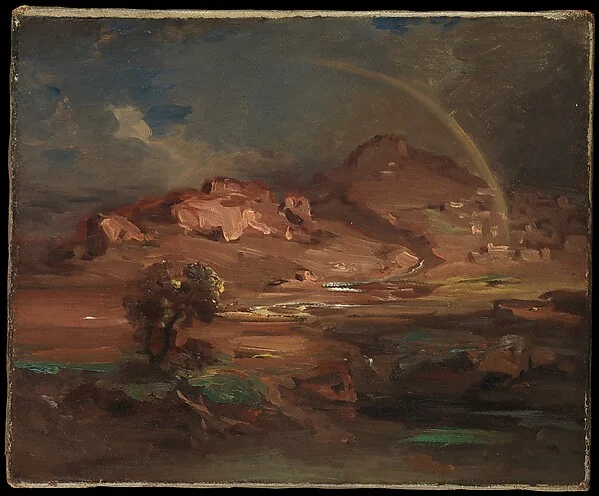
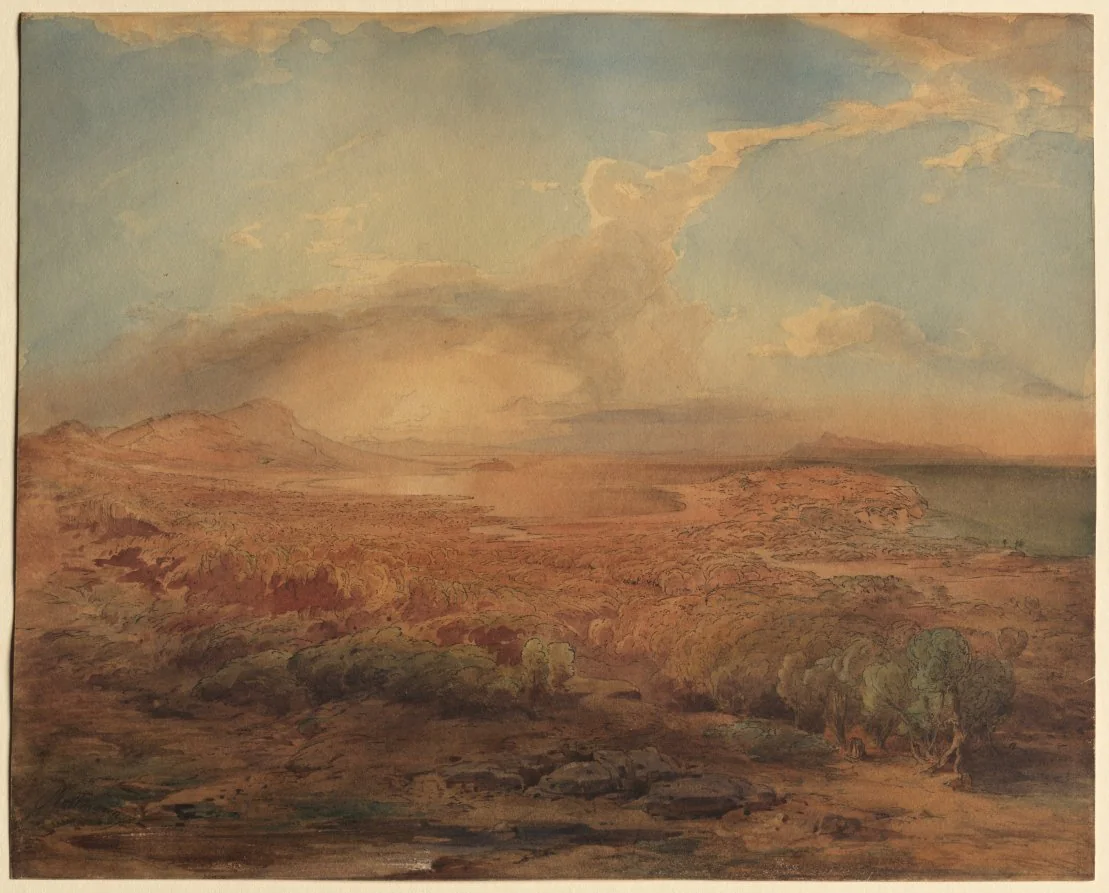
Carl Rottmann (1797-1850) was a German painter known for the luminous, atmospheric landscape paintings of Greek scenery that he produced for King Ludwig I of Bavaria, making him one of the most important painters of the German Romantic landscape tradition. Epidauros from c. 1843 depicts the ancient Greek site of Epidauros in the luminous, atmospheric manner that distinguishes Rottmann's best Greek landscapes from the more dramatic landscape painting of his German Romantic contemporaries. The c. 1843 date places this in Rottmann's most productive period, when he was producing the Greek landscapes for King Ludwig I that are his most accomplished works.
Cultural Impact
Epidauros is important in the history of German landscape painting because it demonstrates the luminous, atmospheric manner that Rottmann brought to Greek subjects as the most important painter of the German Greek landscape tradition. Rottmann's Greek landscapes—combining luminous atmospheric effect with archaeological accuracy—represent an important tradition in German Romantic landscape painting, and the c. 1843 painting shows this tradition at its most accomplished.
Why It Matters
Epidauros is Rottmann's luminous Greek landscape: the ancient site rendered in the atmospheric manner that he developed for King Ludwig I of Bavaria's Greek landscape cycle. The c. 1843 painting shows the most important painter of the German Greek landscape tradition combining luminous atmosphere with archaeological accuracy.