Provenance
Maud Eells Corning [1908-1991], Mentor, OH, bequest to the Cleveland Museum of Art (?-1992); The Cleveland Museum of Art, Cleveland, OH (1992-)
Accession Number
1992.383
Medium
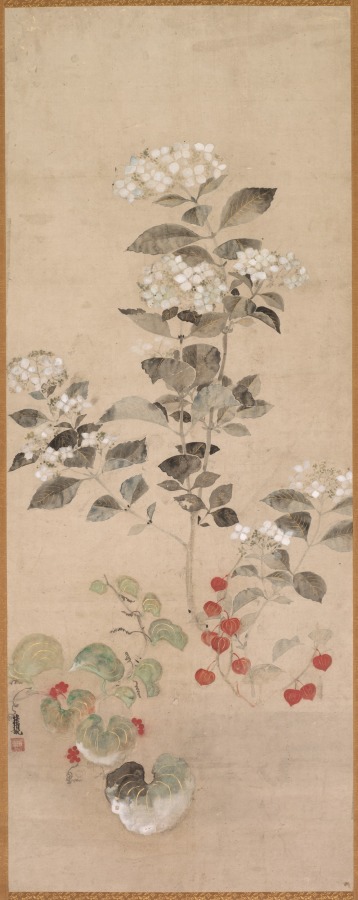
hanging scroll; ink, color, and gold on paper
Dimensions
Overall: 195.3 x 64.8 cm (76 7/8 x 25 1/2 in.); Painting only: 107 x 45 cm (42 1/8 x 17 11/16 in.)
Classification
Painting
Credit Line
Bequest of Maud Eells Corning
Tags
Painting Baroque (1600–1750) Ink Gold Leaf Paper Japanese Color: Orange
Background & Context
Background Story
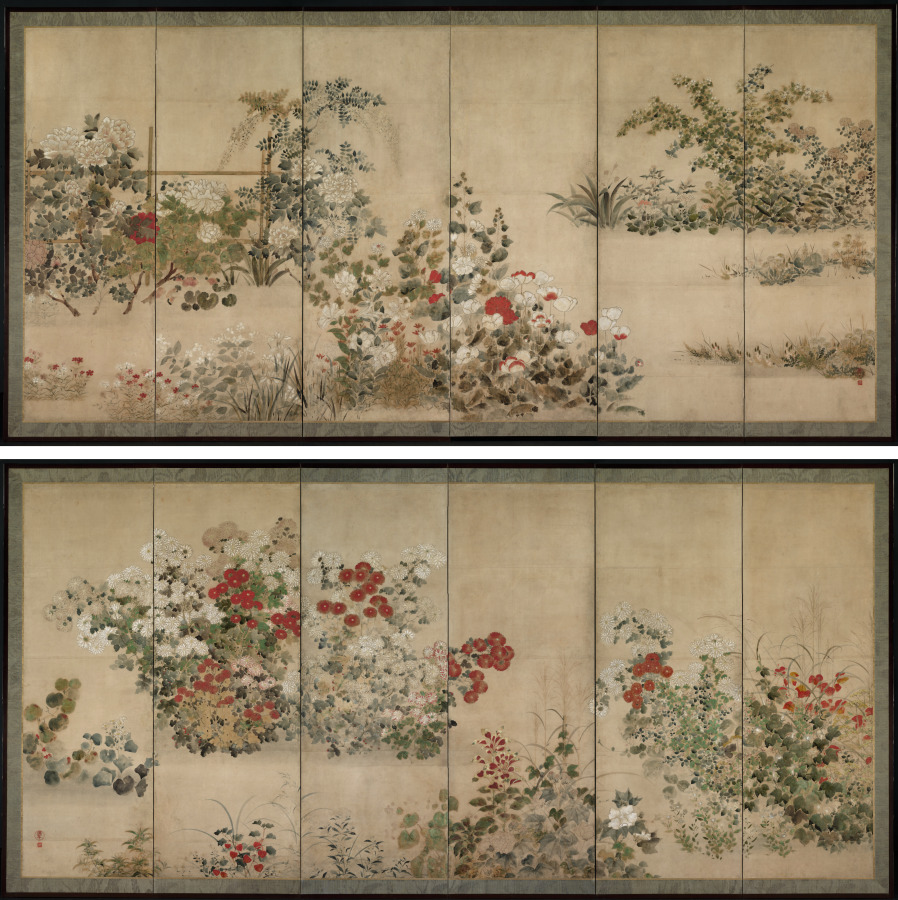
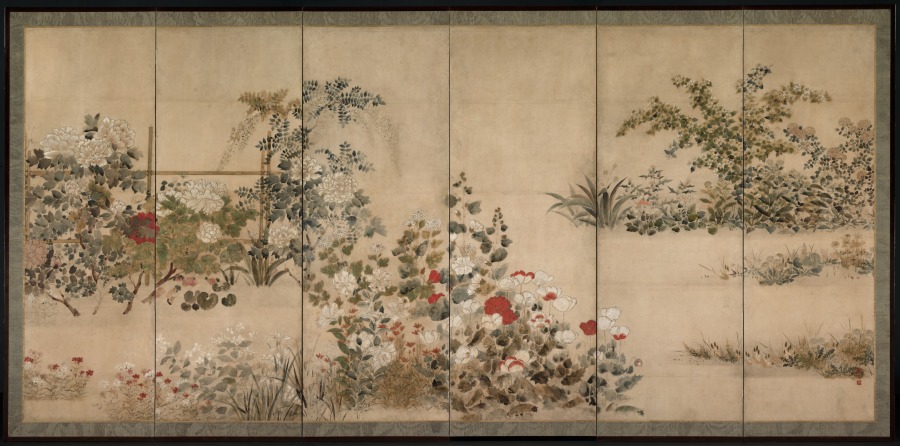
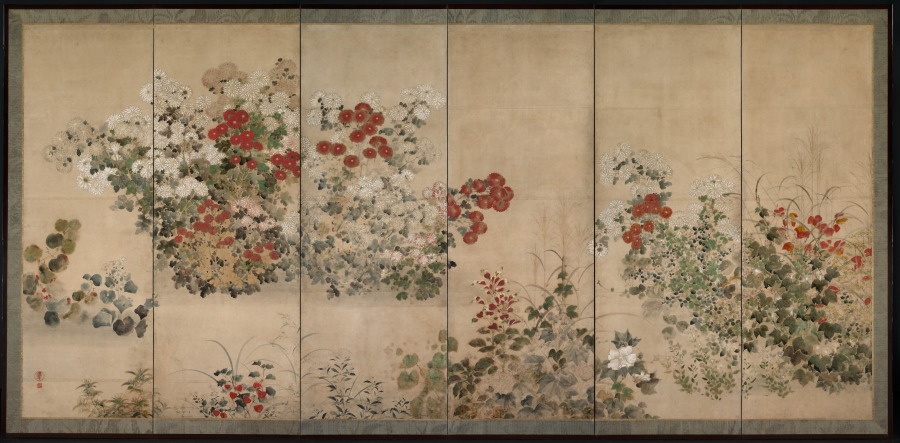
Kitagawa Sosetsu (active mid-1600s) was a Japanese painter known for the precisely observed, elegantly composed paintings of flowers that make him one of the accomplished painters of the early Edo period. Summer Flowers from the mid-1600s depicts summer flowers in the precisely observed, elegantly composed manner of the Rinpa school that distinguishes Sosetsu's best work from the more general flower painting of his contemporaries. Summer flowers were one of the most important subjects in Japanese painting, representing the seasonal customs and poetic associations that were central to Japanese literary and artistic culture, and Sosetsu's elegantly composed treatment shows the flower painting tradition at its most refined.
Cultural Impact
Summer Flowers is important in the history of Japanese painting because it demonstrates the precisely observed, elegantly composed manner of the Rinpa school as applied to one of the most important subjects in Japanese artistic culture. Summer flowers—representing the seasonal customs and poetic associations central to Japanese culture—were one of the most important subjects in Japanese painting, and the mid-1600s painting shows the Rinpa school flower painting tradition at its most precisely observed and elegantly composed.
Why It Matters
Summer Flowers is Sosetsu's elegantly composed Rinpa painting: summer flowers rendered in the precisely observed manner of one of the accomplished painters of the early Edo period. The mid-1600s painting shows the Rinpa school flower painting tradition at its most refined.