Accession Number
1997.114
Medium
hanging scroll; ink and color on paper
Dimensions
Overall: 70.1 cm (27 5/8 in.); Painting only: 158.7 x 56.7 cm (62 1/2 x 22 5/16 in.)
Classification
Painting
Credit Line
Bequest of Mrs. A. Dean Perry
Tags
Painting Baroque (1600–1750) Ink Paper Japanese Color: White Color: Gray
Background & Context
Background Story
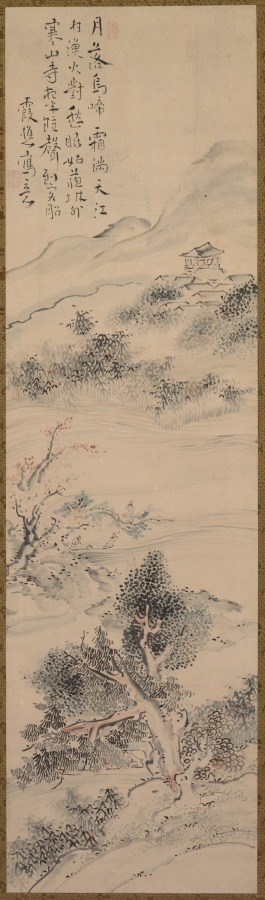
Ike Taiga (1723-1776) was a Japanese painter known as one of the pioneers of the Nanga (Southern School) painting tradition in Japan, whose combination of Chinese literati subjects with Japanese spontaneity makes him one of the most important painters of the Edo period. Spring Landscape from the 1700s depicts a spring landscape in the ink manner of the Chinese literati tradition that Taiga and other Nanga painters adopted and adapted for Japanese painting. The Nanga tradition adopted the Chinese literati ideal of painting for self-cultivation rather than for commission, and Taiga was one of the most accomplished painters in this tradition.
Cultural Impact
Spring Landscape is important in the history of Japanese painting because it demonstrates the Nanga tradition that Taiga helped to pioneer—the adoption and adaptation of Chinese literati painting for Japanese artists. The Nanga tradition represented a significant departure from the established painting schools of Japan, and Taiga's combination of Chinese subjects with Japanese spontaneity created a new type of painting that was simultaneously Chinese in tradition and Japanese in execution.
Why It Matters
Spring Landscape is Taiga's Nanga literati painting: a spring landscape rendered in the ink manner of the Chinese literati tradition that he helped to pioneer in Japan. The 1700s painting shows the Nanga tradition—painting for self-cultivation rather than commission—combining Chinese tradition with Japanese spontaneity.