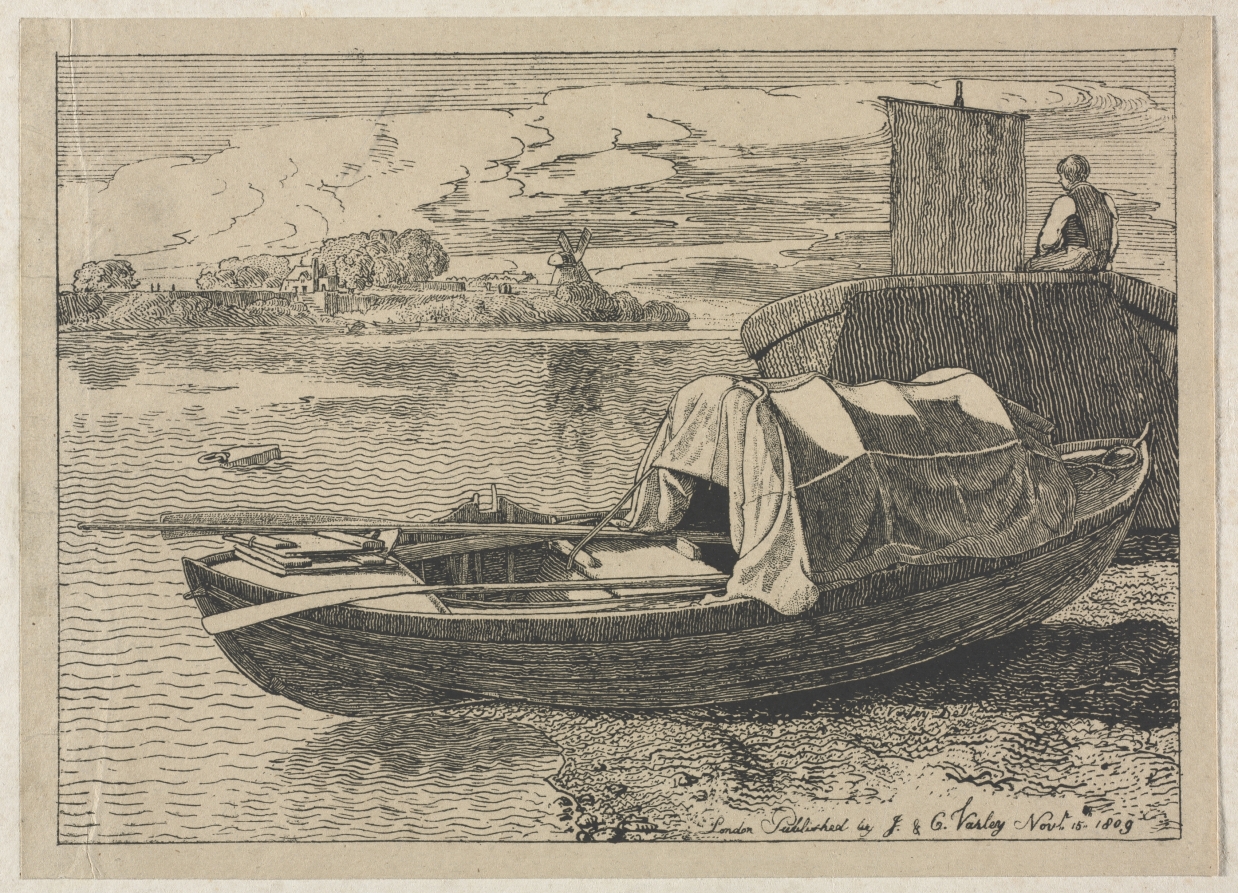
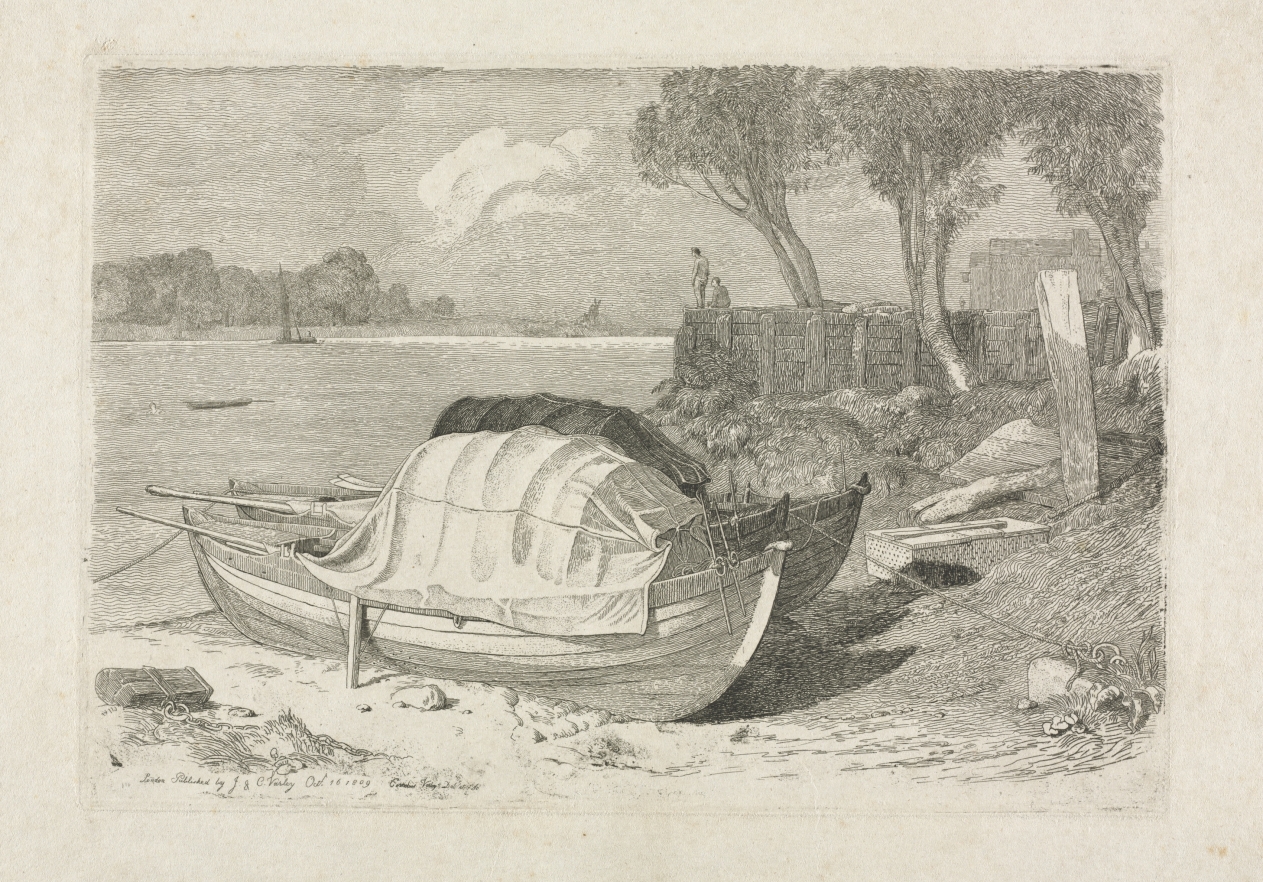
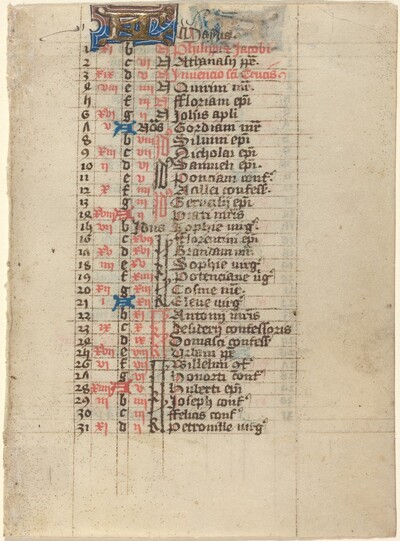
Description
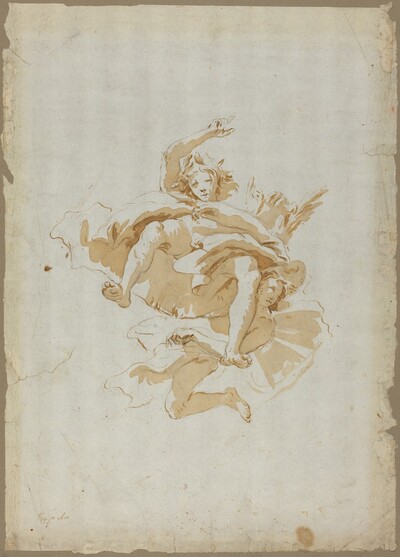
Primarily self-taught, Varley played a significant role in the development of open-air drawing practice in 19thcentury England. He relished the opportunity to engage directly with natural phenomena and made numerous sketches of the English landscape. Raised by his uncle who was a watchmaker, Varley combined his artistic interests with his exposure to science, and in 1809 invented a "graphic telescope," a drawing instrument loosely derived from the camera obscura. Varley’s drawings were more than mere transcriptions of nature, however. This drawing illustrates a stanza of Samuel Roger’s popular poem "The Pleasures of Memory":
The adventuring boy that asks his little share
And hies from home, with many a gossip’s prayer
Turns on a neighboring hill once more to see
The dear abode of peace and privacy;
And as he turns, the thatch among the trees
The smoke’s blue wreaths, ascending from the
breeze,
The Village Common scattered with white sheep
All rouse reflection’s sadly pleasing train
And oft he looks, and weeps, and looks again.
Provenance
[]
Accession Number
2004.40
Medium
brown ink and brown wash with graphite
Dimensions
Sheet: 49.1 x 38.1 cm (19 5/16 x 15 in.)
Classification
Drawing
Credit Line
John L. Severance Fund
Tags
Drawing Neoclassical & Romantic (1751–1850) Ink Graphite & Pencil British Color: Brown Color: White
Background & Context
Background Story
Cornelius Varley (1781-1873) was a British painter known for the precisely observed, atmospherically composed watercolor landscapes that make him one of the most accomplished watercolorists of the British tradition. Landscape with Figure in Foreground from c. 1840 depicts a landscape with a figure in the foreground in the precisely observed, atmospherically composed manner that distinguishes Varley's best work from the more general watercolor landscape painting of his contemporaries. Varley was known for his precisely observed, atmospherically composed watercolor landscapes that capture the atmosphere and detail of the British countryside with remarkable precision, and the c. 1840 painting shows the British watercolor tradition at its most accomplished.
Cultural Impact
Landscape with Figure in Foreground is important in the history of British watercolor painting because it demonstrates the precisely observed, atmospherically composed manner that Varley brought to watercolor landscape painting as one of the most accomplished watercolorists of the British tradition. Varley's precisely observed, atmospherically composed watercolor landscapes—capturing the atmosphere and detail of the British countryside with remarkable precision—represent one of the most accomplished traditions in British watercolor painting, and the c. 1840 painting shows this tradition at its most precisely observed.
Why It Matters
Landscape with Figure in Foreground is Varley's precisely observed British watercolor: a landscape with a figure rendered in the atmospherically composed manner of one of the most accomplished watercolorists of the British tradition. The c. 1840 painting shows the British watercolor tradition at its most precisely observed.