Provenance
M. de Maussion (coronet surmounting the letter M); Douane Centrale (stamp, star in a circle, in black ink). Estate of Muriel Butkin.
Accession Number
2009.117
Medium
Watercolor and gouache with graphite underdrawing
Dimensions
Sheet: 23.6 x 33.5 cm (9 5/16 x 13 3/16 in.)
Classification
Drawing
Credit Line
Bequest of Muriel Butkin
Tags
Drawing Neoclassical & Romantic (1751–1850) Watercolor Graphite & Pencil Gouache French Color: Brown Color: Gray
Background & Context
Background Story
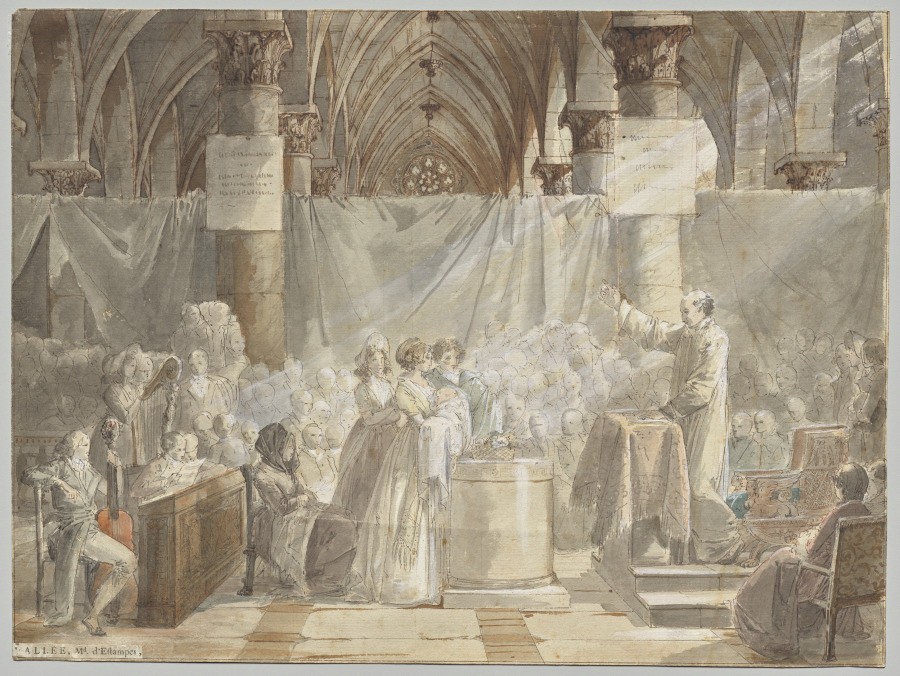
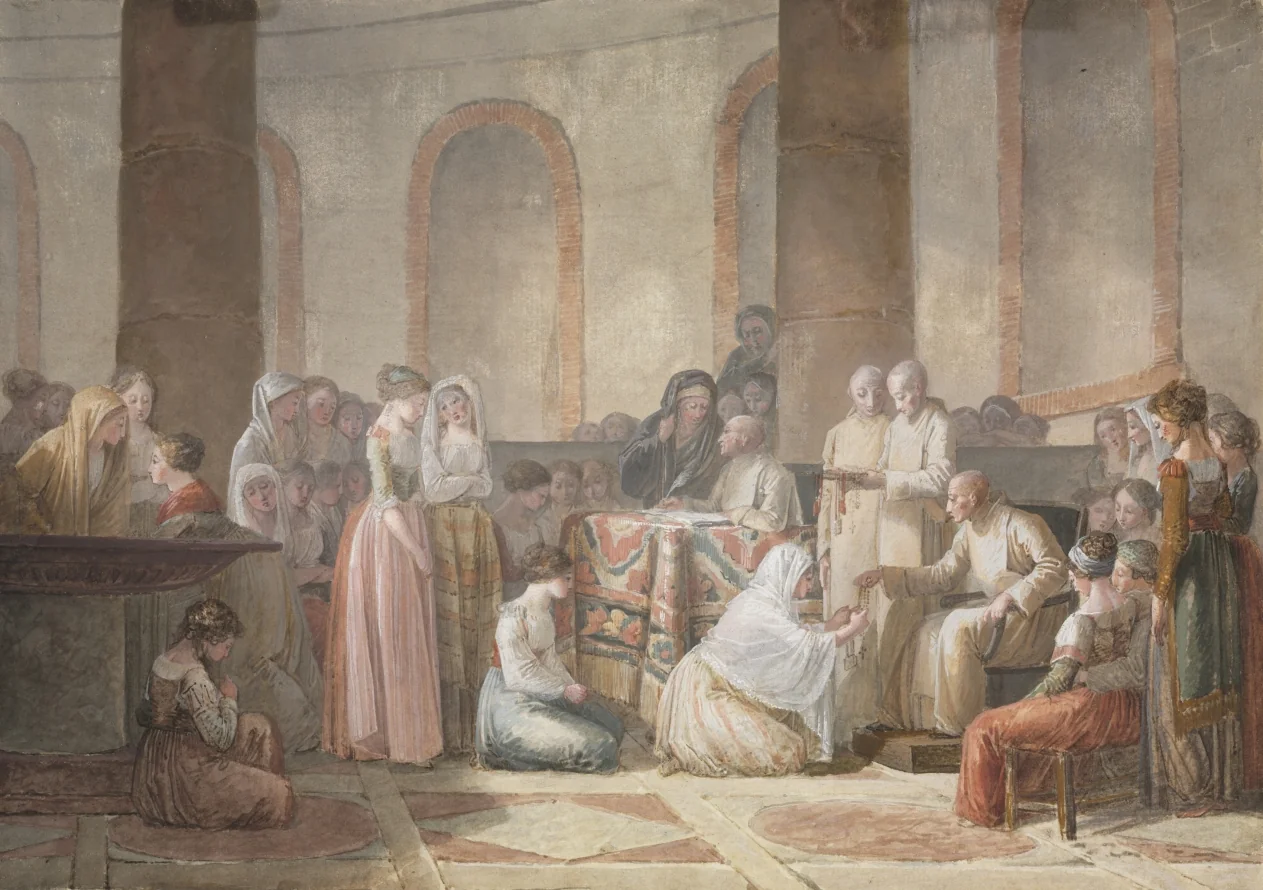
Jean-Baptiste Mallet (1759-1835) was a French painter known for the precisely observed, elegantly composed genre paintings that make him one of the accomplished painters of the French Neoclassical tradition. The Distribution of Rosaries from 1793 depicts the distribution of rosaries in the precisely observed, elegantly composed manner of French Neoclassical painting. The 1793 date places this in the period of the French Revolution, when religious subjects were being transformed by the new political and social order, and Mallet's precisely observed, elegantly composed treatment shows the French genre painting tradition at its most accomplished during this turbulent period.
Cultural Impact
The Distribution of Rosaries is important in the history of French painting because it demonstrates the precisely observed, elegantly composed manner of the French Neoclassical genre painting tradition as practiced by Mallet during the period of the French Revolution. The distribution of rosaries—a religious subject transformed by the new political and social order of the Revolution—represents one of the most precisely observed subjects in French genre painting, and the 1793 painting shows this tradition at its most elegantly composed.
Why It Matters
The Distribution of Rosaries is Mallet's precisely observed Neoclassical genre painting: the distribution of rosaries rendered in the elegantly composed manner of the French Neoclassical tradition. The 1793 painting shows the transformation of religious subjects during the French Revolution at its most precisely observed.