Accession Number
2011.114
Medium
watercolor and extensive point of brush work with graphite and white gouache
Dimensions
Sheet: 48.2 x 56 cm (19 x 22 1/16 in.)
Classification
Drawing
Credit Line
Purchase from the J. H. Wade Fund
Tags
Drawing Neoclassical & Romantic (1751–1850) Watercolor Graphite & Pencil Gouache Italian Color: Brown
Background & Context
Background Story
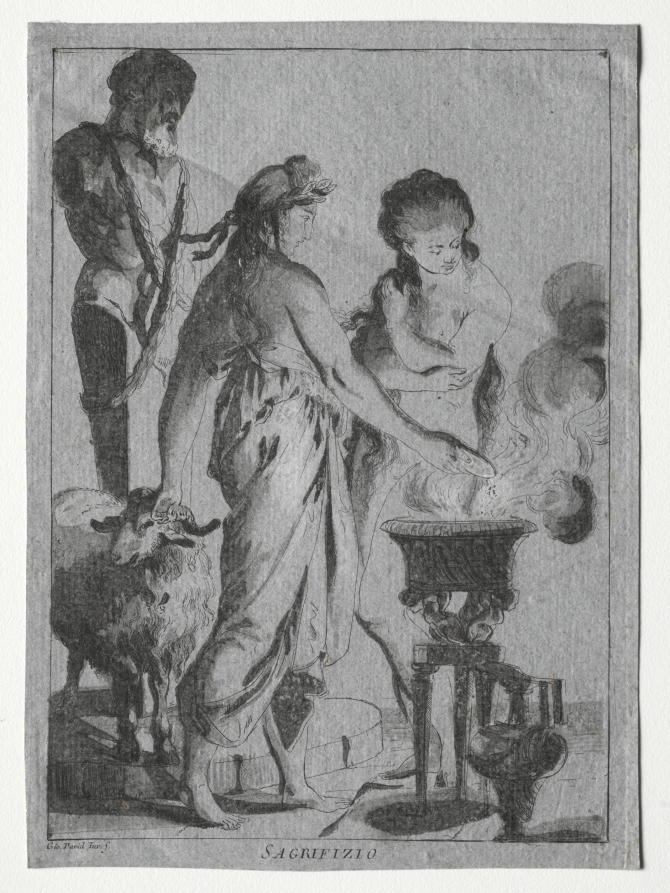
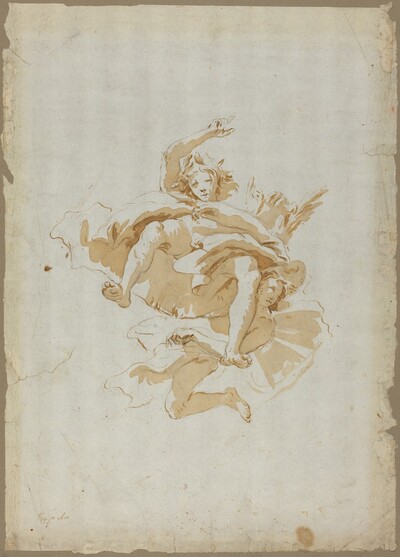
Giovanni David (1743-1790) was a Genoese painter and printmaker known for his theatrical subjects and decorative works in the Venetian tradition. Theater Scene from c. 1775-76 depicts a scene in a theater with the elaborate watercolor and gouache technique that distinguishes David's most accomplished works on paper. The theater subject is characteristic of David's interest in performance and spectacle, and the watercolor medium allows the vivid color and atmospheric effects that the theatrical subject demands. The c. 1775-76 date places this in David's most productive period, when he was producing the theatrical subjects that are his most characteristic works.
Cultural Impact
David's theatrical watercolors are important in the history of 18th-century Italian art because they combine the Venetian decorative tradition with the specific subject of theater performance, creating a visual record of 18th-century theatrical practice that is both a work of art and a document of cultural history. Theater Scene demonstrates David's elaborate watercolor technique at its most accomplished, and the theatrical subject allows the color and spectacle that distinguish his work from the more conventional vedute of his Venetian contemporaries.
Why It Matters
Theater Scene is David's decorative watercolor at its most vivid: a theatrical performance rendered with the elaborate point-of-brush technique and gouache that distinguish his most accomplished works on paper. The c. 1775-76 painting combines the Venetian decorative tradition with the spectacle of 18th-century theater.