Masters of Their Craft
Artists
Discover the visionaries who shaped the course of art history.
31,194 artists in the collection
French 14th Century
French

French 15th Century
French
The 15th century was the century which spans the Julian calendar dates from 1 January 1401 (represented by the Roman numerals MCDI) to 31 December 1500 (MD). In Europe, the 15th century includes parts of the Late Middle Ages, the Early Renaissance, and the early modern period. Many technological, social and cultural developments of the 15th century can in retrospect be seen as heralding the "European miracle" of the following centuries. The architectural perspective, and the modern fields which are known today as banking and accounting were founded in Italy. The Hundred Years' War ended with a decisive French victory over the English in the Battle of Castillon. Financial troubles in England following the conflict resulted in the Wars of the Roses, a series of dynastic wars for the throne of England. The conflicts ended with the defeat of Richard III by Henry VII at the Battle of Bosworth Field, establishing the Tudor dynasty in the later part of the century. Constantinople, known as the capital of the world and the capital of the Byzantine Empire, fell to the emerging Muslim Ottoman Turks, marking the end of the tremendously influential Byzantine Empire and, for some historians, the...

French 16th Century
French
The 16th century begins with the Julian year 1501 (MDI) and ends with either the Julian or the Gregorian year 1600 (MDC) (depending on the reckoning used; the Gregorian calendar introduced a lapse of 10 days in October 1582). The Habsburg Spanish Empire, Portuguese Empire, Ottoman Empire, Safavid Persia, Mughal India and Ming China were the most powerful and hegemonic states. The Renaissance in Italy and Europe saw the emergence of important artists, authors and scientists, and led to the foundation of important subjects which include accounting and political science. Copernicus proposed the heliocentric universe, which was met with strong resistance, and Tycho Brahe refuted the theory of celestial spheres through observational measurement of the 1572 appearance of a Milky Way supernova. These events directly challenged the long-held notion of an immutable universe supported by Ptolemy and Aristotle, and led to major revolutions in astronomy and science. Galileo Galilei became a champion of the new sciences, invented the first thermometer and made substantial contributions in the fields of physics and astronomy, becoming a major figure in the Scientific Revolution in Europe. Spain...

French 17th Century
French
17th-century French literature was written throughout the Grand Siècle of France, spanning the reigns of Henri, the Regency of Marie de' Medici, Louis XIII, the Regency of Anne of Austria (and the civil war called the Fronde), and the reign of Louis XIV. The literature of this period is often equated with the Classicism of Louis XIV's long reign, during which France led Europe in political and cultural development; its authors expounded the classical ideals of order, clarity, proportion and good taste. In reality, 17th-century French literature encompasses far more than just the classicist masterpieces of Jean Racine and Madame de La Fayette.
French 18th/19th Century
French
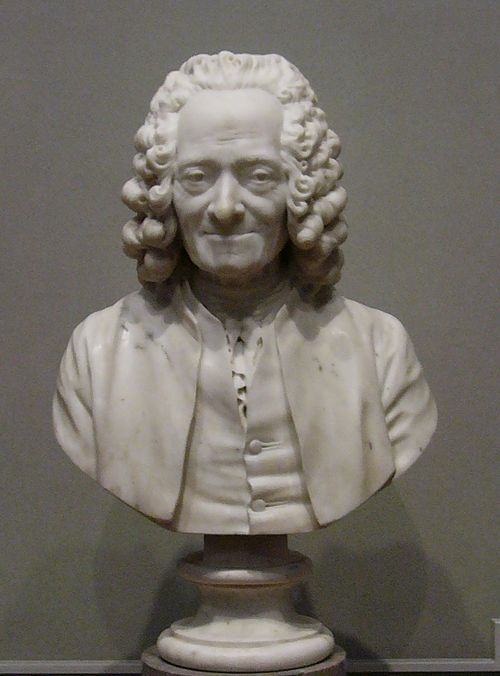
French 18th Century
French
18th-century French literature is French literature written between 1715, the year of the death of King Louis XIV of France, and 1798, the year of the coup d'État of Bonaparte which brought the Consulate to power, concluded the French Revolution, and began the modern era of French history. This century of enormous economic, social, intellectual and political transformation produced two important literary and philosophical movements: during what became known as the Age of Enlightenment, the Philosophes questioned all existing institutions, including the church and state, and applied rationalism and scientific analysis to society; and a very different movement, which emerged in reaction to the first movement; the beginnings of Romanticism, which exalted the role of emotion in art and life. In common with a similar movement in England at the same time, the writers of 18th century France were critical, skeptical and innovative. Their lasting contributions were the ideas of liberty, toleration, humanitarianism, equality, and progress, which became the ideals of modern western democracy.

French 19th Century
French
The 19th century began on 1 January 1801 (represented by the Roman numerals MDCCCI), and ended on 31 December 1900 (MCM). It was the 9th century of the 2nd millennium. It was characterized by vast social upheaval. Slavery was abolished in much of Europe and the Americas. The First Industrial Revolution, though it began in the late 18th century, expanded beyond its British homeland for the first time during the 19th century, particularly remaking the economies and societies of the Low Countries, France, the Rhineland, Northern Italy, and the Northeastern United States. A few decades later, the Second Industrial Revolution led to ever more massive urbanization and much higher levels of productivity, profit, and prosperity, a pattern that continued into the 20th century. The Catholic Church, in response to the growing influence and power of modernism, secularism and materialism, formed the First Vatican Council in the late 19th century to deal with such problems and confirm certain Catholic doctrines as dogma. Religious missionaries were sent from the Americas and Europe to Asia, Africa and the Middle East. In the Middle East, it was an era of change and reform. The Islamic gunpowder empires...

French 20th Century
French
20th Century Studios, Inc., formerly Twentieth Century Fox, is an American film production and distribution company owned by the Walt Disney Studios, the film studios division of the Disney Entertainment business segment of the Walt Disney Company. It was headquartered at the Fox Studio Lot in the Century City area of Los Angeles, until its lease with Fox Corporation ended and it was relocated to the Walt Disney Studios in Burbank. Walt Disney Studios Motion Pictures distributes and markets the films produced by this studio in theatrical markets. For 90 years, 20th Century has been one of the major American film studios. It was founded on May 31, 1935 as Twentieth Century-Fox Film Corporation by the merger of Fox Film Corporation and Twentieth Century Pictures, and was one of the original "Big Five" among eight majors of Hollywood's Golden Age. In 1985, the studio removed the hyphen in the name (becoming Twentieth Century Fox Film Corporation) after being acquired by Rupert Murdoch's News Corporation, which was renamed 21st Century Fox in 2013 after it spun off its publishing assets. Disney purchased most of 21st Century Fox's assets, which included 20th Century Fox, on March 20, 2019...
French & Co.
American
American, active 1860s

French, Daniel Chester
American
American, 1850 - 1931
Daniel Chester French (April 20, 1850 – October 7, 1931) was an American sculptor in the late 19th and early 20th centuries. His works include The Minute Man, an 1874 statue in Concord, Massachusetts, and his 1920 monumental statue of Abraham Lincoln at the Lincoln Memorial in Washington, D.C.

French early 16th Century
French
During the early modern period, from the Renaissance (c. 1500–1550) to the Revolution (1789–1804), the Kingdom of France was a monarchy ruled by the House of Bourbon (a Capetian cadet branch). This corresponds to the so-called Ancien Régime ("old rule"). The territory of France during this period increased until it included essentially the extent of the modern country, and it also included the territories of the first French colonial empire overseas. The period is dominated by the figure of the "Sun King", Louis XIV (his reign of 1643–1715 being one of the longest in history), who managed to eliminate the remnants of medieval feudalism and established a centralized state under an absolute monarch, a system that would endure until the French Revolution and beyond.

French, Herbert G.
American
American, 1872 - 1942
Charles Gates Dawes (August 27, 1865 – April 23, 1951) was the 30th vice president of the United States from 1925 to 1929 under President Calvin Coolidge. He was a co-recipient of the Nobel Peace Prize in 1925 for his work on the Dawes Plan for World War I reparations, and a member of the Republican Party. Born in Marietta, Ohio, Dawes attended Cincinnati Law School before beginning a legal career in Lincoln, Nebraska. After serving as a gas plant executive, he managed William McKinley's 1896 presidential campaign in Illinois. After the election, McKinley appointed Dawes as the Comptroller of the Currency. He remained in that position until 1901 before forming the Central Trust Company of Illinois. Dawes served as a general during World War I and was the chairman of the general purchasing board for the American Expeditionary Forces. In 1921, President Warren G. Harding appointed Dawes as the first director of the Bureau of the Budget. Dawes served on the Allied Reparations Commission, where he helped formulate the Dawes Plan to aid the struggling German economy. The 1924 Republican National Convention nominated President Calvin Coolidge without opposition. After former governor of Illinois...