Provenance
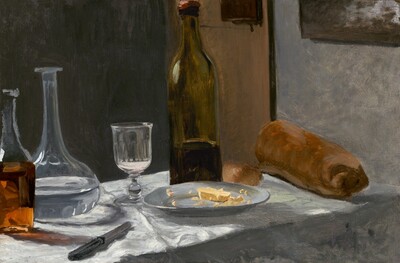
From the artist in 1876 to Dr. Georges de Bellio [1828-1894], Paris; by inheritance to M and Mme [she née Victorine de Bellio,1863-1958] Ernest Donop de Monchy, Paris, until at least 1897. Possibly (Paul Rosenberg and Co., London, New York, and Paris).[1] Georges Menier, Paris, by 1924;[2] (Menier sale, Palais Galliera, Paris, 15 June 1965, no. 121); purchased by (Hector Brame, Paris) for Paul Mellon [1907-1999], Upperville, VA; gift 1983 to NGA.
[1] The painting is cited as no. 86 in an unpublished inventory of the de Bellio collection by Remus Niculescu, "Georges de Bellio, l'Ami des Impressionists (I)," _Paragone_ 247 (September 1970). See also the letter from Niculescu to Paul Mellon dated 12 April 1970, in NGA curatorial files. This could be the Monet "Femme au monticule" sold by Donop de Monchy to Paul Rosenberg on 16 April 1917 (Receipt, Paul Rosenberg Archives, Museum of Modern Art, New York, file 1.c.24b, copy in NGA curatorial files)
[2] The painting was lent by Menier to the Première exposition de collectionneurs au profit de la Société des Amis du Luxembourg, Paris, in 1924.
Accession Number
1983.1.29
Medium
oil on canvas
Dimensions
overall: 100 x 81 cm (39 3/8 x 31 7/8 in.) | framed: 119.4 x 99.7 cm (47 x 39 1/4 in.)
Classification
Painting
Credit Line
Collection of Mr. and Mrs. Paul Mellon
Tags
Painting Impressionist & Modern (1851–1900) Oil Painting Canvas French
Background & Context
Background Story
Painted in 1875, Woman with a Parasol is one of Monet's most beloved works - an image of radiant spontaneity that captures a single moment in the life of his family. The painting depicts Camille Monet standing on a sun-drenched hillside, a parasol raised against the brilliant Normandy sky, with their seven-year-old son Jean standing behind her among the wildflowers. The wind billows Camille's white dress and the fabric of the parasol, creating a sense of motion that anticipates the snapshot aesthetic by half a century.
Monet painted this outdoors, working rapidly to capture the transient effects of light and atmosphere - the core principle of Impressionism. The composition is daring: Camille is placed off-center, seen from a low angle that makes her tower against the sky like a monument. The hillside rises steeply, eliminating the horizon and immersing the viewer in the landscape. The brilliant whites of the dress and clouds are set against the deep greens of the grass, creating a chromatic energy that vibrates across the canvas.
Camille would die just four years later, in 1879, at the age of 32. This painting preserves her in a moment of radiant summer health - a memory of happiness that Monet would never recapture.
Cultural Impact
Woman with a Parasol became one of the defining images of Impressionism - a painting that encapsulates the movement's commitment to capturing the ephemeral, the personal, and the luminous. Its influence extends to fashion photography and cinema, where the wind-blown figure against a summer sky became a visual shorthand for freedom and pleasure.
Why It Matters
This painting is Impressionism at its most emotionally resonant. It combines the movement's technical innovations with a depth of personal feeling that elevates genre painting to the level of memorial. Every stroke records not just a moment of light, but a moment of love.