Provenance
Mr. and Mrs. Leigh Block, Chicago, by 1961 [Chicago 1961]; given to the Art Institute, 1968.
Accession Number
30468
Medium
Gouache on paper
Dimensions
36.5 × 29.5 cm (14 3/8 × 11 5/8 in.)
Classification
gouache
Credit Line
Gift of Mary and Leigh Block
Background & Context
Background Story
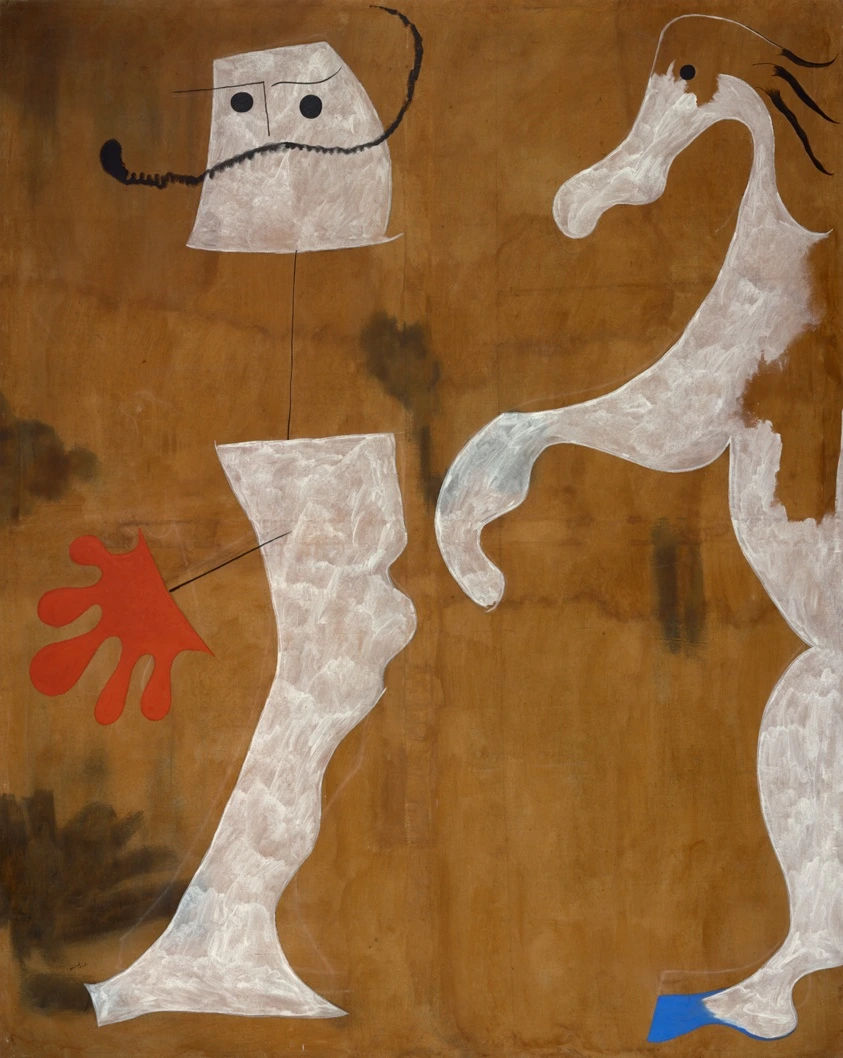
Joan Miro's The Man with a Pipe (1935) is a gouache on paper from the period when Miro had fully developed his mature surrealist style. The painting shows a figure that is recognizably human but transformed through Miro's characteristic vocabulary of abstract forms and signs. The man with a pipe is reduced to his essential elements: a circle for the head, a line for the body, the pipe suggested by a simple shape. The gouache medium allows for bright, opaque colors that Miro used to create a composition of energy and wit. The palette is likely dominated by the primary colors and black that are characteristic of Miro's work. This painting belongs to the 1930s, a period of intense creativity for Miro when he was producing some of his most important works, including the series of paintings that would influence the development of Abstract Expressionism. The man with a pipe is transformed from a realistic subject into a playful, poetic configuration of line and color.
Cultural Impact
Miro's paintings of the 1930s represent the peak of his surrealist period, using a vocabulary of simplified forms and bright colors to create a world of poetic imagination.
Why It Matters
This gouache of a man with a pipe transforms a simple subject into a playful composition of abstract forms, Miro's characteristic vocabulary of signs creating an image that is both recognizable and dreamlike.