Accession Number
49717
Medium
Gouache, over traces of graphite, on cream wove paper
Dimensions
48.2 × 63.2 cm (19 × 24 15/16 in.)
Classification
gouache
Credit Line
Olivia Shaler Swan Memorial Collection
Background & Context
Background Story
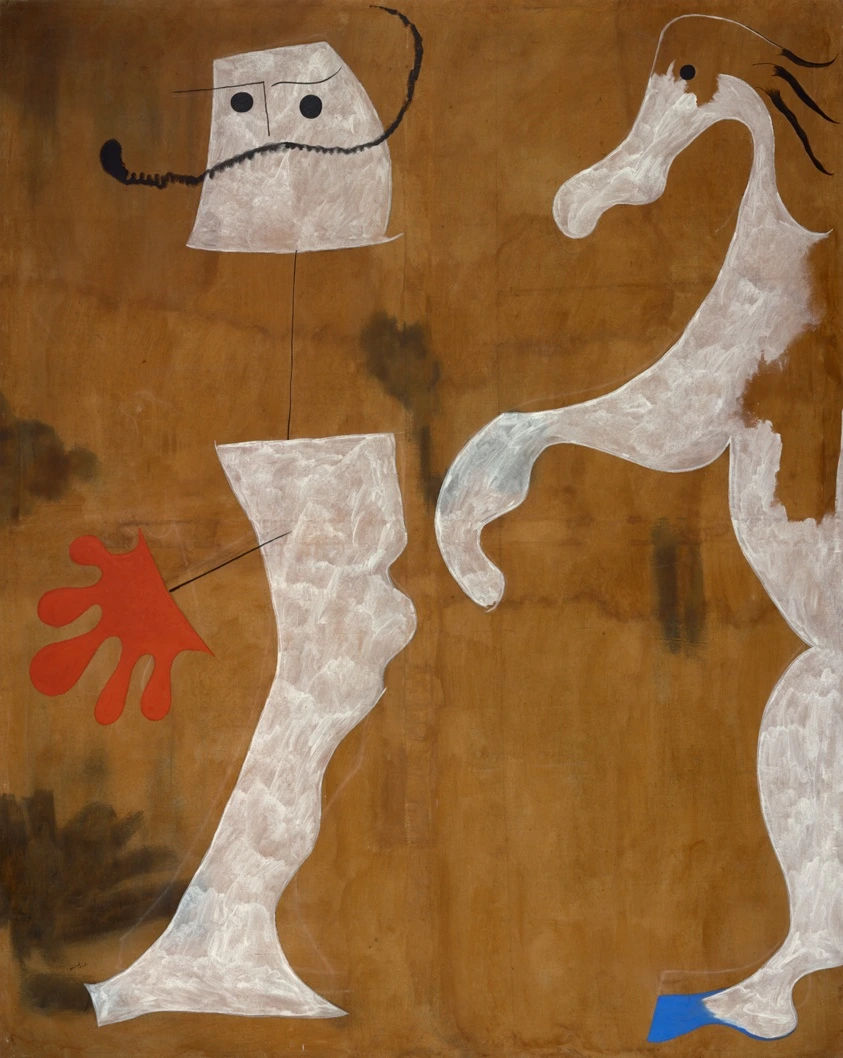
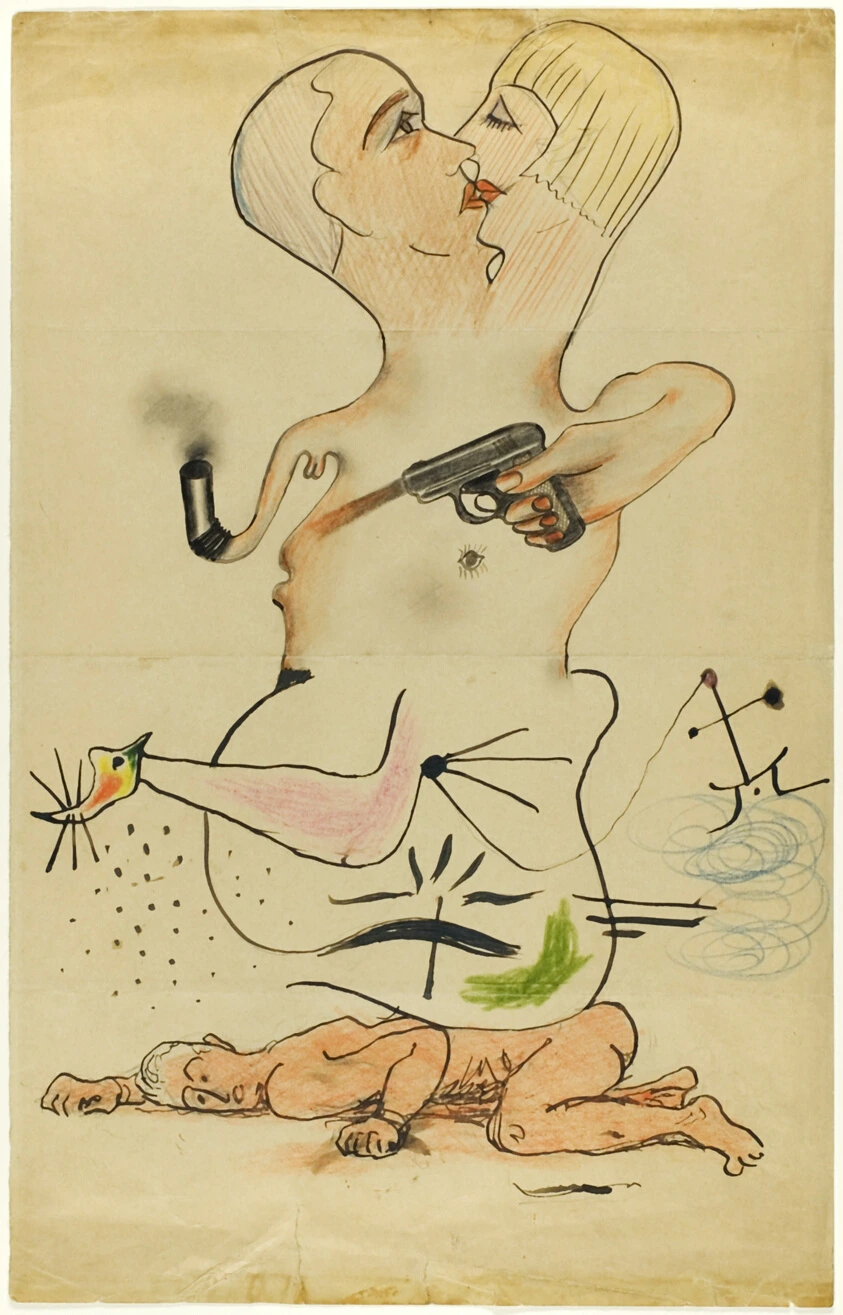
Joan Miro's Composition with Figures (1932) is a gouache over traces of graphite on cream wove paper, from a period of intense experimentation in Miro's career. The composition features abstracted figures, rendered in Miro's characteristic vocabulary of simplified forms, lines, and bright colors. The figures are suggested rather than described, their forms reduced to essential shapes that seem to float in an indeterminate space. The gouache technique allows for vibrant, opaque colors that Miro used to create a sense of energy and movement. The traces of graphite provide an underlying structure. Miro's work of the early 1930s shows the influence of Surrealism, particularly the concept of automatic drawing and the exploration of the unconscious. This composition with figures is a record of Miro's inner world, a landscape of the mind populated by forms that are at once abstract and suggestive of human presence.
Cultural Impact
Miro's abstract figure compositions were a crucial influence on the development of Abstract Expressionism, demonstrating how the human figure could be transformed into a vocabulary of pure form and color.
Why It Matters
This gouache composition transforms human figures into a playful arrangement of abstract forms, Miro's bright colors and simplified shapes creating a world of poetic imagination.