Provenance
The artist [with Galerie Alfred Flechtheim, Düsseldorf and Berlin, c. 1930 (Liste von Paul Klee to Galerie Alfred Flechtheim of “25 Neue Aquarelle Für Flechtheim anlässl. Amerika Ausstellung,” Jan. 28, 1930, Zentrum Paul Klee, Bern, Schenkung Familie Klee, restricted; price and shipping lists, 1930, The Museum of Modern Art Archives, New York, MoMA Exhs., Series Folder 4.2; and Düsseldorf 1931); with Galerie Simon and D. H. Kahnweiler, Paris, c. 1934 (shipping sheet to J. B. Neumann, New York, from Galerie Simon, Paris, Oct. 3, 1934, no. 11421, J. B. Neumann Papers, Archives of American Art, Smithsonian Institution, Microfilm Reels NJBN-1–5); and with Neumann Gallery, New York, 1934 (shipping sheet to J. B. Neumann, Oct. 3, 1934, cited above, and New York 1939)]. Katherine Kuh (1904–1994), Chicago, by June 1946 [Chicago 1946]; bequeathed to the Art Institute of Chicago, 1994.
Accession Number
129937
Medium
Pen and black ink, with watercolor on cream laid paper, laid down on paperboard
Dimensions
31 × 46.3 cm (12 1/4 × 18 1/4 in.)
Classification
pen and ink drawings
Credit Line
Bequest of Katharine Kuh
Background & Context
Background Story
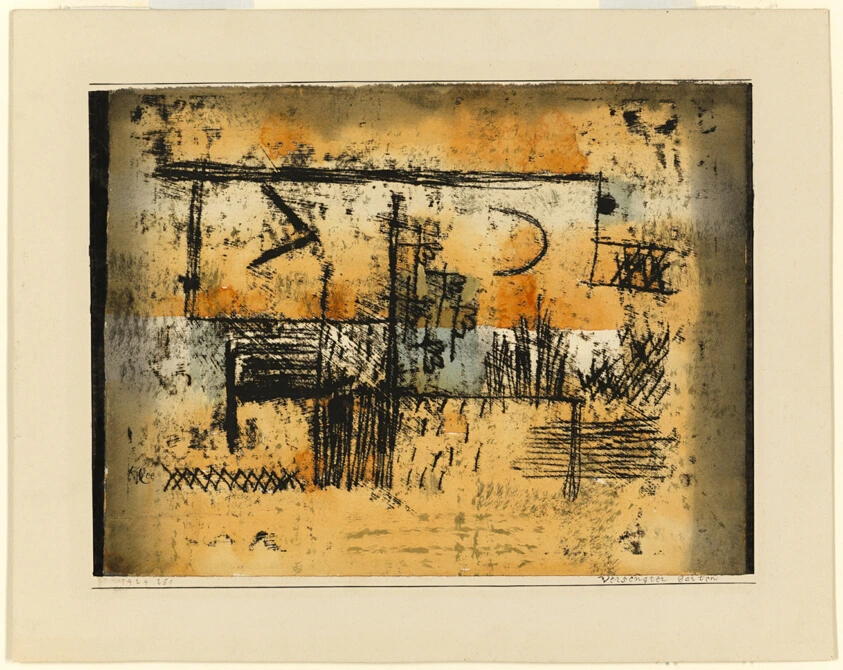
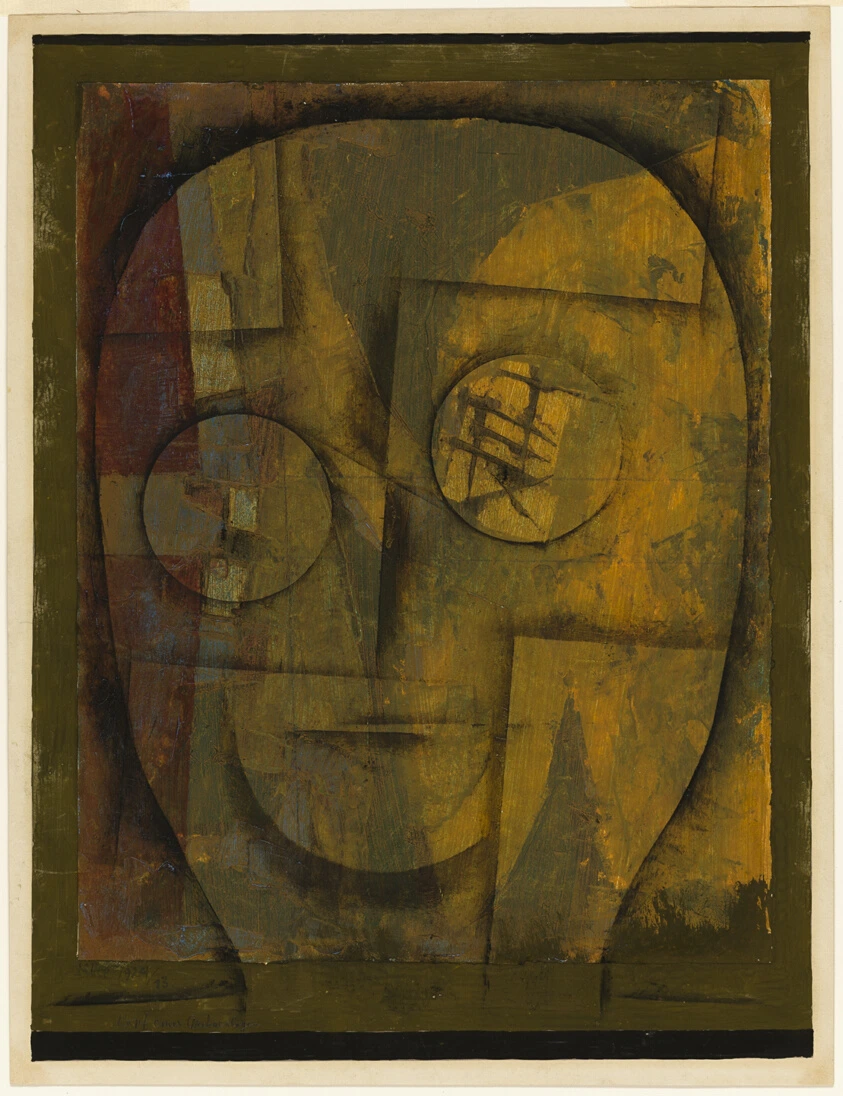
Paul Klee's A Phantom Crumbles (1927) is from Klee's Bauhaus period. The title suggests a figure disintegrating, a theme in Klee's exploration of form and formlessness. His work from this period balances geometric structure with organic freedom.
Cultural Impact
Klee's Bauhaus works represent the peak of his career, combining art theory with poetic imagination.
Why It Matters
This work captures Klee's exploration of form and dissolution, the phantom crumbling into abstract elements.