Provenance
Samuel Abraham Marx (1885-1964) and Florene May Schoenborn (1903-1995), from 1955 [New York 1965]; bequeathed by Florene May Schoenborn to the Art Institute, 1997.
Accession Number
147658
Medium
Tempera on cream wove paper, laid down on thick millboard support
Dimensions
32.1 × 40.8 cm (12 11/16 × 16 1/8 in.)
Classification
tempera
Credit Line
Bequest of Florene May Schoenborn
Background & Context
Background Story
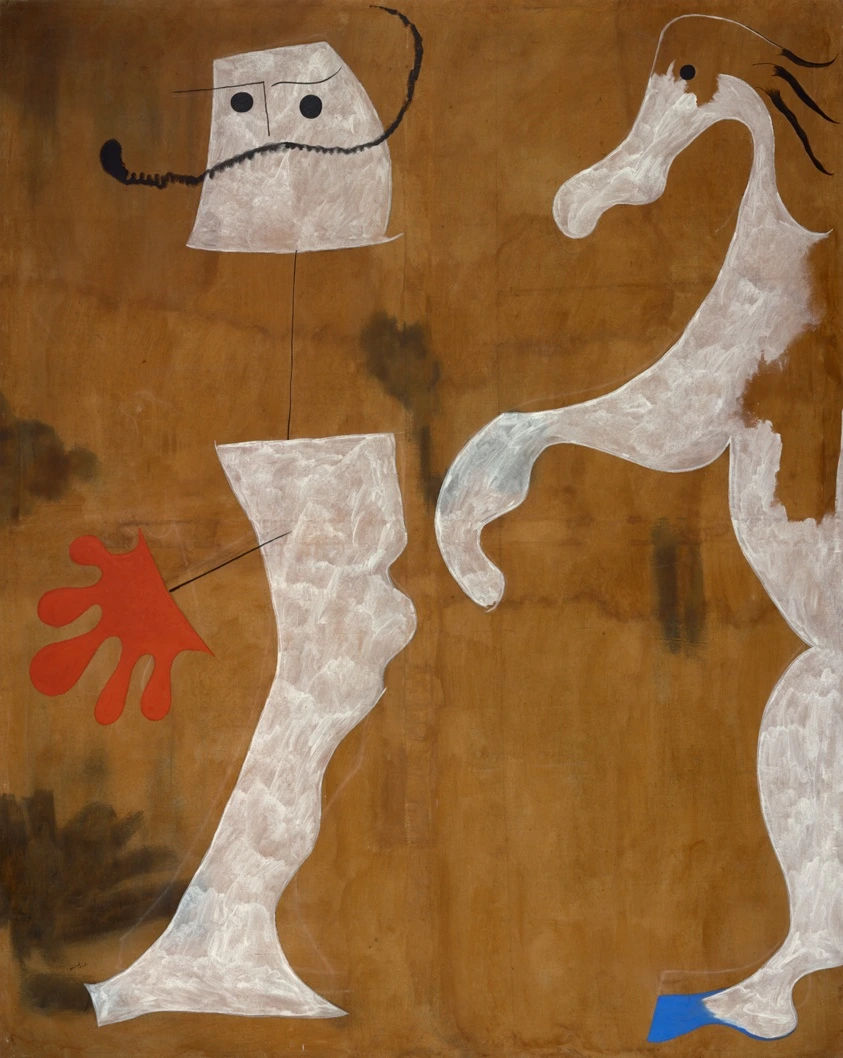
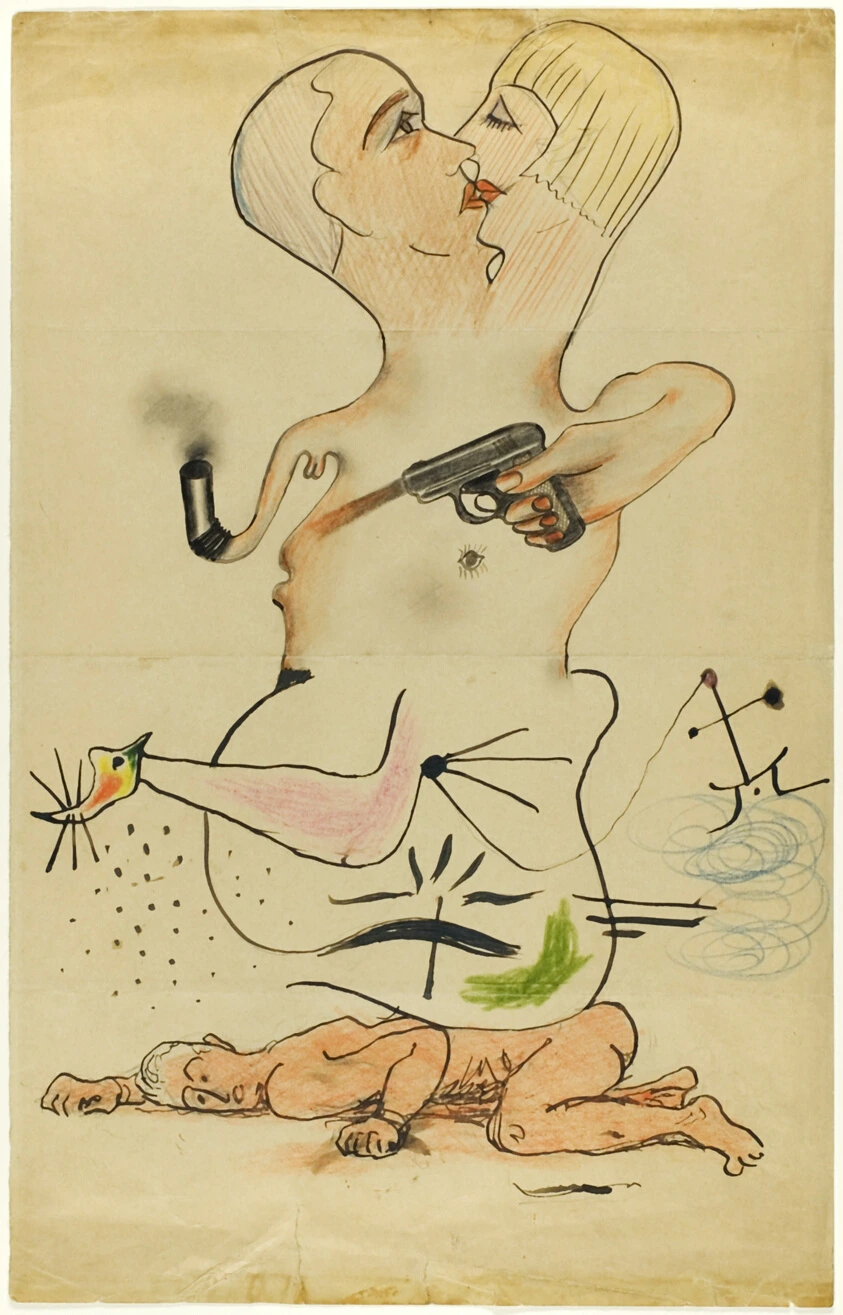
Joan Miro's Personage, Animals, Mountains (1935) is a tempera on cream wove paper laid down on thick millboard support. This work combines the elements of its title: a personage (a human figure), animals, and mountains, all rendered in Miro's characteristic vocabulary of simplified forms. The composition brings together these elements in a space that is both landscape and dreamscape, the mountains providing a setting for the encounters between the human and animal figures. The tempera medium allows for clean, precise colors that Miro used to create a composition of clarity and energy. The year 1935 was a period of political tension in Spain, and Miro's work from this period sometimes reflects the anxiety of the time, but Personage, Animals, Mountains seems to belong to a more playful, imaginative realm, recalling the folk art and primitive sources that influenced Miro throughout his career.
Cultural Impact
Miro's works of the 1930s represent the full flowering of his surrealist imagination, creating a personal mythology that influenced generations of artists.
Why It Matters
This tempera composition of personage, animals, and mountains creates a dreamlike world where human, animal, and landscape forms merge in a playful, poetic configuration.