Provenance
Sold by Pierre Matisse Gallery, New York, and E.V. Thaw and Co., Inc., New York, to Herbert Ferber [statement of authentication of Feb. 24, 1972, by Eugene V. Thaw]. Charles Collingwood, New York [label on the back of a photograph of "Viticulture" from the André Emmerich Gallery, New York]. Sold by Dain Gallery, New York, to Lindy and Edwin Bergman, Chicago, 1972; given to the Art Institute of Chicago, 2018.
Accession Number
119154
Medium
Black crayon and watercolor, with graphite and incising, on cream wove paper
Dimensions
62.9 × 48.2 cm (24 13/16 × 19 in.)
Classification
crayon
Credit Line
Lindy and Edwin Bergman Collection
Background & Context
Background Story
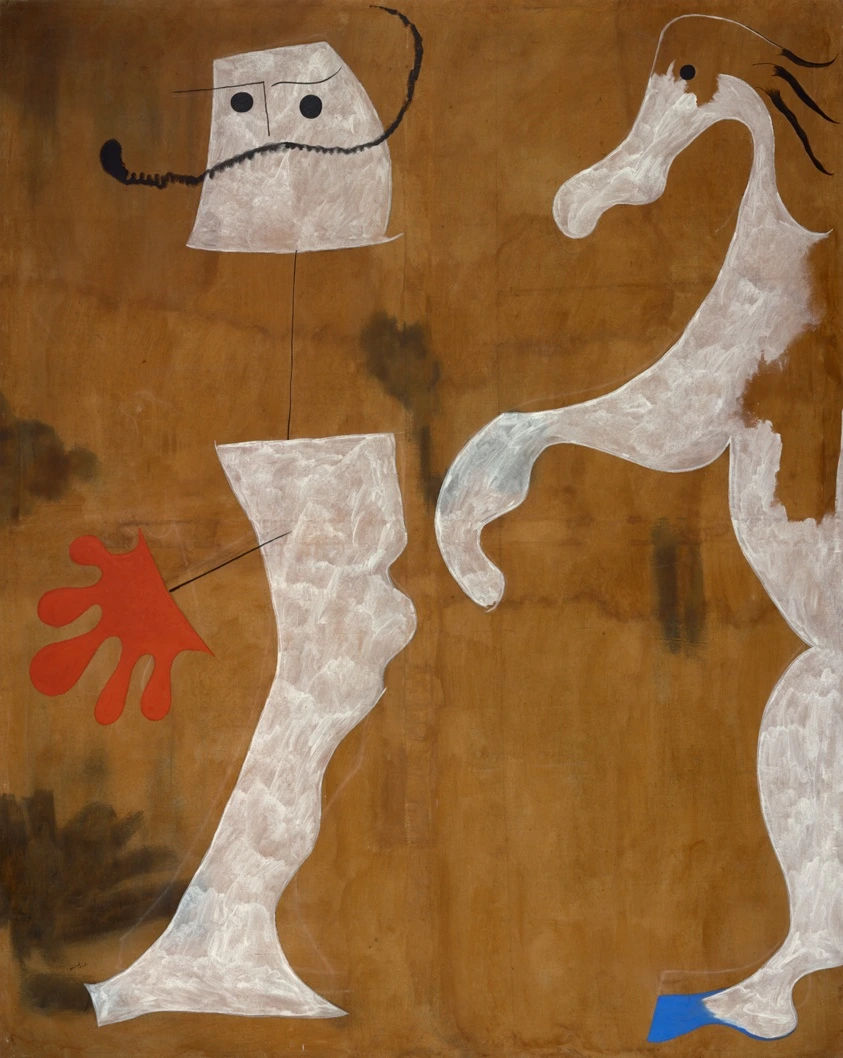
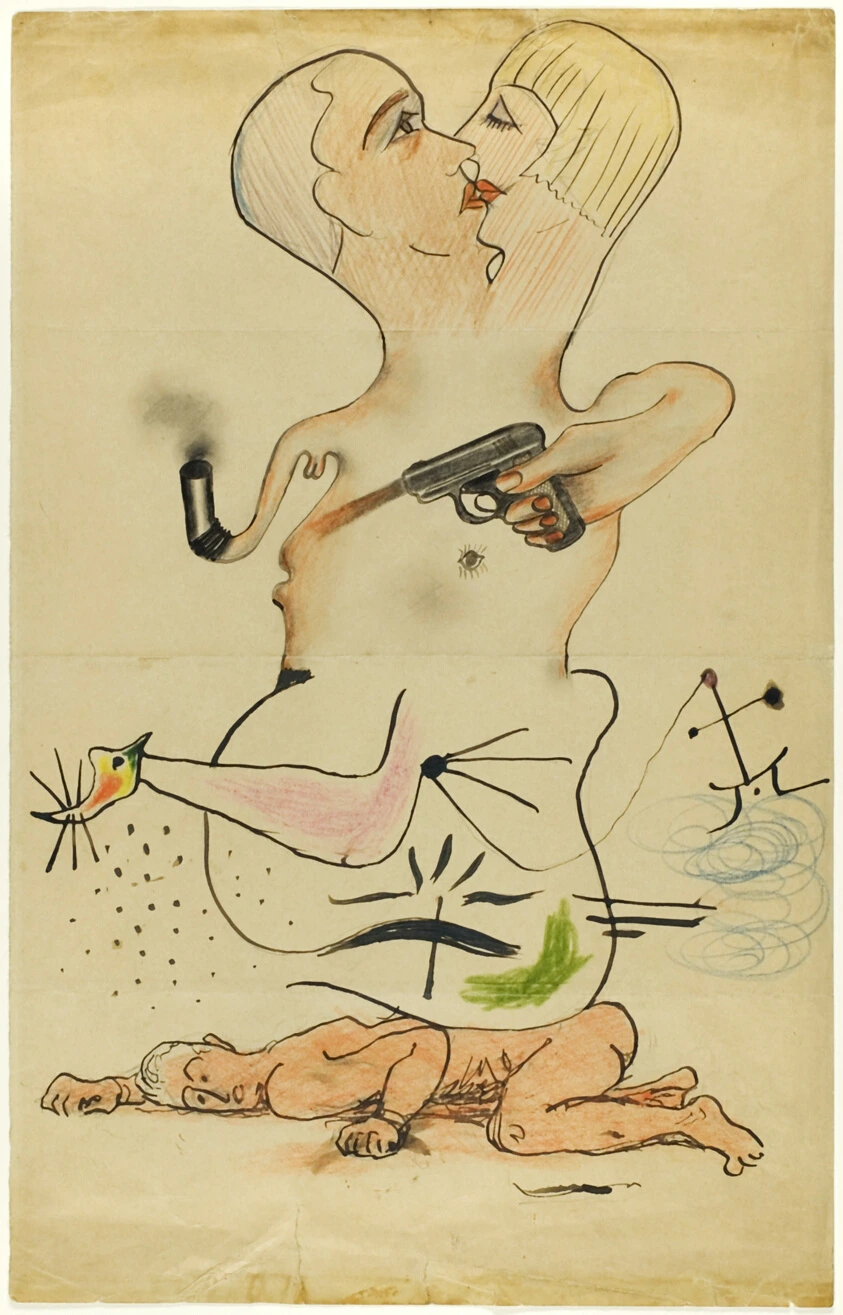
"Viticulture" is a 1924 crayon and watercolor drawing that belongs to the period when Miró was emerging from the influences of Fauvism and Cubism to develop the personal vocabulary of signs and symbols that would define his mature style. The title refers to wine-growing, and the composition includes forms that suggest vines, grapes, and the tools of agricultural labor, all rendered in the reductive, almost childlike manner that Miró adopted as a deliberate rejection of academic sophistication. The black crayon lines are bold and searching, their uneven weight and occasional hesitation suggesting the energy of discovery rather than the smoothness of execution. Graphite underdrawing is visible in places, showing how Miró established the compositional structure before committing to the more emphatic crayon strokes. The incising mentioned in the medium description—scratching into the paper surface—creates physical texture that catches light and adds dimensional depth to the drawing. This material experimentation was characteristic of the 1920s avant-garde, when artists were exploring the boundaries between drawing and relief, image and object. The subject of viticulture carries personal resonance for Miró as a Catalan artist: the vineyards of his native region were central to local identity, and their depiction connected his abstract experiments to a specific geography. Art historians have linked this work to the contemporary primitivism of Picasso and the tribal influences that were reshaping European art in the postwar period. The painting also anticipates the land art and ecological art of the late twentieth century by making agriculture itself a subject worthy of aesthetic attention.
Cultural Impact
This 1924 crayon drawing connected Catalan viticultural identity to emerging biomorphic abstraction, using incised texture and childlike reductiveness to elevate agricultural labor to avant-garde subject matter.
Why It Matters
It matters because Miró drew grapes and vines like they were secret writing—proving that the land he grew up on could become a language of its own.