Provenance
G. David Thompson, Pittsburgh [fax of May 26, 1995, from Claudia Neugebauer of the Galerie Beyeler, Basel]; sold to the Galerie Beyeler, Basel, 1959 [above fax and fax of May 18, 1995, from Susan Stroman of the Sidney Janis Gallery, New York]; sold to the Sidney Janis Gallery, New York, 1960 [on loan to the Galerie Chalette, New York, 1964]; sold to Lindy and Edwin Bergman, Chicago, 1966; given to the Art Institute of Chicago, 2018.
Accession Number
118760
Medium
Collage composed of cut-and-pasted, commercially printed papers, postcards, and sandpaper, with graphite and black crayon, on tan wove paper
Dimensions
106.5 × 71.9 cm (41 15/16 × 28 5/16 in.)
Classification
collage
Credit Line
Lindy and Edwin Bergman Collection
Background & Context
Background Story
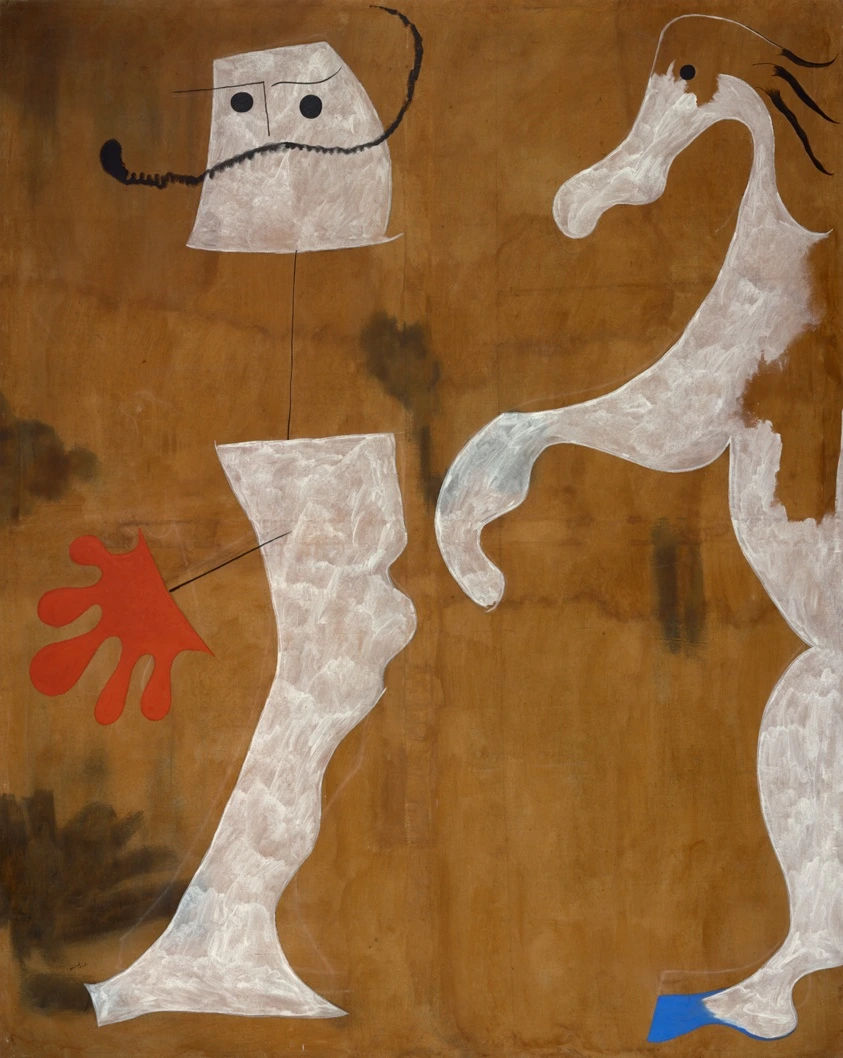
Joan Miro's Drawing - Collage (August 30, 1933) is a collage composed of cut-and-pasted, commercially printed papers, postcards, and sandpaper, with graphite and black crayon on tan wove paper. This work belongs to Miro's collage series of 1933, one of the most innovative phases of his career. The use of commercial printed papers, postcards, and sandpaper brings the materials of everyday life into the work of art, a practice that Miro shared with the Cubists and Dadaists. The sandpaper adds an unusual texture that contrasts with the smooth printed papers. The graphite and black crayon add linear elements that integrate the cut papers into a composition. The date on the work suggests that Miro was working rapidly, perhaps producing a collage a day. These collages were a crucial step in Miro's development of a personal vocabulary of signs and forms that would define his mature work.
Cultural Impact
Miro's collages of 1933 were among the most innovative works of his career, expanding the possibilities of the medium and influencing the development of mixed-media art.
Why It Matters
This collage combines cut papers, postcards, and sandpaper in a playful composition of textures and forms, demonstrating Miro's innovative approach to materials and his ability to transform everyday objects into art.