Provenance
Pierre Matisse Gallery, New York, by 1958. Harold and Mary Weinstein, Chicago, by 1961; sold to Lindy and Edwin Bergman, Chicago, 1967; given to the Art Institute of Chicago, 2018.
Accession Number
119155
Medium
Pastel, charcoal, and graphite, with smudging and scraping, on tan wove paper; mounted along edges to a wood stretcher
Dimensions
107.1 × 71.4 cm (42 3/16 × 28 1/8 in.)
Classification
pastel
Credit Line
Lindy and Edwin Bergman Collection
Background & Context
Background Story
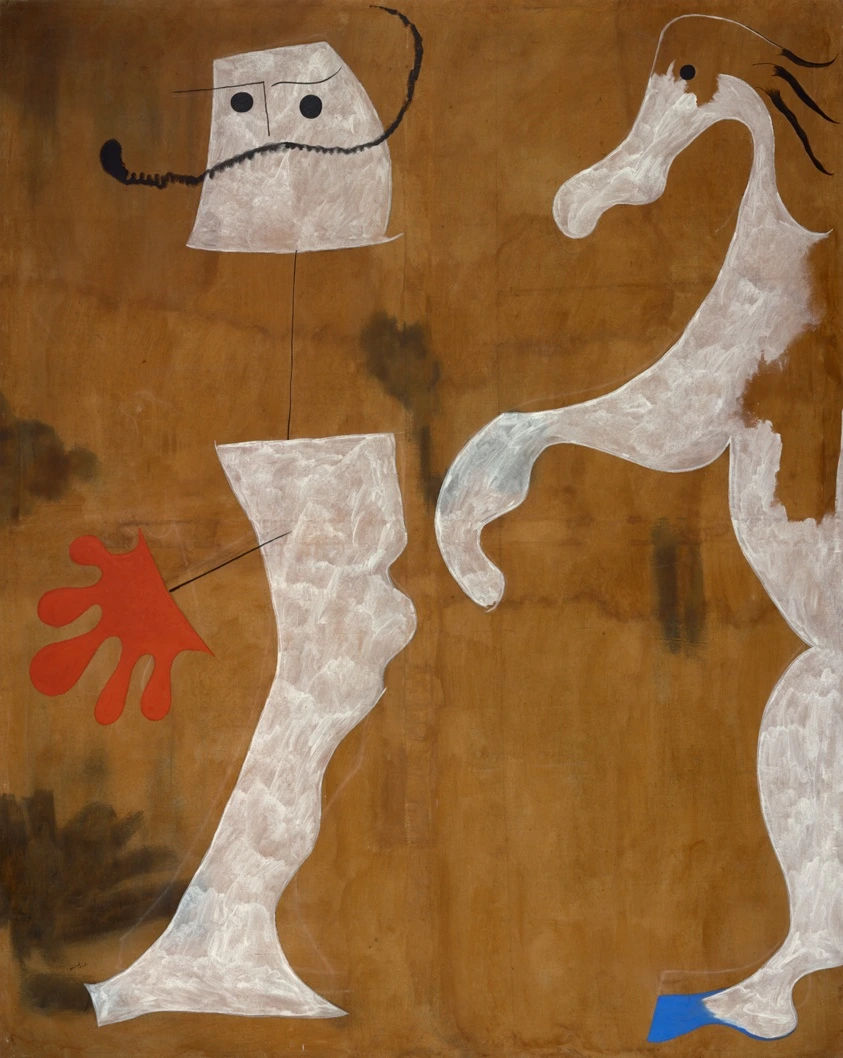
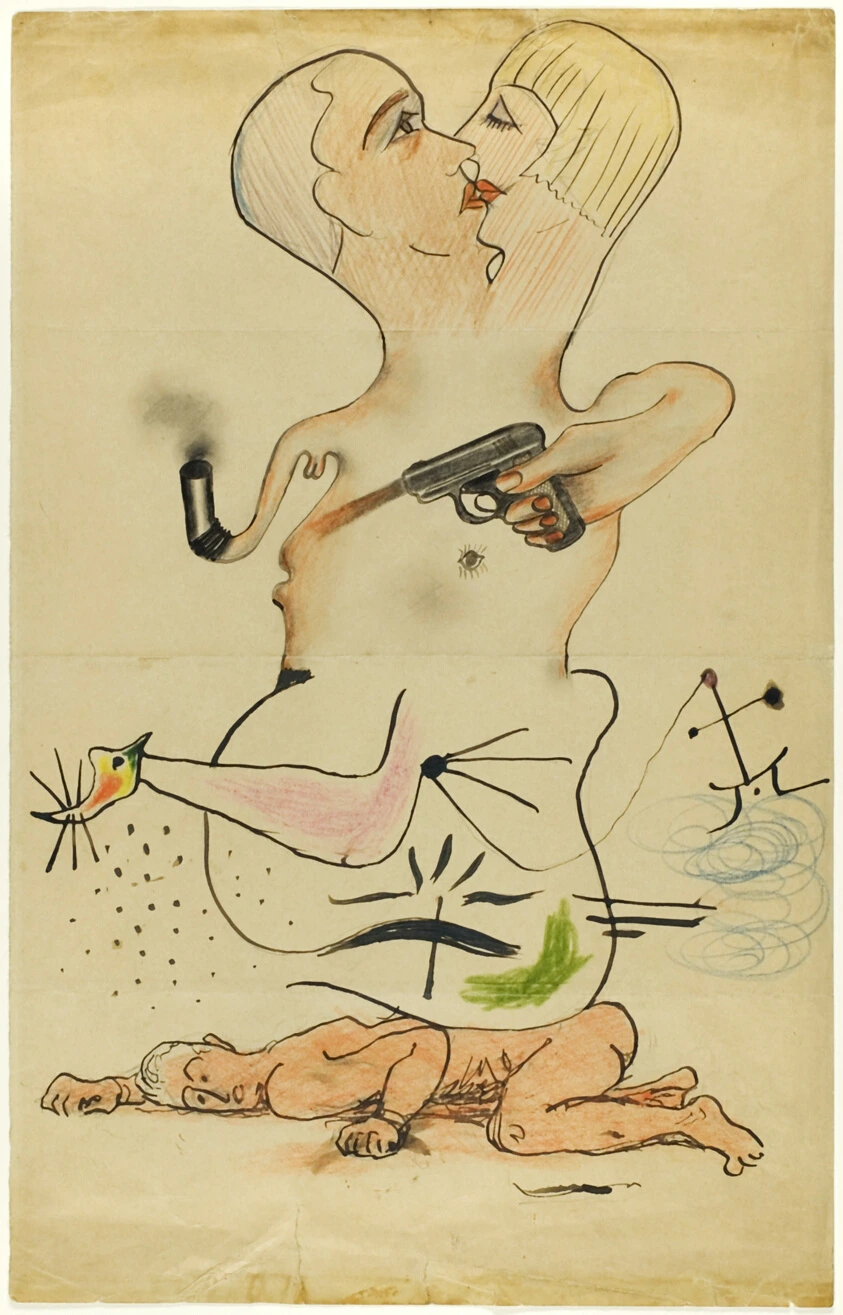
Joan Miro's Woman (October 1934) is a pastel, charcoal, and graphite drawing with smudging and scraping on tan wove paper, mounted along edges to a wood stretcher. This large-scale work on paper shows a female figure rendered in Miro's characteristic vocabulary of simplified forms and signs. The woman is transformed into a configuration of curves, lines, and shapes that suggest rather than describe the female body. The pastel adds rich, vibrant color, while the charcoal and graphite provide linear definition and structure. The smudging and scraping create varied textures that enrich the surface. The tan wove paper provides a warm ground. Miro's depictions of the female figure were central to his art, and he treated the subject with a combination of erotic energy and formal invention. This Woman from 1934 belongs to the period of Miro's fullest engagement with Surrealism, when his work was at its most freely inventive.
Cultural Impact
Miro's depictions of the female figure were a central theme throughout his career, ranging from the poetic to the erotic, always rendered with his characteristic formal invention.
Why It Matters
This large pastel and charcoal drawing transforms the female figure into a configuration of abstract forms and vibrant colors, Miro's characteristic vocabulary creating a vision of woman that is both primitive and modern.