Provenance
Galerie Simon (Daniel-Henry Kahnweiler), Paris, 1931 to 1938 [no. 01164, photo no. 16024]. Karl Nierendorf, New York, by 1942 [New York 1942 exh. cat.]. Henry Kleemann, New York. Sold, Elizabeth Chapman, Chicago [according to a letter from Mrs. Chapman in curatorial file]. Given by her to the Art Institute, 1948.
Accession Number
63990
Medium
Oil on plaster
Dimensions
20.3 × 32.4 cm (8 × 12 3/4 in.)
Classification
Painting
Credit Line
Gift of Mrs. Gilbert W. Chapman
Background & Context
Background Story
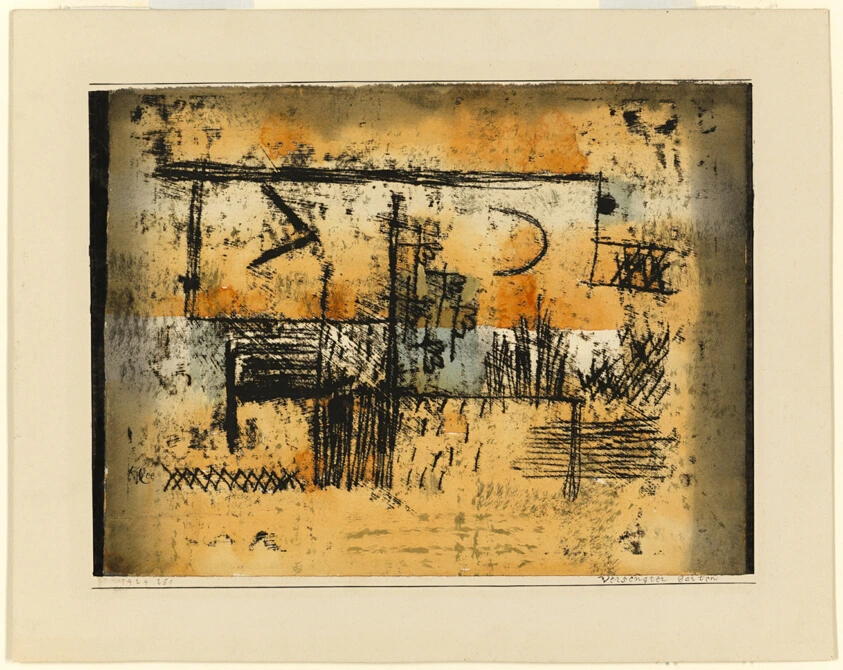
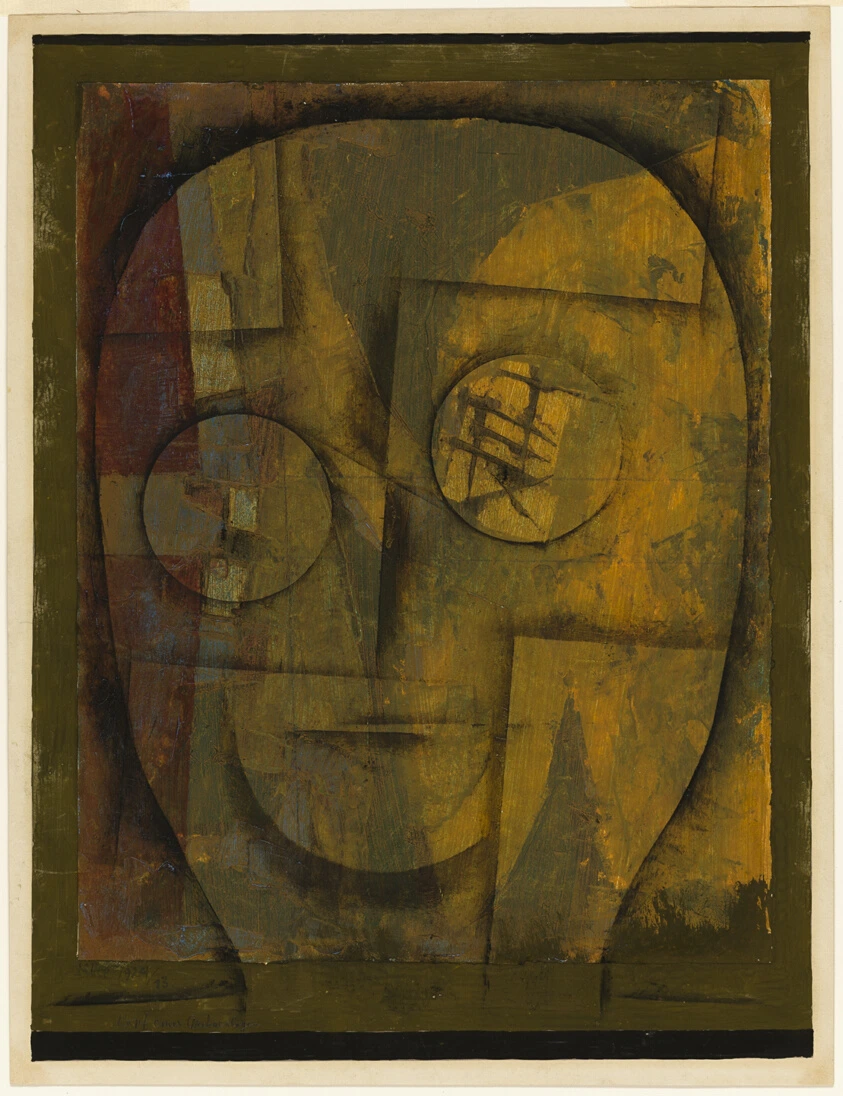
"Stakim" is a 1928 oil painting on plaster that belongs to Paul Klee's Bauhaus period, when he was exploring the possibilities of painting on unusual supports and combining the precision of his draftsmanship with the material experimentation that the Bauhaus encouraged. The title is a nonsense word—typical of Klee's playful approach to language—but the painting itself is serious, an exploration of geometric and organic forms arranged in a composition that suggests both architectural structure and natural growth. The plaster support is significant: unlike canvas, which absorbs oil paint and creates a matte, unified surface, plaster is non-absorbent and allows the paint to sit on the surface with a slight gloss, creating a harder, more enamel-like finish that Klee exploited for its jewel-like quality. The palette is characteristic of the late 1920s: muted earth tones combined with touches of brighter color that function as accents rather than dominant elements. The forms themselves are Klee's signature vocabulary of signs and symbols: arrows, circles, and calligraphic marks that suggest movement, growth, and the passage of time without fixing these concepts into literal representation. Art historians have connected this work to the broader Bauhaus interest in the unity of art and craft, particularly the workshops that explored textiles, ceramics, and metalwork as vehicles for modern design. Klee's painting on plaster participates in this interdisciplinary spirit while maintaining the personal, almost private quality that distinguished his work from the more systematic aesthetic of his Bauhaus colleagues. The work also reflects Klee's engagement with the art of children and the mentally ill, sources he valued for their freedom from academic convention and their directness of expression.
Cultural Impact
This 1928 Bauhaus oil on plaster combined geometric-architectural structure with playful nonsense language, using enamel-like jewel finish to bridge craft workshop experimentation with personal sign vocabulary.
Why It Matters
It matters because Klee painted on plaster and made it look like a jewel—proving that even a wall could hold a secret if the colors were quiet enough.