Provenance
Pierre Matisse Gallery, New York, 1936 [Cahiers d’art, 1936]. Mary and Leigh Block, Chicago. Gift to the Art Institute, 1994.
Accession Number
129854
Medium
Oil on copper
Dimensions
26 × 34.9 cm (10 1/4 × 13 3/4 in.)
Classification
Painting
Credit Line
Gift of Mary and Leigh Block
Background & Context
Background Story
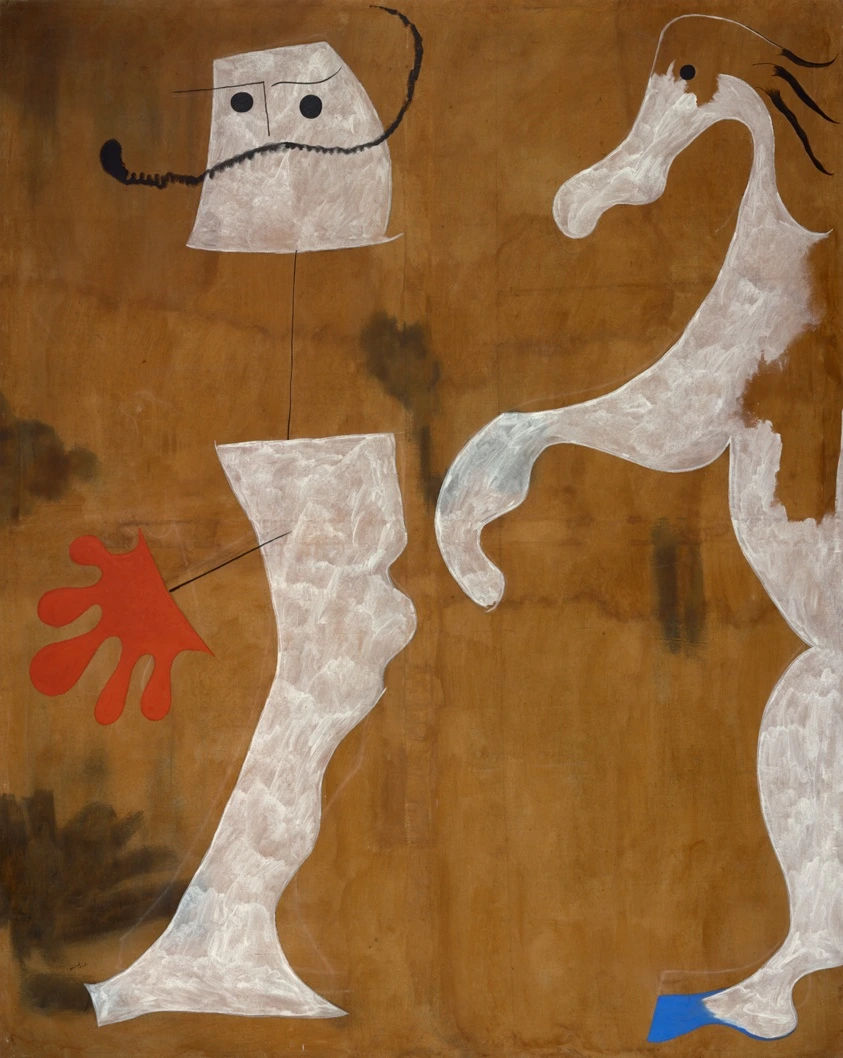
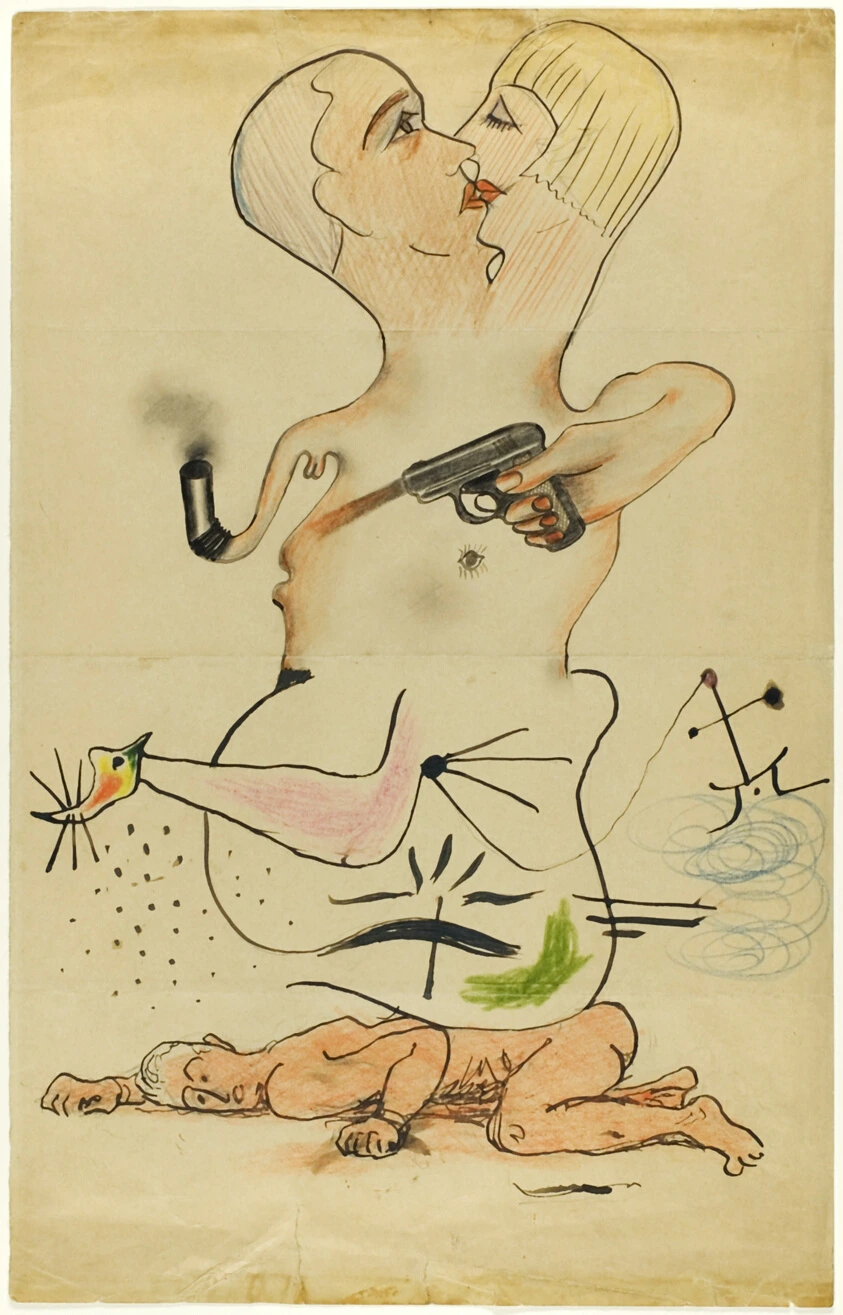
"Two Personages in Love with a Woman" is a 1936 oil on copper by Joan Miró that captures the Spanish Surrealist in his most erotically charged and poetically enigmatic mode, the image showing two abstract figures and a female form rendered with the same biomorphic vocabulary and playful color that characterized his most famous compositions. The composition is a small painting—26 × 34.9 centimeters—showing three figures in a landscape of sexual suggestion and emotional complexity, the forms suggesting both the physical reality of desire and the dreamlike transformations of the unconscious mind. The oil on copper creates a surface of extraordinary luminosity and smoothness, the metal support enhancing the jewel-like quality of the colors and the precision of the biomorphic forms. The April 29–May 9, 1936 date places this work in the same crucial period as "The Two Philosophers," suggesting that Miró was exploring themes of love, desire, and human relationship with the same intensity and ambiguity that characterized his political and philosophical works. Art historians have compared this painting to the erotic drawings of Picasso and the love poems of the Surrealist writers, noting that Miró's treatment is more focused on the visual metaphor and the poetic suggestion, the transformation of sexual desire into abstract form, than the explicit content or the narrative development of these other traditions.
Cultural Impact
This April–May 1936 oil-on-copper made desire poetically enigmatic through small 26cm biomorphic erotic suggestion and jewel-like copper luminosity, using same Spanish pre-war intensity to transform sexual love into abstract visual metaphor beyond Picasso explicit erotic drawing.
Why It Matters
It matters because Miró painted two people loving a woman and made the copper feel like it was blushing with secrets—proving that even love could be a shape if the Surrealism was honest enough.