Accession Number
29024
Medium
Fabricated black chalk, with frottage on cream laid paper
Dimensions
42.7 × 31.2 cm (16 13/16 × 12 5/16 in.)
Classification
charcoal
Credit Line
Worcester Sketch Fund
Background & Context
Background Story
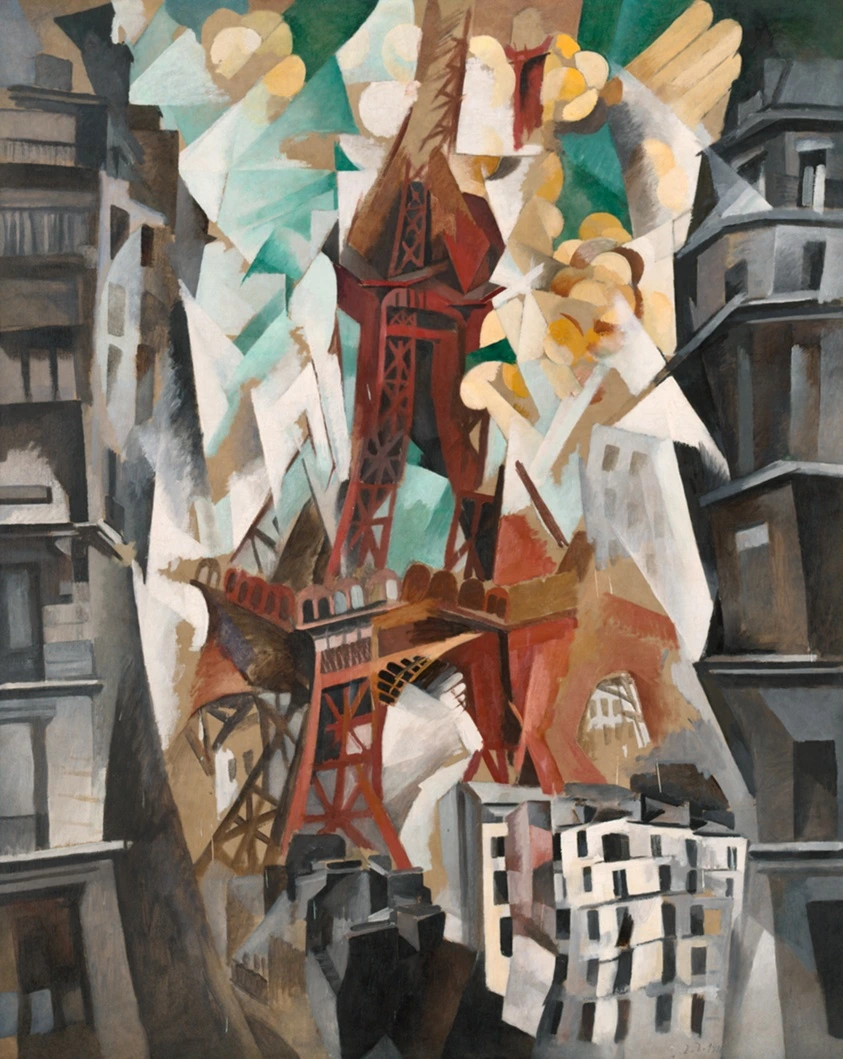
Robert Delaunays Saint-Severin from 1909 is a fabricated black chalk drawing with frottage on cream laid paper that depicts the interior of the Gothic church of Saint-Severin in Paris, a subject that occupied Delaunay at the beginning of his career and that provided the foundation for the chromatic approach to painting that he would later develop under the name of Simultanism. Saint-Severin, with its soaring Gothic arches and the dynamic perspective of its ambulatory, provided Delaunay with a subject that combined architectural structure with the dynamic movement of light through space, a combination that would become the foundation of his approach to painting as a simultaneity of color experience rather than a representation of objects in space. The fabricated black chalk, with its capacity for broad tonal areas and sharp Linear definition, allows Delaunay to create the contrast between the dark stone of the Gothic arches and the light that streams through the stained glass windows, a contrast that he would later translate into the color oppositions of his Simultanist paintings. The frottage technique, in which the chalk is rubbed over the paper to create a textured surface that suggests the material quality of the stone, adds a physical dimension to the drawing that connects it to the tradition of architectural rendering while simultaneously pointing toward the material experiments of the later 20th century. The year 1909 places this drawing in the period when Delaunay was transitioning from the Impressionist-influenced landscapes of his early work to the dynamic compositions that would lead to his first Simultanist paintings.
Cultural Impact
Delaunays Saint-Severin drawings are important documents for understanding the development of his Simultanist approach to color, and they influenced the development of Cubism and Orphism by demonstrating that architectural subjects could be vehicles for chromatic experimentation. The frottage technique influenced the later development of automatic drawing.
Why It Matters
A 1909 black chalk drawing with frottage by Delaunay of the interior of Saint-Severin in Paris, using the Gothic architecture as a foundation for the dynamic contrast of light and structure that would become the chromatic simultaneity of his Simultanist paintings.