Provenance
Galerie Leiris, Paris. Sold to Berggruen & Cie., Paris, by June 24, 1954; sold to Richard Zeisler, New York, June 24, 1954 [receipt in curatorial file].
Accession Number
185763
Medium
Oil and watercolor on cardboard
Dimensions
43.1 × 72.4 cm (17 × 28 1/2 in.)
Classification
Painting
Credit Line
Bequest of Richard S. Zeisler
Background & Context
Background Story
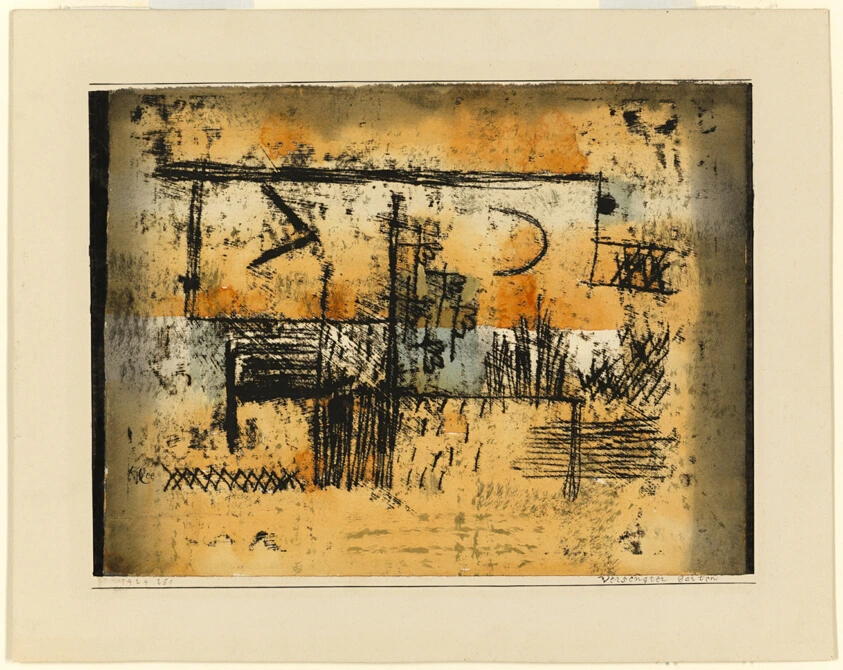
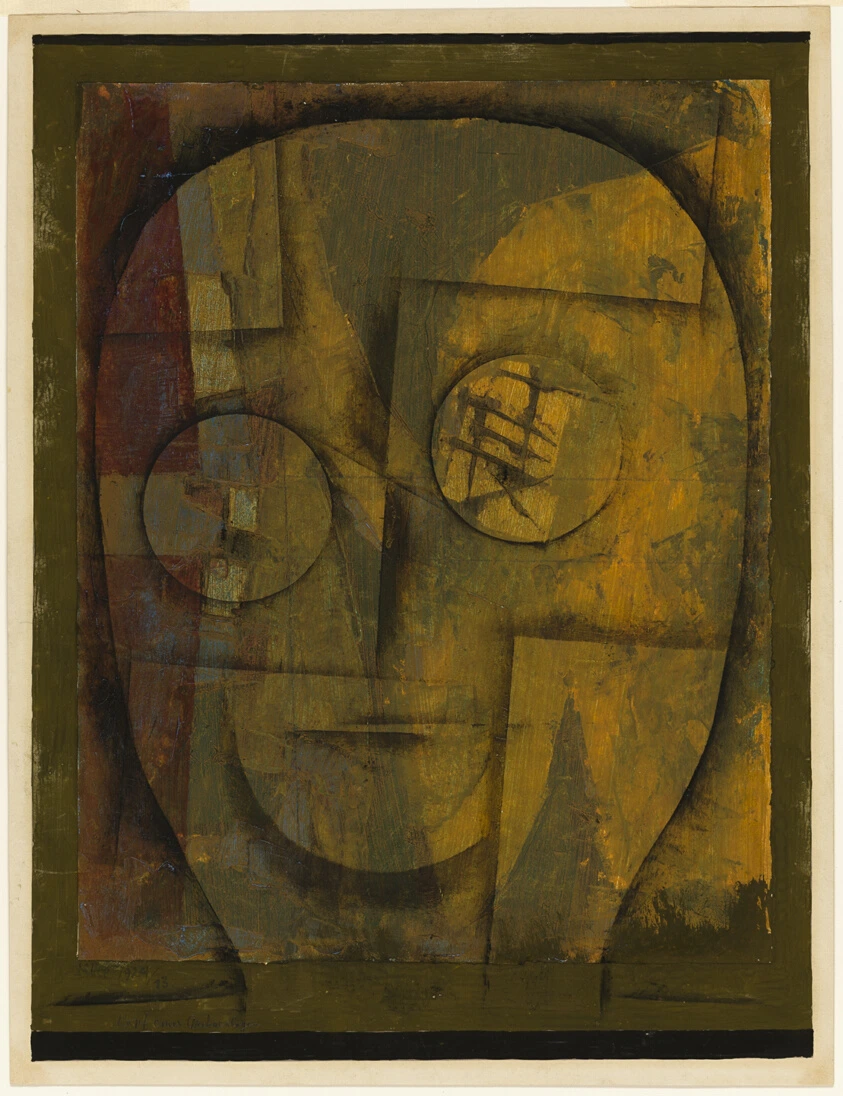
Paul Klees Still Life with Fragments from 1925 is an oil and watercolor on cardboard that exemplifies the artists approach to still life as a vehicle for exploring the relationship between the visible world and the abstract principles of construction that underlie it. Klee, who was teaching at the Bauhaus during the 1920s and developing the theory of pictorial construction that would become his pedagogical legacy, treated the still life not as a depiction of objects in space but as an arrangement of pictorial elements that can be analyzed, deconstructed, and reassembled according to the principles of balance, rhythm, and proportion. The fragments of the title, which suggest both the broken remnants of objects and the geometric elements from which a composition is built, allow Klee to combine recognizable still life motifs with abstract geometric forms in a way that refuses the distinction between representation and abstraction. The oil and watercolor medium on cardboard provides the combination of opacity and transparency that Klee exploited throughout his career, with the oil providing the chromatic density of the abstract passages and the watercolor providing the luminous transparency of the representational elements. The year 1925 places this painting in the period of Klees most productive engagement with the Bauhaus, when he was simultaneously producing paintings that demonstrated his theoretical principles and teaching courses that articulated those principles in a systematic form.
Cultural Impact
Klees still lifes of the 1920s are significant contributions to the history of modern painting, demonstrating that the still life could be a vehicle for exploring abstract principles of construction. Still Life with Fragments influenced the development of Constructivist painting and the broader tradition of analytical abstraction.
Why It Matters
A 1925 oil and watercolor on cardboard by Klee treating still life as an arrangement of pictorial fragments that combine recognizable motifs with abstract geometric forms, refusing the distinction between representation and abstraction in the Bauhaus period of his theoretical practice.