Description
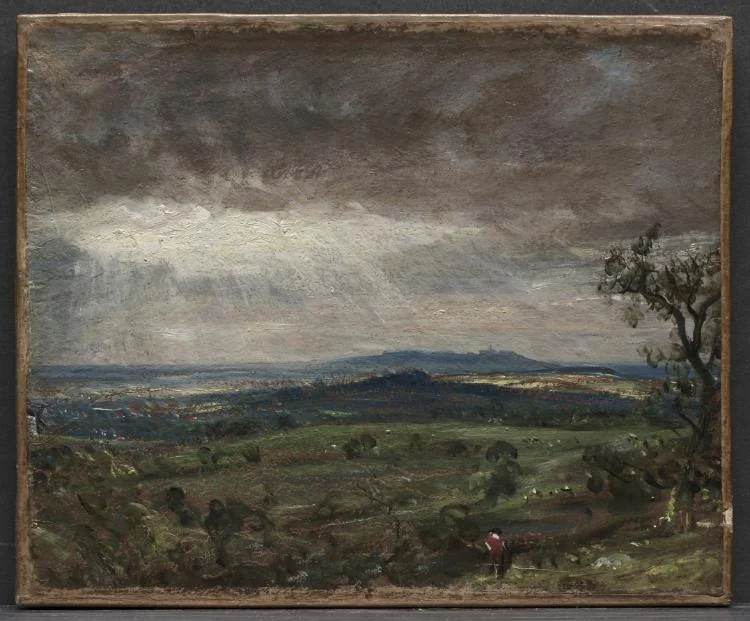
Constable was interested in the changing light effects of weather and often worked outdoors, making swift oil sketches on paper. He focused on painting the countryside of his native England, which he never left. He wrote to a fellow artist that he would “rather be a poor man [in England] than a rich man abroad.”
Provenance
Isabel Constable, the artist's daughter; [1822-1888], London, United Kingdom; Tooth and Sons (London, England), purchased by J. H. Wade, 1895. (1895); Mr. and Mrs. Jeptha H. Wade, by gift to the Cleveland Museum of Art, 1916. (1895-1916); The Cleveland Museum of Art, Cleveland, OH (1916-)
Accession Number
1916.1027
Medium
oil on paper, mounted on canvas
Dimensions
Framed: 39 x 44.5 x 5 cm (15 3/8 x 17 1/2 x 1 15/16 in.); Unframed: 25.9 x 31.3 cm (10 3/16 x 12 5/16 in.)
Classification
Painting
Credit Line
Gift of Mr. and Mrs. J. H. Wade
Tags
Painting Neoclassical & Romantic (1751–1850) Oil Painting Canvas British Color: Brown
Background & Context
Background Story
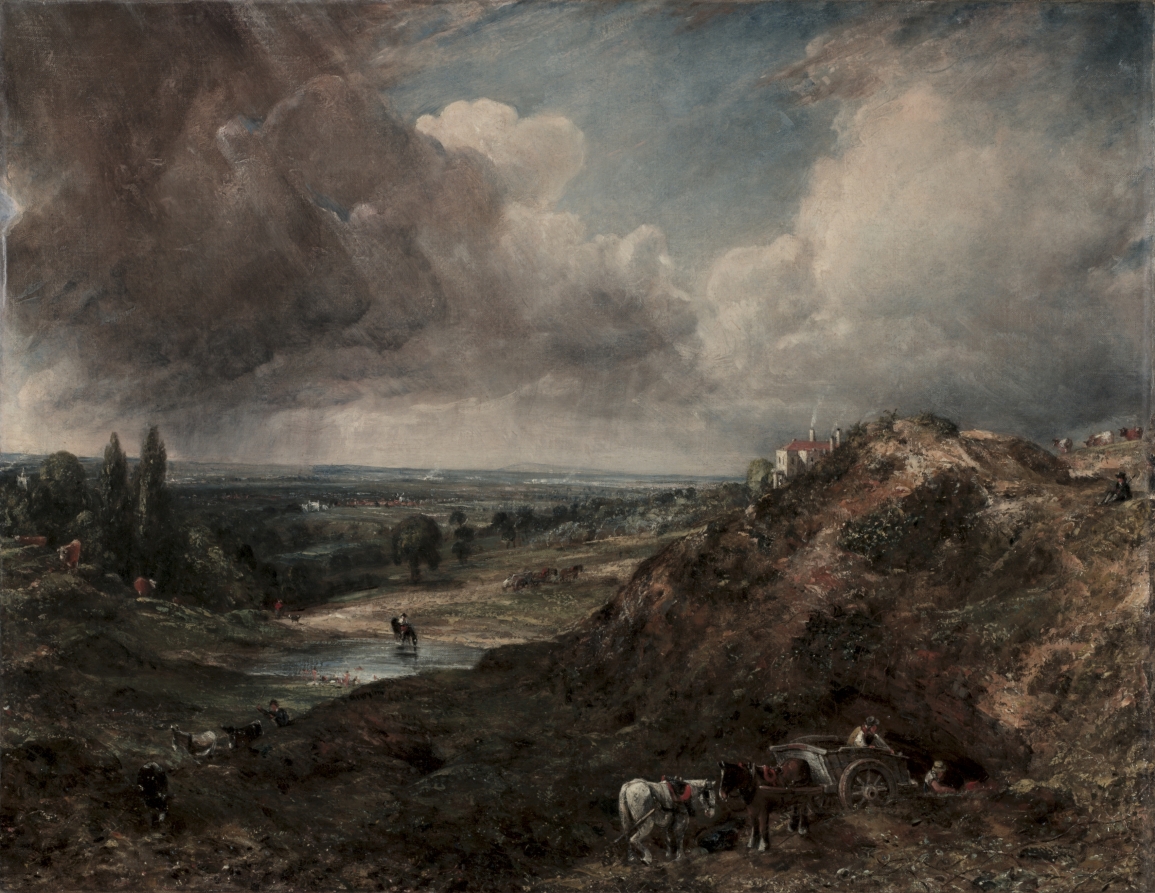
Between 1819 and 1826, Constable rented a house in Hampstead, and the Heath became his outdoor studio for cloud studies and landscape sketches. This view looking toward Harrow on the Hill demonstrates why the Heath was so productive for him: the elevated position, the expanse of open sky, and the patchwork of fields and woodland below offered endless variations of light and weather. The composition is modest — no dramatic gorge or ruined abbey — just London's great common under a magnificent cloud formation.
Cultural Impact
Constable's Hampstead paintings mark a turning point in landscape art. By treating the Heath — a suburban common, not a scenic wilderness — as worthy of serious artistic attention, he democratized landscape subject matter. The sky studies he made here, painted with meteorological precision, remain among the most accurate cloud paintings in Western art and influenced cloud classification science itself.
Why It Matters
This painting is Constable at his most modern: an unassuming subject rendered with full emotional and technical commitment. The Hampstead period proves that great art depends on how you see, not what you see.