Accession Number
1940.550
Medium
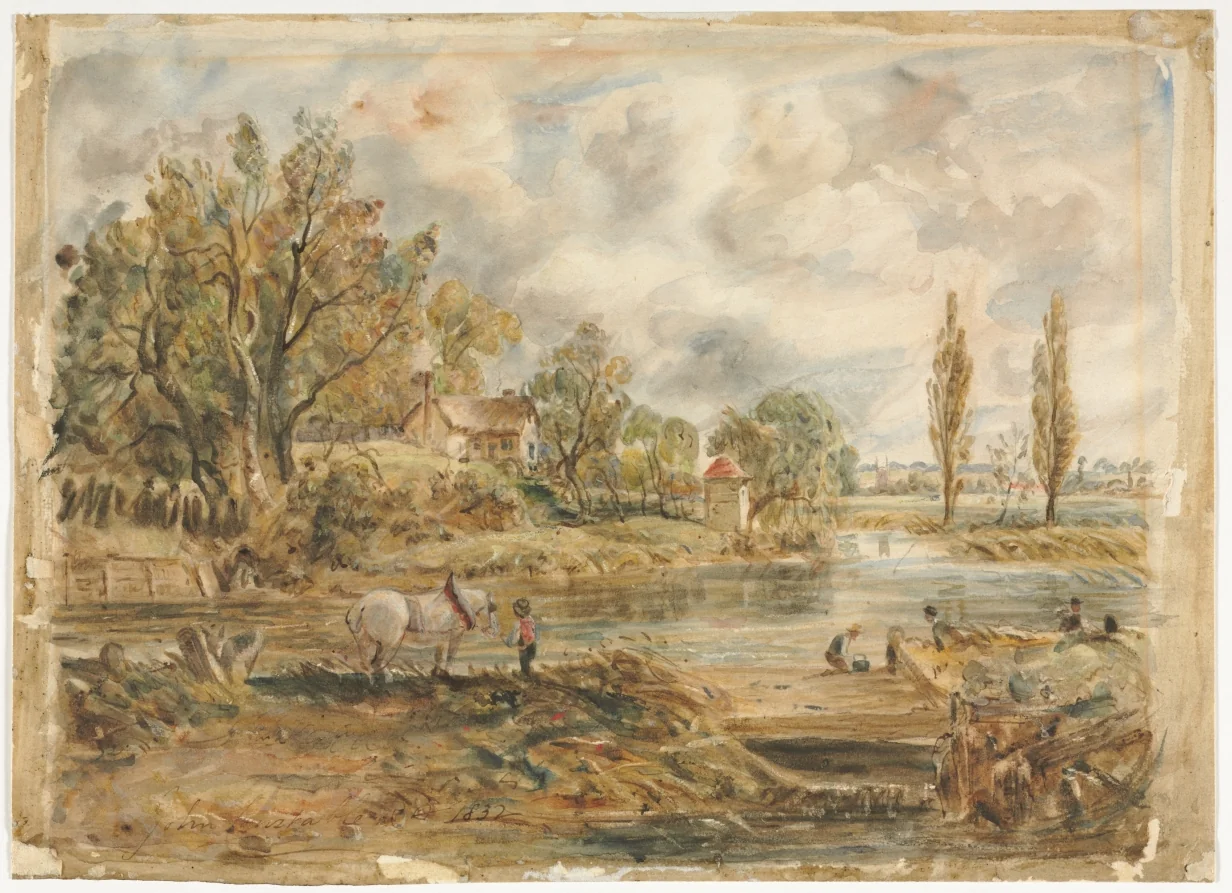
watercolor
Dimensions
Sheet: 36.9 x 43.2 cm (14 1/2 x 17 in.)
Classification
Drawing
Credit Line
Bequest of James Parmelee
Tags
Color: Brown Color: Gray
Background & Context
Background Story
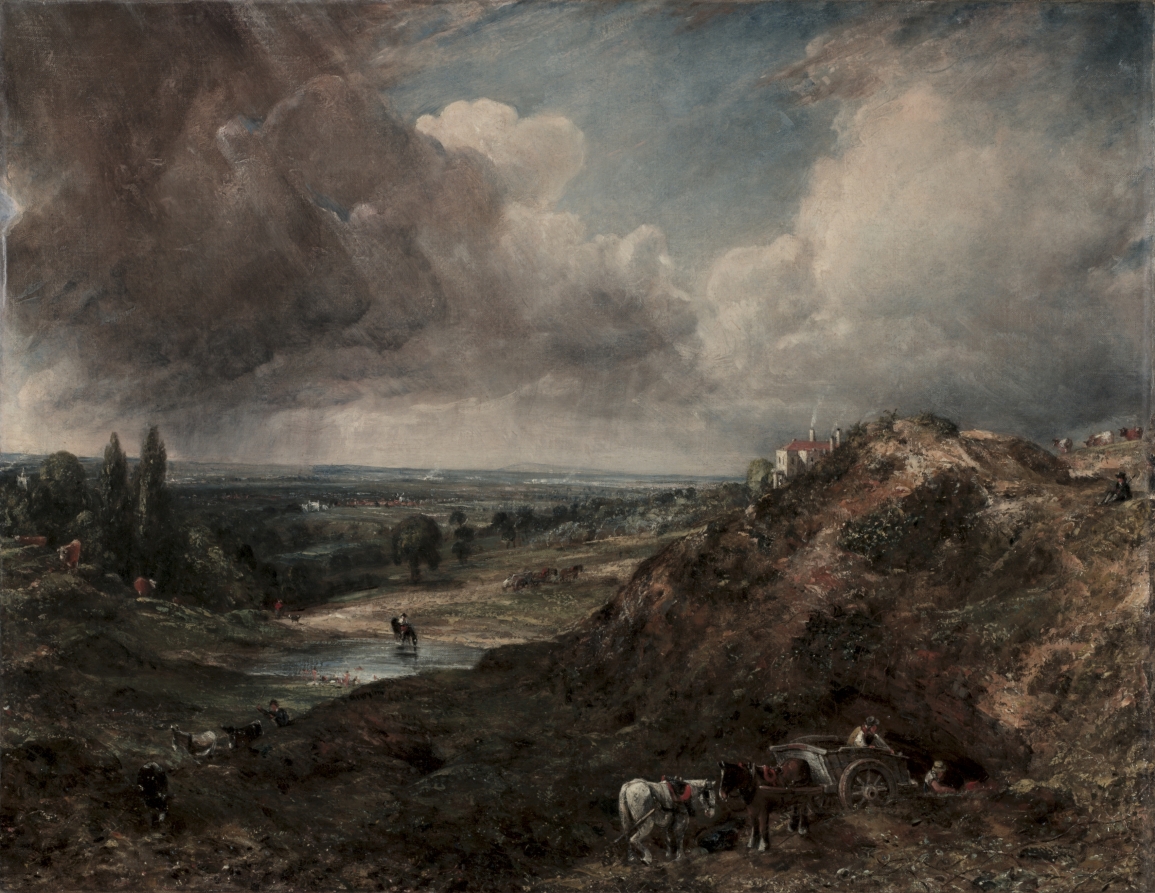
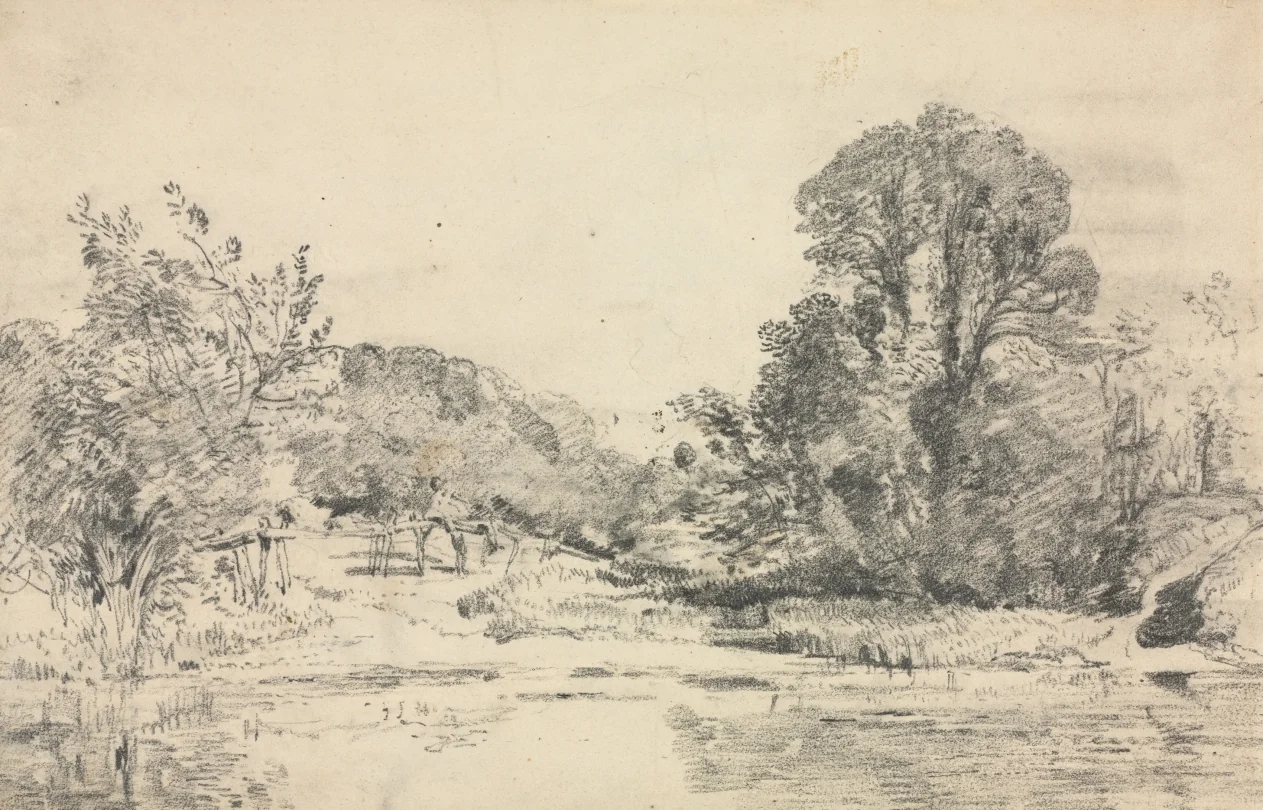
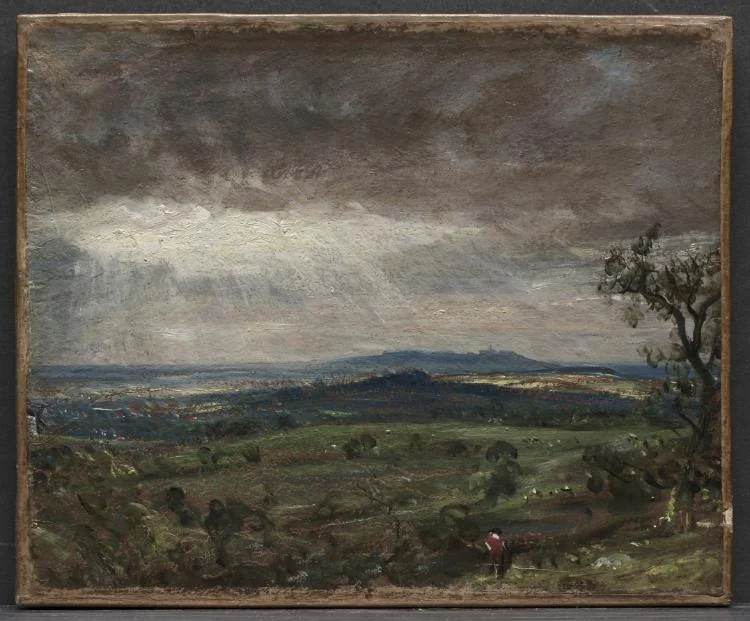
John Constable's "Hampstead Heath" (1800s) is a watercolor drawing that captures one of the English artist's favorite subjects: the open, windswept landscape of Hampstead Heath, north of London. Constable (1776–1837) and his family lived in Hampstead from 1821, and the heath became a constant source of inspiration. Unlike his famous "six-footers"—the monumental landscape canvases that he exhibited at the Royal Academy—this watercolor is an intimate, spontaneous work, likely painted on the spot. Constable's watercolor technique is remarkably fresh: broad washes of color suggest the rolling terrain and expansive sky, while smaller touches define trees, paths, and distant buildings. The sky dominates the composition, as it often does in Constable's work—he was a passionate student of meteorology, making detailed notes of cloud formations and weather conditions. Hampstead Heath offered Constable something that his native Stour Valley could not: proximity to London's art world alongside the open countryside he needed for his practice. This watercolor belongs to the tradition of the British landscape watercolor, a medium in which artists like Thomas Girtin and J.M.W. Turner had achieved extraordinary results, and Constable was a worthy practitioner.
Cultural Impact
Constable's watercolors of Hampstead Heath document the landscape of an area that was rapidly being absorbed into London's urban expansion, preserving a pastoral vision of a place that would soon become a suburb.
Why It Matters
This watercolor captures the particular atmosphere of Hampstead Heath—the sense of wide skies, fresh air, and open space just minutes from London—that made it Constable's beloved retreat and a subject that freed his most spontaneous watercolor technique.