Provenance
(Marie Sterner Gallery, New York, NY) (?-1937); The Cleveland Museum of Art, Cleveland, OH (August 23, 1937)
Accession Number
1937.513
Medium
charcoal and graphite
Dimensions
Image: 58.4 x 48.7 cm (23 x 19 3/16 in.); Sheet: 60.7 x 49.5 cm (23 7/8 x 19 1/2 in.)
Classification
Drawing
Credit Line
Gift of Leonard C. Hanna Jr.
Tags
Color: Brown Color: White Color: Gray
Background & Context
Background Story
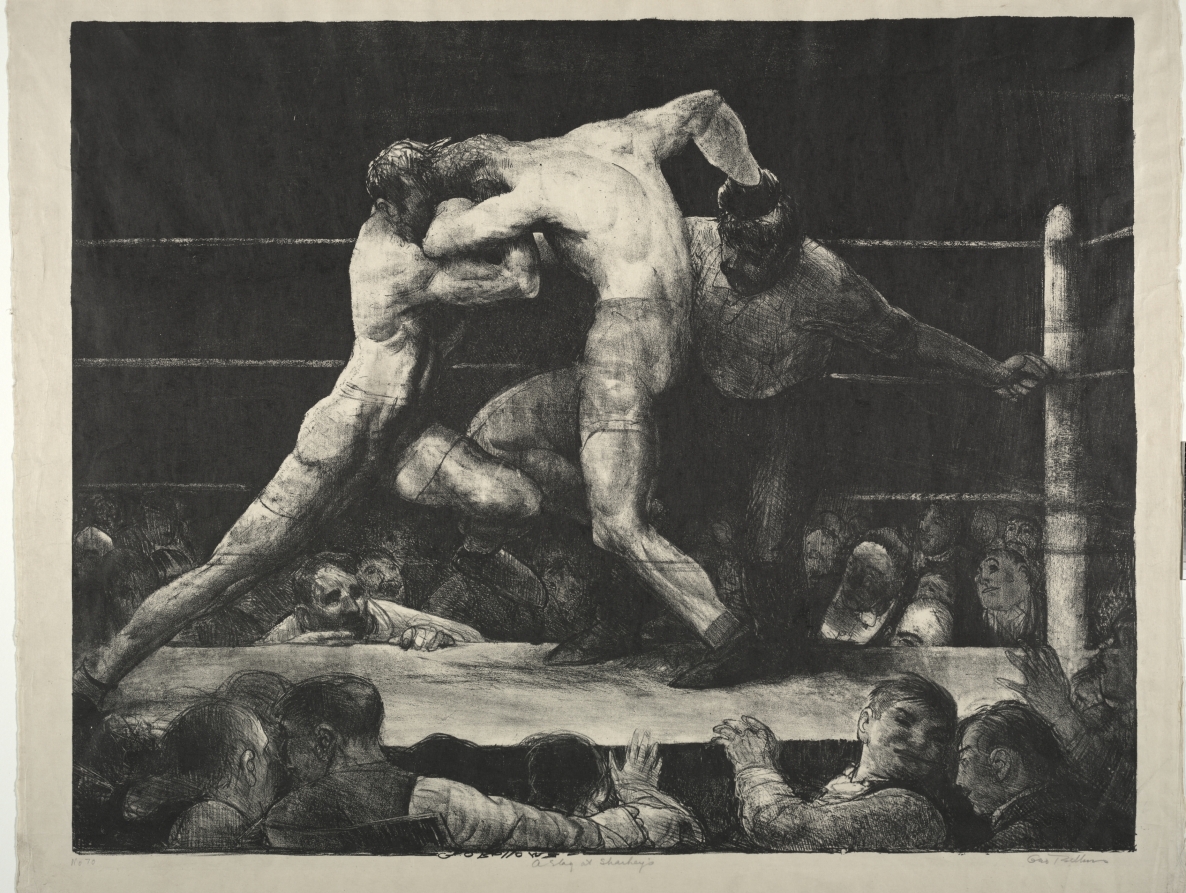
George Bellows's "The Eve of Victory" (1918) is a charcoal and graphite drawing created in the final months of World War I. The title suggests the anticipation of Allied victory, though the mood of the drawing is far from celebratory. Bellows was a passionate anti-war advocate—his famous series of paintings "The War Series" (1918) depicted the atrocities committed by German forces during the invasion of Belgium, based on official reports and testimony. This drawing may relate to that series, showing exhausted soldiers or civilians on the night before a hoped-for victory. Bellows's charcoal technique in this work is extraordinarily expressive: he uses heavy, rubbed blacks for shadow and atmosphere, then picks out faces and forms with sharper graphite lines. The sense of fatigue, apprehension, and hope is palpable. Bellows believed that the artist had a moral responsibility to engage with the great issues of the day, and his war drawings were his contribution to the public debate about American involvement in the conflict. "The Eve of Victory" captures the ambivalence of triumph—the knowledge that victory comes at an enormous human cost.
Cultural Impact
Bellows's war drawings represent one of the most powerful anti-war statements in American art, anticipating the social documentary tradition that would flourish during the Great Depression.
Why It Matters
In this drawing, Bellows captures the bitter ambivalence of wartime triumph—the mingled exhaustion, hope, and grief that precede even the most decisive victory, rendered with extraordinary emotional power.