Description
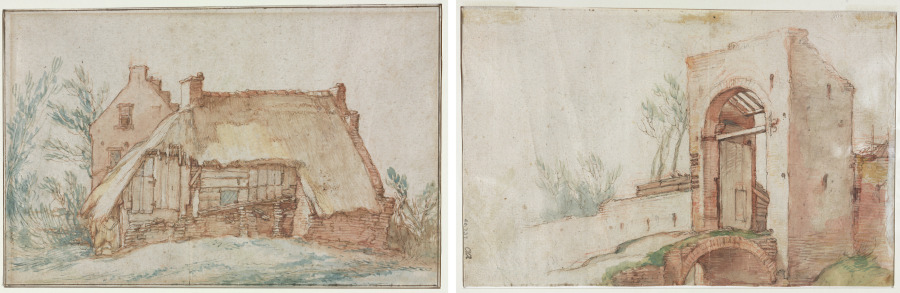
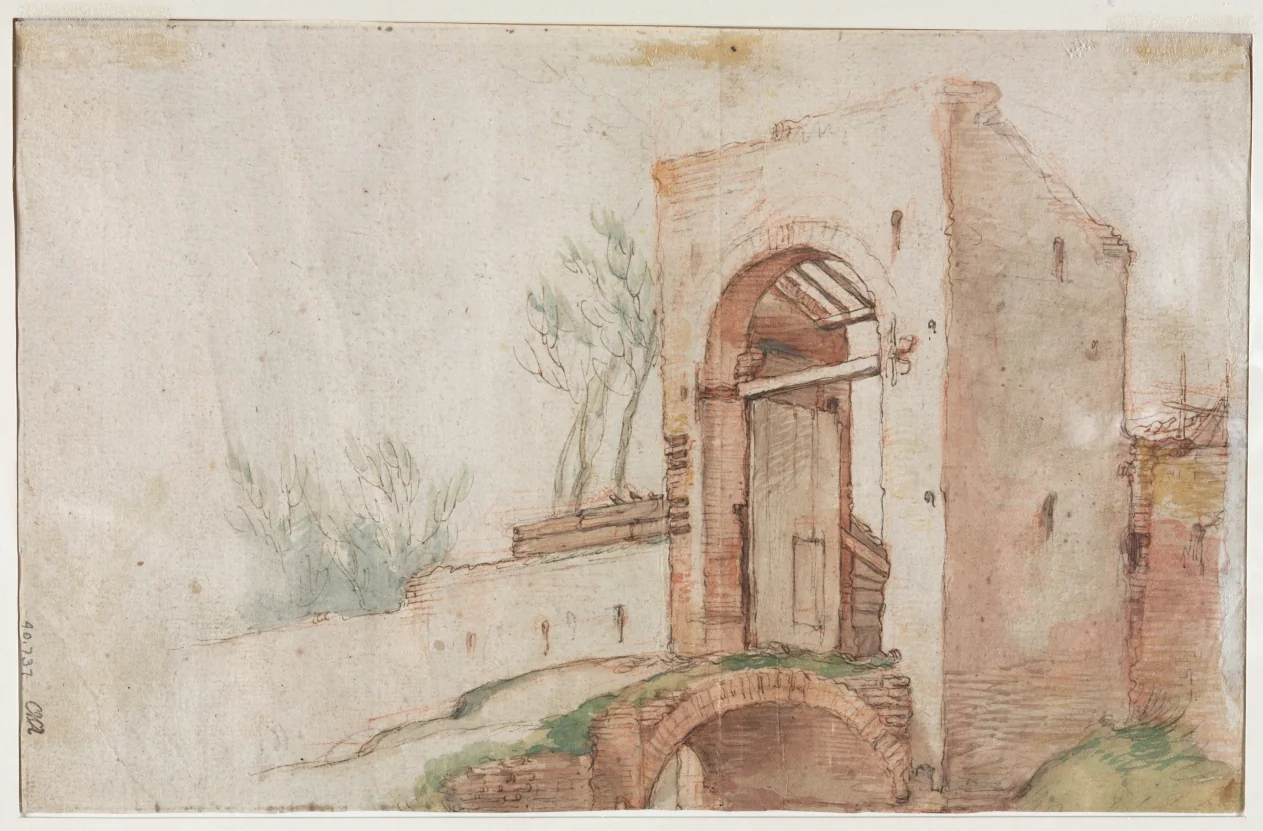
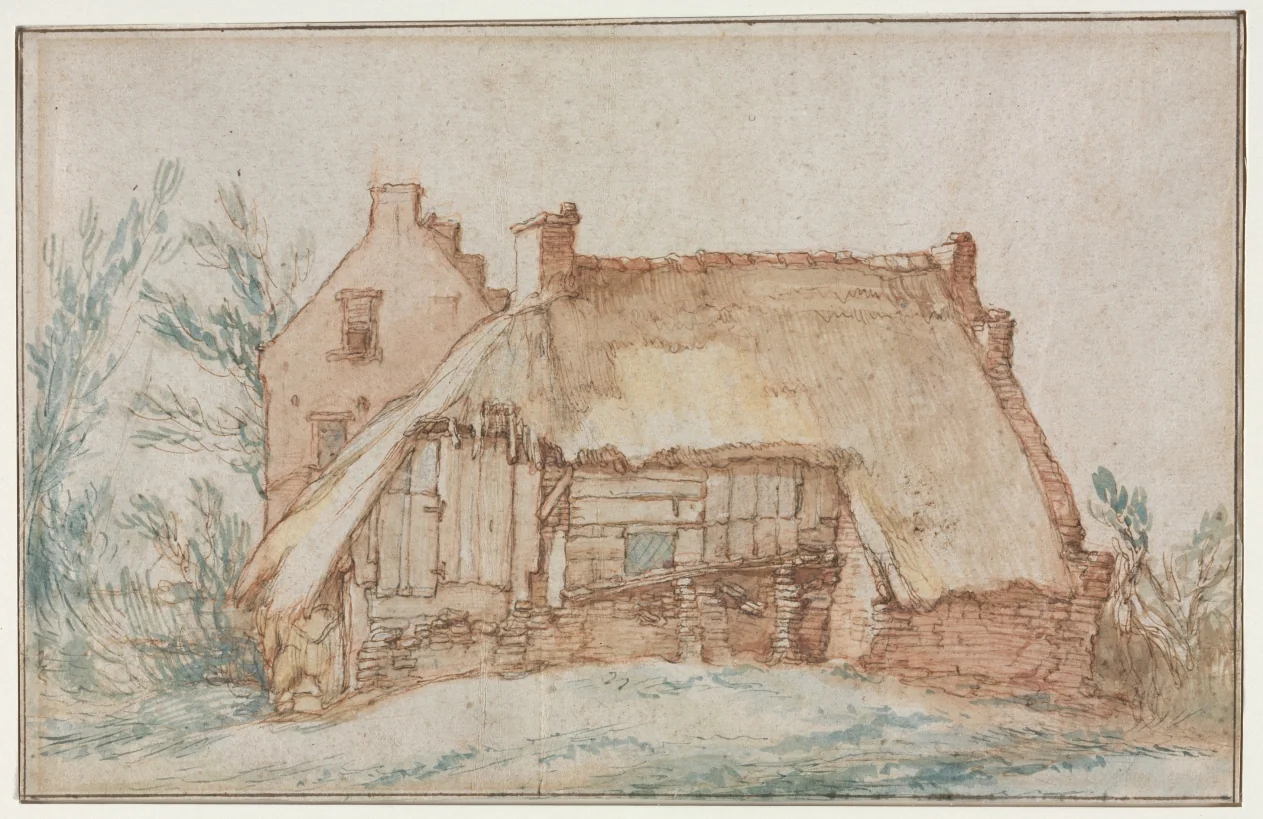
Abraham Bloemaert, active in Utrecht, was a painter, prolific draftsman, print designer, and important teacher. Bloemaert was an important precursor of the new wave of realism in Dutch art in the 1620s. Artist and author Karel van Mander (1548-1606) wrote the following description of Bloemaert=s drawings in 1604 which seems to correspond very closely to this work: With art lovers there are also by him very attractive landscapes with some attractive and funny farmhouses, farm tools, trees, and backgrounds, things to be seen around Utrecht in great numbers and variety, for he does very much from life, having a very attractive way of drawing and handling with the pen, to which he then adds some succulent touches of colors for a special seemliness.
Provenance
J. P. Haseltine; J. Parmelee, Cleveland; John Postle Heseltine, London (Lugt 1507-1508, not stamped; according to old label, now removed, in departmental file). [Arthur H. Hahlo & Co., New York (according to old label, now removed, in departmental file)]; James Parmelee, Cleveland (not in Lugt; according to departmental cataloguing sheet and card)
Accession Number
1940.737.a
Medium
pen and brown ink with brush and brown, blue, red and yellow wash, over black and red chalk
Dimensions
Sheet: 17.2 x 27.2 cm (6 3/4 x 10 11/16 in.)
Classification
Drawing
Credit Line
Bequest of James Parmelee
Tags
Drawing Baroque (1600–1750) Ink Dutch Color: White Color: Gray
Background & Context
Background Story
Abraham Bloemaert (1566-1651) was a pivotal figure in Dutch art, bridging the Mannerist tradition of the 16th century and the naturalism of the Dutch Golden Age. This drawing of a peasant's cottage, rendered in pen and ink with multi-colored washes over black and red chalk, exemplifies the transitional nature of his work: the technical sophistication of the Mannerist tradition (the colored washes, the complex layering of media) is applied to a subject — a humble peasant dwelling — that would become central to Dutch Golden Age art. The cottage is drawn with the attention to detail and atmospheric sensitivity that Bloemaert brought to all his subjects, regardless of their social status.
Cultural Impact
Bloemaert's peasant subjects are part of the broader Dutch tradition of genre painting that would flourish in the 17th century, but his treatment is distinguished by the same refinement that he applied to mythological and religious subjects. The peasant's cottage is not a subject for satire or condescension but a structure worthy of careful observation and skilled depiction — an attitude that anticipates the dignity of van Gogh's peasant cottages two and a half centuries later.
Why It Matters
Peasant's Cottage is Bloemaert applying Mannerist technique to a humble subject, and the result is a drawing that anticipates the dignity of Dutch genre painting. The cottage receives the same careful observation and refined technique that a palace would receive — this is democratic vision two centuries before democracy.