Description
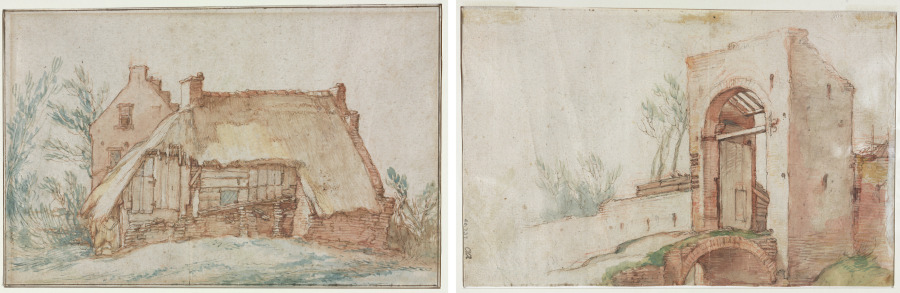
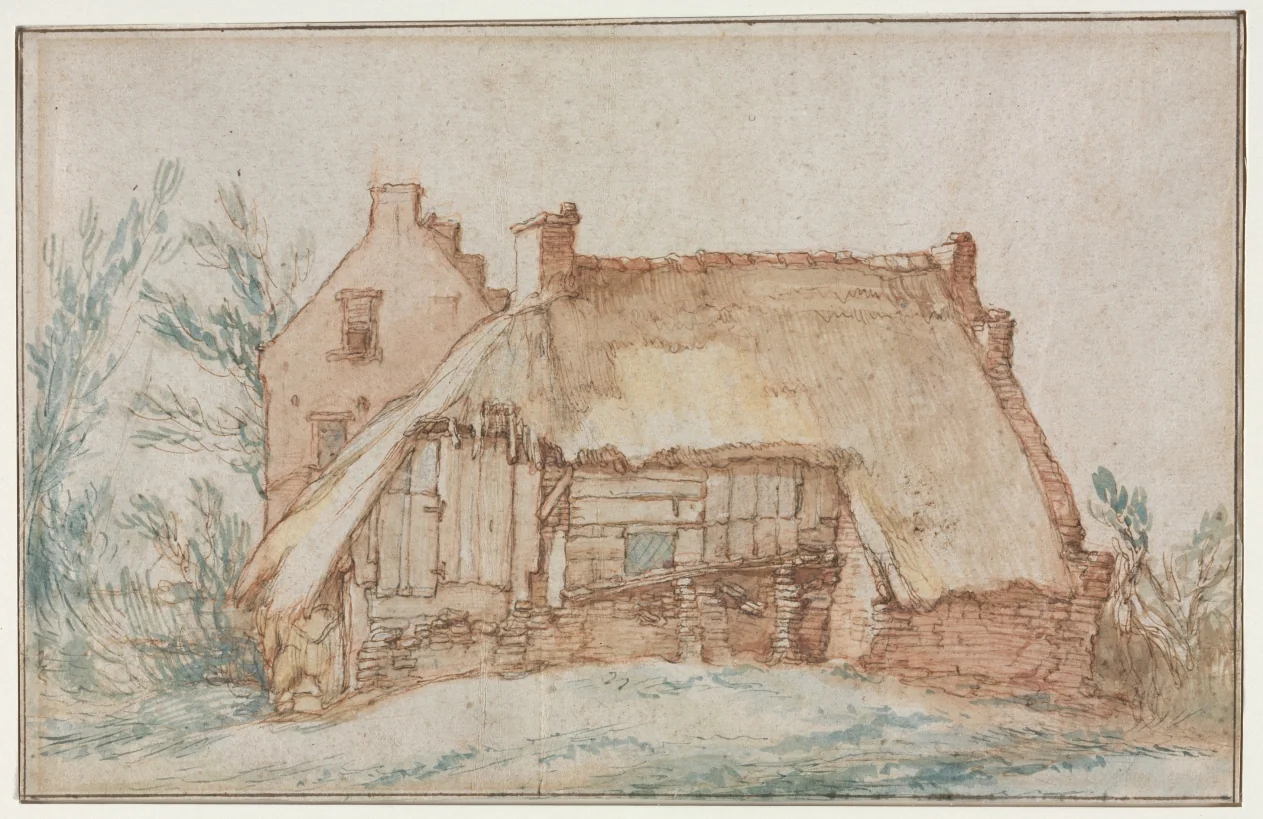
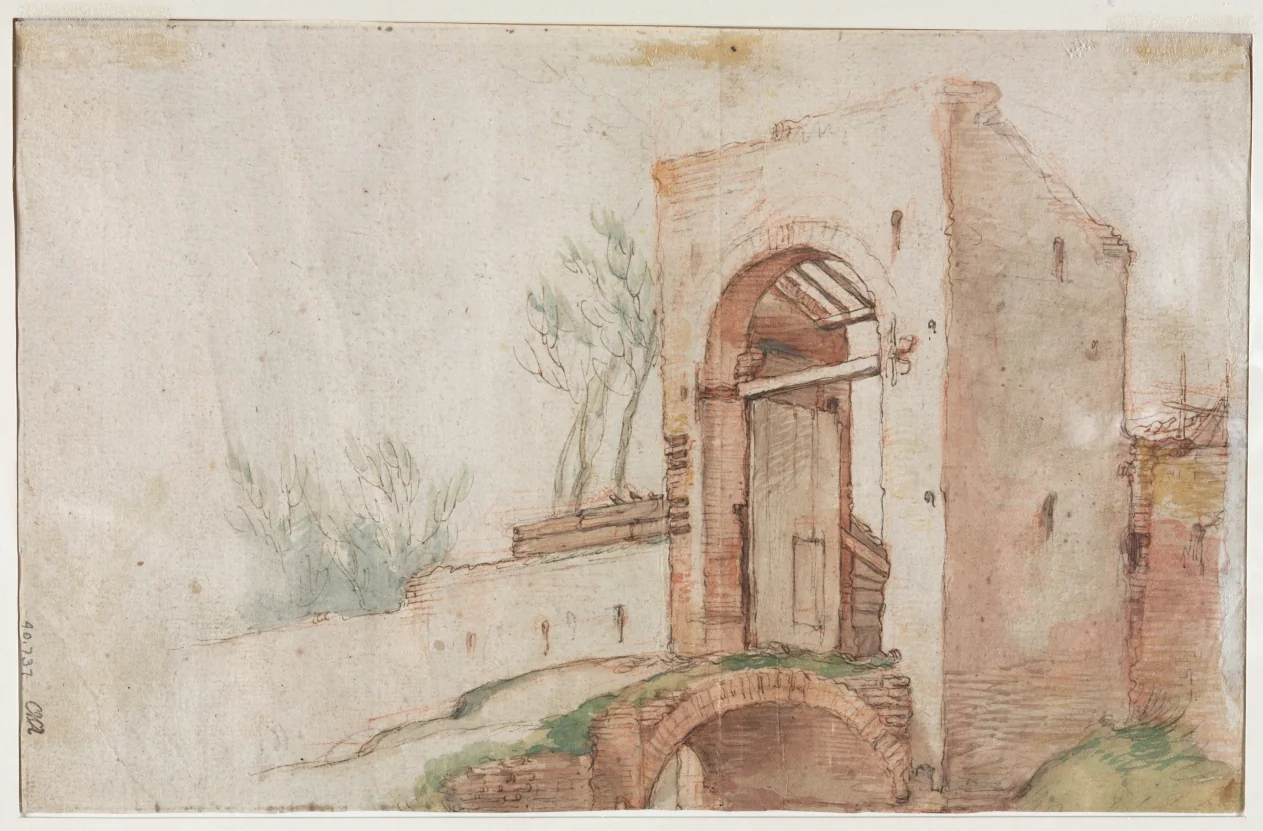
Abraham Bloemaert, active in Utrecht, was a painter, prolific draftsman, print designer, and important teacher. Bloemaert was an important precursor of the new wave of realism in Dutch art in the 1620s. Artist and author Karel van Mander (1548-1606) wrote the following description of Bloemaert=s drawings in 1604 which seems to correspond very closely to this work: With art lovers there are also by him very attractive landscapes with some attractive and funny farmhouses, farm tools, trees, and backgrounds, things to be seen around Utrecht in great numbers and variety, for he does very much from life, having a very attractive way of drawing and handling with the pen, to which he then adds some succulent touches of colors for a special seemliness.
Provenance
John Postle Heseltine, London (Lugt 1507-1508, not stamped; according to old label, now removed, in departmental file). [Arthur H. Hahlo & Co., New York (according to old label, now removed, in departmental file)]; James Parmelee, Cleveland (not in Lugt; according to departmental cataloguing sheet and card)
Accession Number
1940.737.b
Medium
pen and brown ink and brush and brown, red, green, yellow and blue wash, over red and black chalk
Dimensions
Sheet: 17.5 x 27.2 cm (6 7/8 x 10 11/16 in.)
Classification
Drawing
Credit Line
Bequest of James Parmelee
Tags
Drawing Baroque (1600–1750) Ink Dutch Color: White
Background & Context
Background Story
The verso of the Peasant's Cottage sheet contains a drawing of a bridge and gate — a different subject on the same piece of paper, suggesting that Bloemaert used both sides of his drawing sheets for different compositional ideas. The bridge and gate are architectural subjects that allow him to demonstrate his skill at perspective, structural drawing, and the use of colored washes to create atmospheric depth. The multi-colored washes (brown, red, green, yellow, and blue) create a richer color effect than is typical of Dutch landscape drawings of the period, reflecting Bloemaert's Mannerist training and his willingness to use color as a structural element.
Cultural Impact
The practice of drawing on both sides of a sheet was common in the 16th and 17th centuries, when paper was expensive and artists were economical with their materials. The bridge and gate subject on the verso of the peasant cottage sheet suggests that Bloemaert was working through a series of landscape and architectural ideas on the same piece of paper, moving from the vernacular architecture of the cottage to the more formal architecture of the bridge and gate.
Why It Matters
Bridge and Gate on the verso of the peasant cottage sheet reveals Bloemaert's working process: different subjects on front and back, each explored with the full range of his colored washes. The bridge and gate are the formal counterpart to the cottage's informality — two aspects of the built environment, explored on a single sheet of paper.