Accession Number
1946.66
Medium
pencil
Dimensions
Sheet: 33 x 52 cm (13 x 20 1/2 in.)
Classification
Drawing
Credit Line
Gift of E. R. Brumley
Tags
Drawing Impressionist & Modern (1851–1900) Graphite & Pencil American Color: White Color: Gray
Background & Context
Background Story
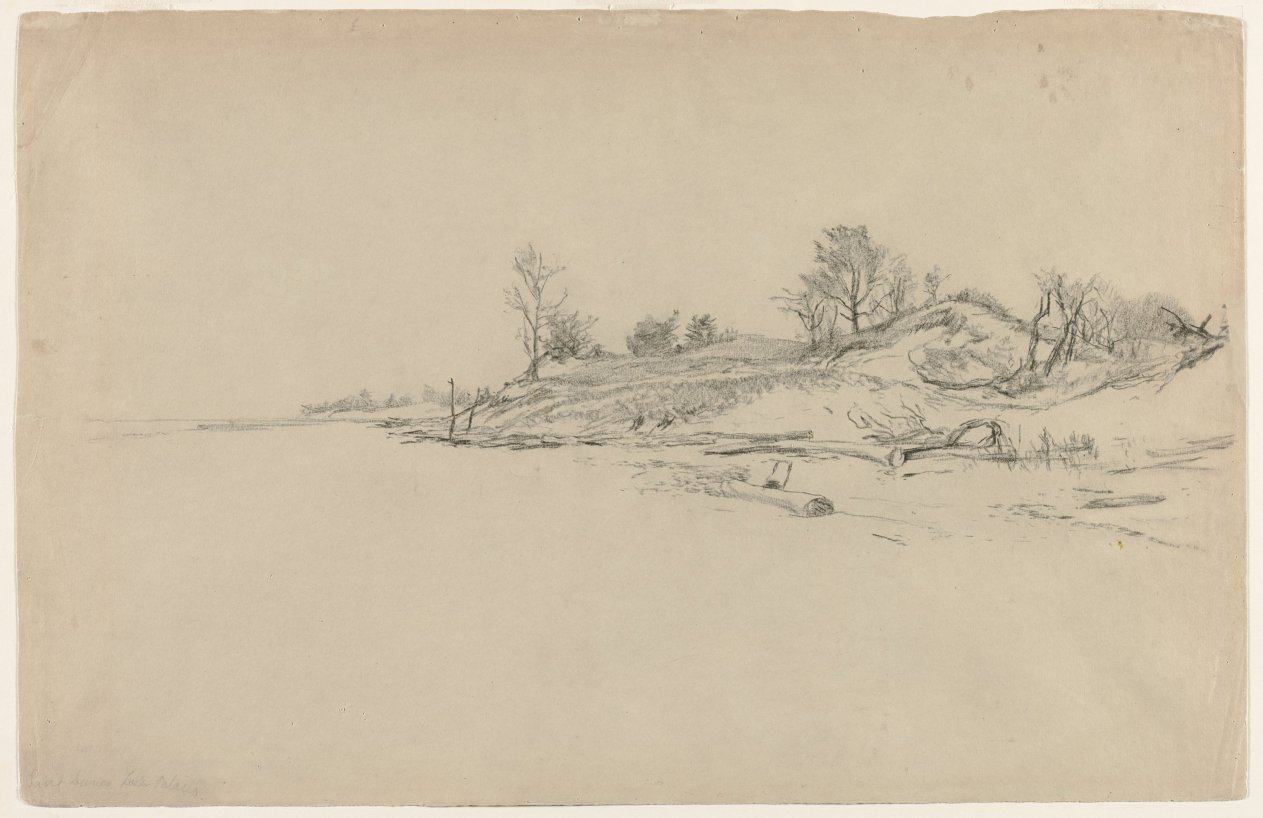
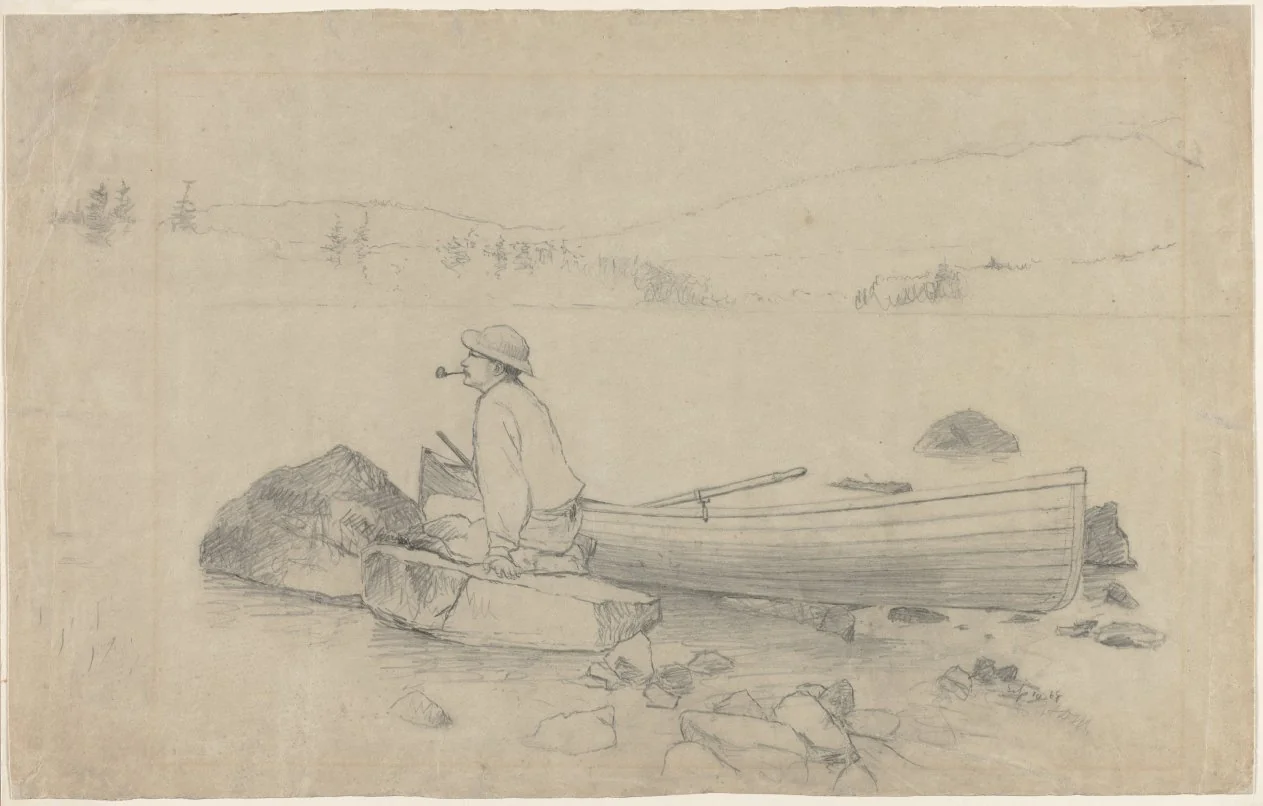
This 1868 pencil drawing of the Adirondacks dates from Martin's early period, when he was making sketching trips to the northern New York wilderness that had inspired the Hudson River School painters before him. The Adirondack Mountains — rugged, vast, and largely undeveloped in the 1860s — gave Martin a subject that demanded the kind of detailed topographic drawing that the pencil medium uniquely provides. The drawing is a document of a specific place at a specific time, and its precision reflects the 19th-century expectation that landscape drawings should be accurate records of observed scenery.
Cultural Impact
The Adirondacks were central to the American wilderness imagination, from Emerson's transcendentalist writings to the paintings of the Hudson River School. Martin's 1868 drawing participates in this tradition, documenting the mountains, forests, and lakes that were being discovered by urban tourists even as they were being_logged and developed. The pencil drawing is both an artistic study and a historical record of the Adirondacks before they became a regulated park.
Why It Matters
Adirondacks (1868) is Martin's youth on paper: a pencil drawing of the northern wilderness, made when he was still working within the Hudson River tradition. The precision of the pencil records what the young artist saw — the mountains, forests, and lakes of a wilderness that was already beginning to change.