Accession Number
1955.669
Medium
oil on canvas
Dimensions
Unframed: 32.4 x 51 cm (12 3/4 x 20 1/16 in.)
Classification
Painting
Credit Line
Anonymous Gift, The Frank E. and Theano Wattles Case Memorial Collection
Tags
Painting Impressionist & Modern (1851–1900) Oil Painting Canvas American Color: Orange Color: Gray
Background & Context
Background Story
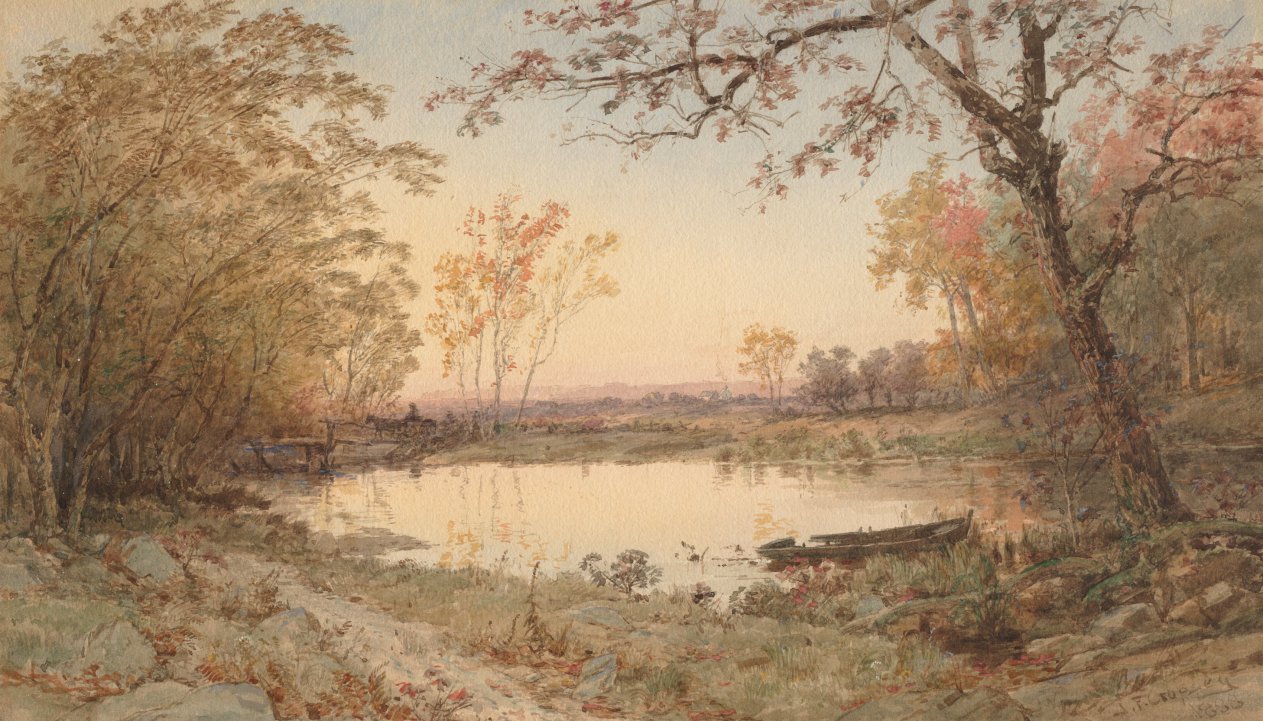
Gray Day on the Esopus (1882) represents a departure from Cropsey's signature autumn brilliance, depicting the Hudson Valley's Esopus Creek under the overcast conditions that are actually more typical of the region's weather than the brilliant fall days for which he was famous. The painting's willingness to represent gray weather—the subdued light, the muted color, the atmospheric moisture that softens all edges—demonstrates a mature artist's confidence in finding beauty in conditions that less accomplished painters might avoid. The year 1882 was late in Cropsey's career; the Hudson River School's popularity was declining as French-influenced styles gained favor, and the grand wilderness vision that had dominated American landscape painting for decades was giving way to more intimate, Tonalist approaches. Cropsey's gray day painting anticipates this shift while maintaining the Hudson River School's commitment to specific American places. The Esopus Creek—a tributary of the Hudson—provided a local subject that didn't require the dramatic mountain scenery of his earlier work, suggesting an artist who had moved from seeking spectacle to appreciating subtlety.
Cultural Impact
Cropsey's late gray-day paintings influenced the transition from Hudson River School to Tonalist landscape painting in American art, demonstrating that the older generation could adapt to changing sensibilities. The paintings influenced how overcast weather was represented in American landscape art, establishing a tradition of subdued atmospheric painting that would flourish in the work of George Inness and the Tonalists. The Esopus subject influenced how local Hudson Valley landscapes were represented.
Why It Matters
This painting matters because it demonstrates artistic growth and adaptability at a late career stage. The Cropsey who painted Gray Day on the Esopus was not the same artist who painted autumn spectaculars—he had developed a subtler vision that found beauty in atmospheric nuance rather than chromatic intensity. For contemporary artists navigating changing tastes and aging sensibilities, Cropsey's late work offers a model of how artistic development can continue throughout a career.