Description
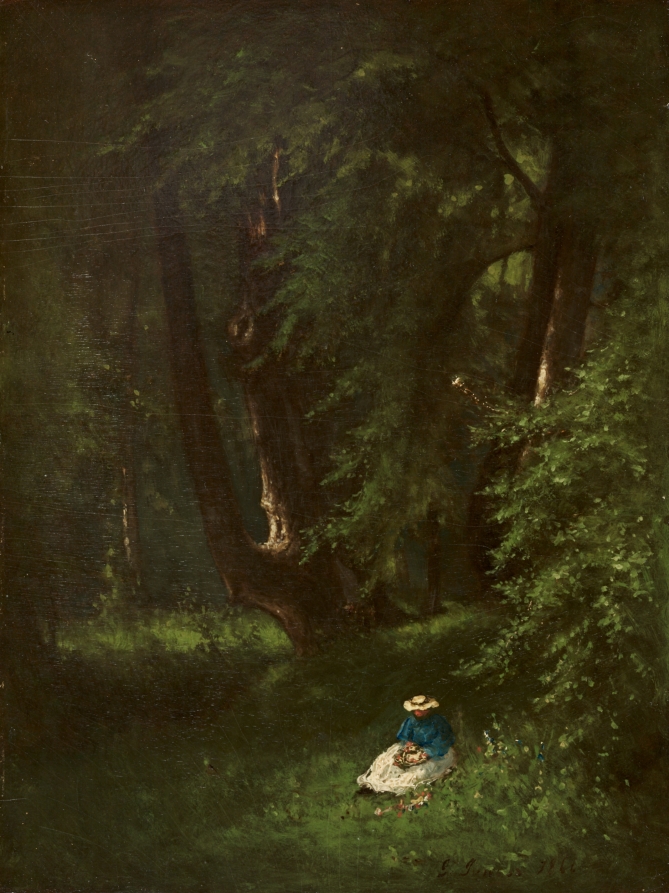
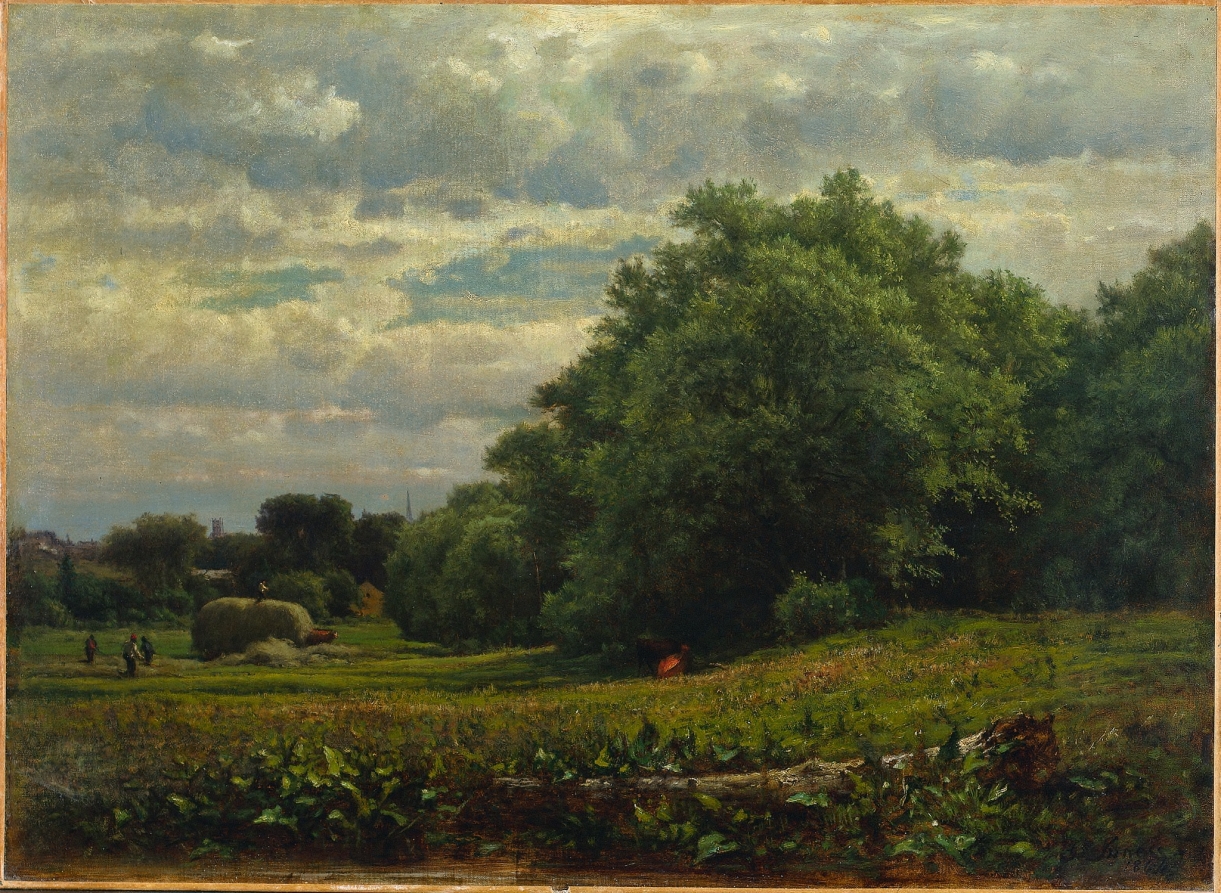
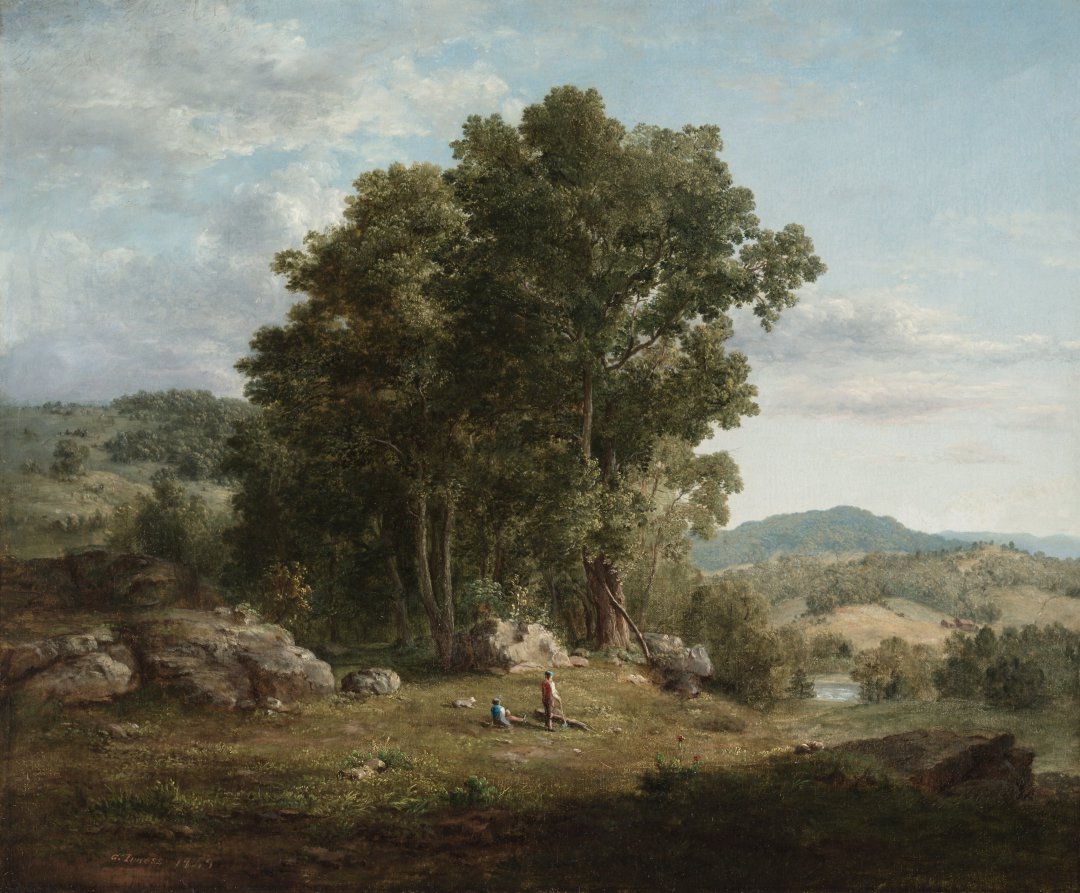
During the later 19th century, when European artists were influencing American landscape painters, George Inness looked to France for stylistic inspiration. After a trip to Europe in 1853-54, during which he came into contact with contemporary French painters, Inness adopted a loose, painterly style. By the late 1870s, he was interested in conveying the intimate, mysterious aspects of nature.
This painting may depict a site near Monclair, New Jersey.
Provenance
[]
Accession Number
1955.670
Medium
oil on canvas
Dimensions
Framed: 46.5 x 60.5 x 4 cm (18 5/16 x 23 13/16 x 1 9/16 in.); Unframed: 33.3 x 47.3 cm (13 1/8 x 18 5/8 in.)
Classification
Painting
Credit Line
Anonymous Gift, The Frank E. and Theano Wattles Case Memorial Collection
Tags
Painting Impressionist & Modern (1851–1900) Oil Painting Canvas American Color: Yellow Color: Gray
Background & Context
Background Story
Montclair, New Jersey (c. 1878) depicts the suburban community where Inness lived from 1878 until his death in 1894. Montclair, on the Watchung Mountains west of Newark, was developing as a suburban retreat for New York City professionals when Inness settled there. The community's rolling terrain, mature trees, and views across the New Jersey landscape provided subjects that Inness painted with the devotion of an artist working from his own doorstep. The year 1878 marks the beginning of Inness's Montclair period—arguably his most productive and artistically significant—when he was painting the local landscape with the intensity of a newly arrived resident seeing it for the first time combined with the technical mastery of a mature artist. Montclair's landscape—neither wilderness nor urban, neither purely rural nor fully suburban—provided the kind of settled, working landscape that best served Inness's Tonalist vision. The painting likely emphasizes Montclair's characteristic features: the rolling hills, the mixed woodland and field, and the particular quality of New Jersey light that Inness rendered so effectively. His Montclair paintings documented the community at a specific moment of development—the transition from rural to suburban that would define much of 20th-century American landscape change.
Cultural Impact
Inness's Montclair paintings influenced how the American suburban landscape was represented in art, documenting the transition from rural to suburban that would transform the American landscape in the 20th century. The paintings influenced the cultural identity of Montclair as an artistic community—a reputation that persisted and attracted later artists and writers. The paintings influenced how New Jersey's landscape was perceived, contributing to the state's cultural identity as a place of surprising beauty.
Why It Matters
This painting matters because it documents the birth of American suburbia and does so with the artistic seriousness that suburbia's detractors might think it doesn't deserve. Inness's Montclair demonstrates that artistic significance is not limited to dramatic or picturesque subjects—suburban New Jersey, painted with Tonalist sensitivity, yields images of considerable beauty and cultural importance.