Accession Number
1960.157
Medium
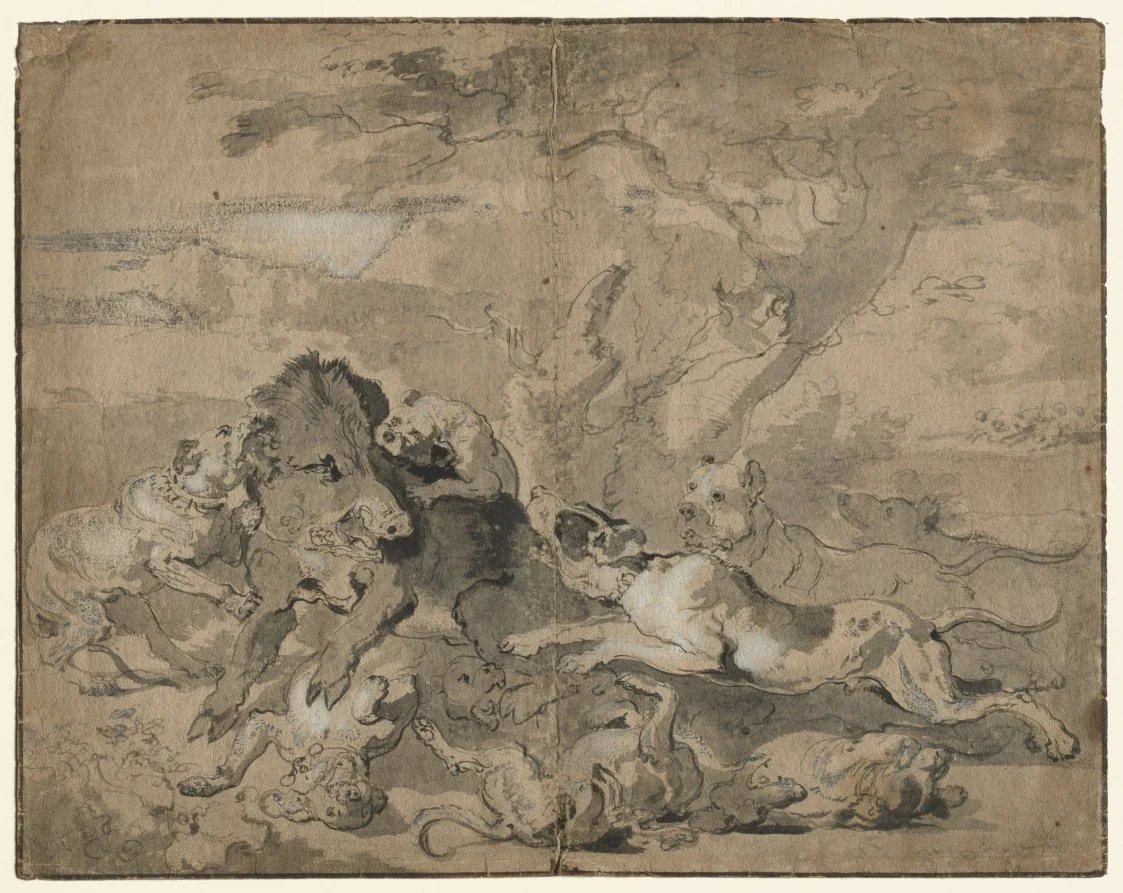
pen and black ink and brush and black and gray wash heightened with lead white (partially oxidized); framing lines in black and brown ink
Dimensions
Sheet: 41.9 x 52.5 cm (16 1/2 x 20 11/16 in.); Secondary Support: 41.9 x 52.5 cm (16 1/2 x 20 11/16 in.)
Classification
Drawing
Credit Line
Delia E. Holden Fund
Tags
Drawing Baroque (1600–1750) Ink Dutch Color: Brown Color: Gray
Background & Context
Background Story
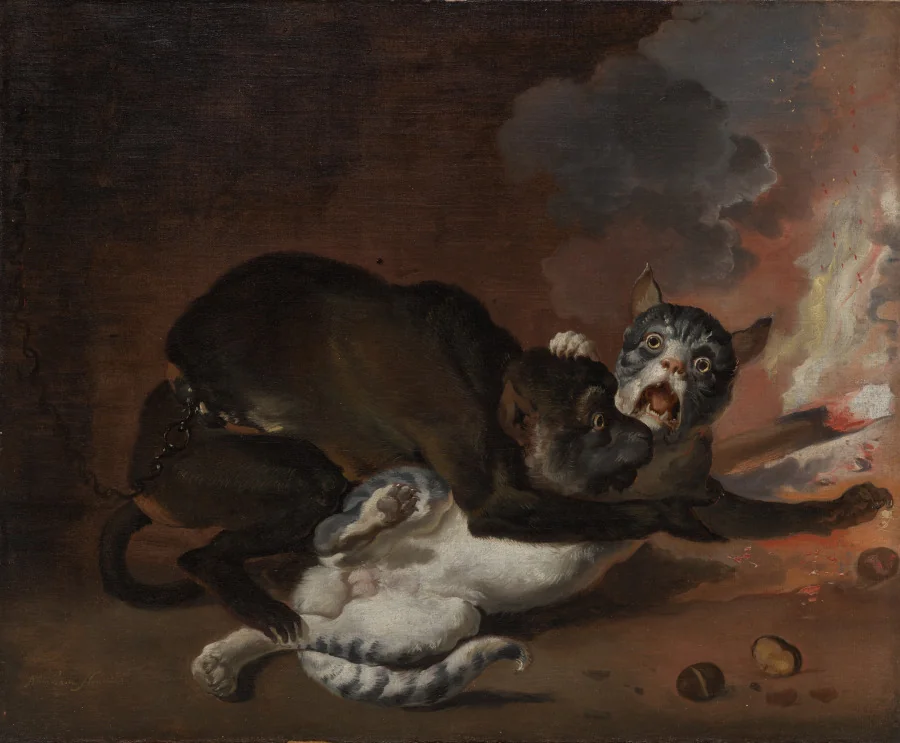
Abraham Hondius (c. 1625-1691) was a Dutch painter known for the dynamic, precisely observed animal and hunting subjects that make him one of the most important animal painters of the Dutch Golden Age. Boar Hunt from c. 1672 depicts a boar hunt in the dynamic, precisely observed manner that distinguishes Hondius's best work from the more general hunting painting of his contemporaries. The c. 1672 date places this in Hondius's most productive period, when he was producing the dynamic, precisely observed animal and hunting subjects that are his most accomplished works, and the boar hunt subject shows his talent for depicting the dynamic energy of the hunt with both precise observation and dramatic composition.
Cultural Impact
Boar Hunt is important in the history of Dutch animal painting because it demonstrates the dynamic, precisely observed manner that Hondius brought to hunting subjects as one of the most important animal painters of the Dutch Golden Age. Hondius's dynamic, precisely observed hunting subjects—combining the precise observation of animals with the dramatic energy of the hunt—represent one of the most accomplished traditions in Dutch animal painting, and the c. 1672 painting shows this tradition at its most dynamic.
Why It Matters
Boar Hunt is Hondius's dynamic Dutch animal painting: a boar hunt rendered in the precisely observed manner of one of the most important animal painters of the Dutch Golden Age. The c. 1672 painting shows the combination of precise animal observation with dramatic hunting energy that makes Hondius one of the most accomplished animal painters.