Accession Number
1980.89
Medium
black chalk and brush and gray wash and yellow watercolor
Dimensions
Sheet: 20.8 x 30.8 cm (8 3/16 x 12 1/8 in.)
Classification
Drawing
Credit Line
John L. Severance Fund
Tags
Drawing Baroque (1600–1750) Watercolor Dutch Color: White
Background & Context
Background Story
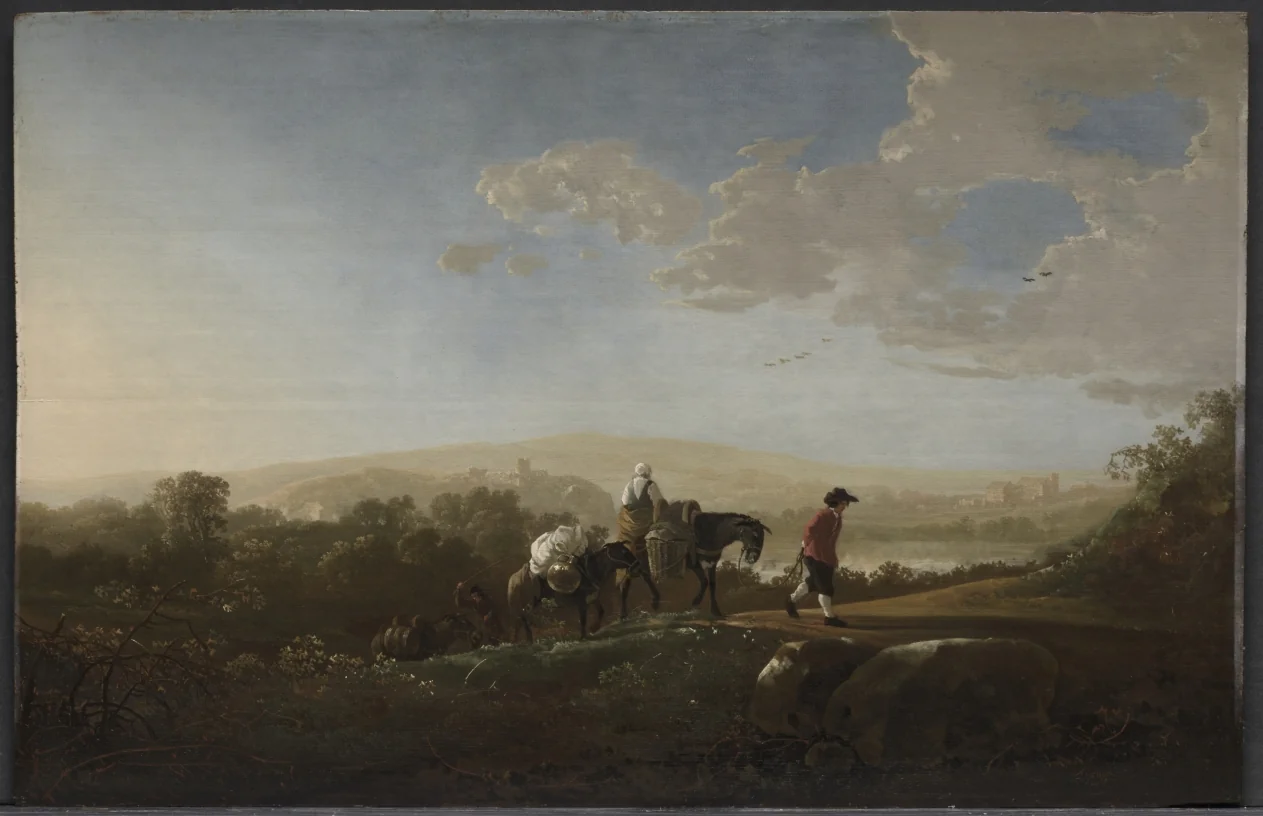
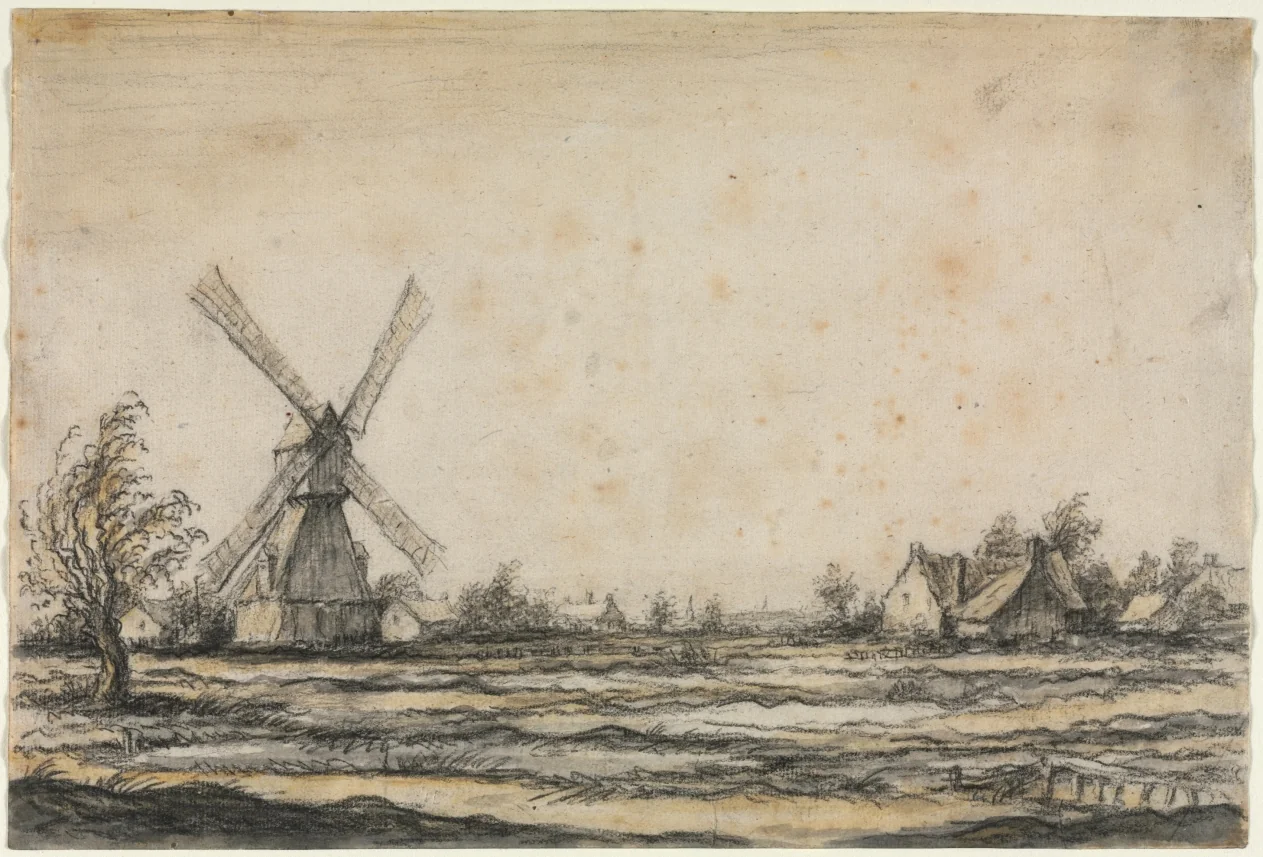
Landscape with a Windmill near a Farmstead (1642-44) is an early work depicting two of the most iconic elements of the Dutch landscape: the windmill and the farmstead. Windmills were not merely picturesque features of Dutch scenery—they were essential infrastructure for the Republic's existence. Windmills pumped water from polders (land reclaimed from sea and marsh), ground grain, sawed timber, and powered early industrial processes. A landscape with a windmill was therefore a landscape of technological achievement—the mill represented Dutch mastery over water and the engineering prowess that made the Republic possible. The farmstead, with its simple architecture and productive surroundings, represented the agricultural foundation on which Dutch prosperity was built. Cuyp's early treatment of these subjects, painted when he was in his early twenties, shows the developing artist working within established Dutch landscape traditions while beginning to develop the personal approach that would distinguish his mature work. The painting's relatively modest scale and straightforward composition suggest a young artist building competence through practice rather than seeking to impress through ambition.
Cultural Impact
Cuyp's windmill paintings influenced the cultural perception of windmills as symbols of Dutch national identity—an association that persists to this day. The paintings contributed to how Dutch landscape heritage was understood and preserved, and influenced tourism imagery that continues to represent the Netherlands through windmill landscapes. The paintings also influenced later Dutch painters who treated windmills as architectural subjects rather than merely picturesque features.
Why It Matters
This painting matters because it demonstrates how even a young artist working within conventional traditions can produce images of lasting cultural significance. The windmill and farmstead that Cuyp painted in 1642 have become synonymous with Dutch landscape identity worldwide. For contemporary artists beginning their careers, the painting offers reassurance that working within traditions is not a limitation but a foundation—and that even early works can contribute something lasting to cultural perception.