
Provenance
(Frank Caro [1904–1980], New York, NY, sold to the Cleveland Museum of Art) (?–1982); The Cleveland Museum of Art, Cleveland, OH (1982–)
Accession Number
1982.68.4
Medium
album leaf, ink and light color on paper
Dimensions
Album, closed: 15.4 x 18.5 x 3.1 cm (6 1/16 x 7 5/16 x 1 1/4 in.); Each painting: 11.2 x 13.1 cm (4 7/16 x 5 3/16 in.)
Classification
Painting
Credit Line
Edwin R. and Harriet Pelton Perkins Memorial Fund
Tags
Painting Baroque (1600–1750) Ink Paper Chinese Color: White
Background & Context
Background Story
A scholar watching fish in a stream or pond is a well-established subject in Chinese painting, derived from the Daoist story of Zhuangzi and Huizi debating the happiness of fish from the bridge over the Hao River. Hua Yan's version captures both the observational intensity of the scholar (who is genuinely trying to understand the fish) and the philosophical paradox at the heart of the story (how can you know whether the fish are happy?). The landscape surrounding the figure is rendered with Hua Yan's characteristic vitality — rocks and vegetation that seem as alive as the fish below.
Cultural Impact
The Zhuangzi fish debate was one of the foundational texts of Daoist philosophy, and its popularity as a painting subject reflected the literati's enduring engagement with the paradox of knowledge and happiness. Hua Yan's Yangzhou context adds another layer: in a city devoted to commerce, the scholar watching fish is a figure of deliberate withdrawal from the competitive world of trade and social climbing.
Why It Matters
Scholar Watching Fish is Hua Yan illustrating the most famous paradox in Chinese philosophy: you cannot know whether the fish are happy, but you cannot help trying. The painting captures both sides of the paradox — the desire to understand and the recognition that understanding may be impossible.
Related Artworks
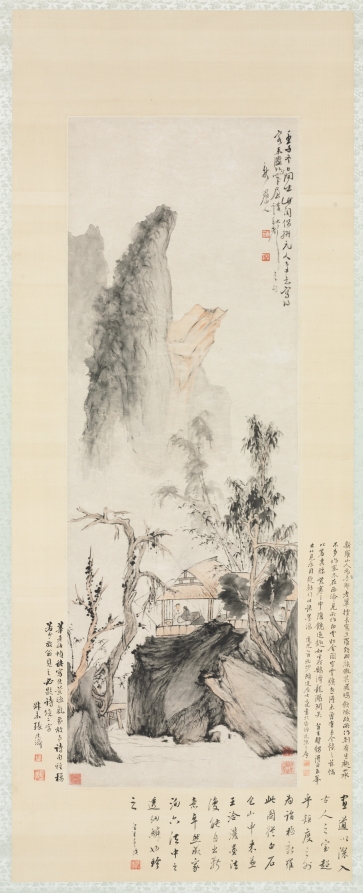
Conversation in Autumn
Hua Yan
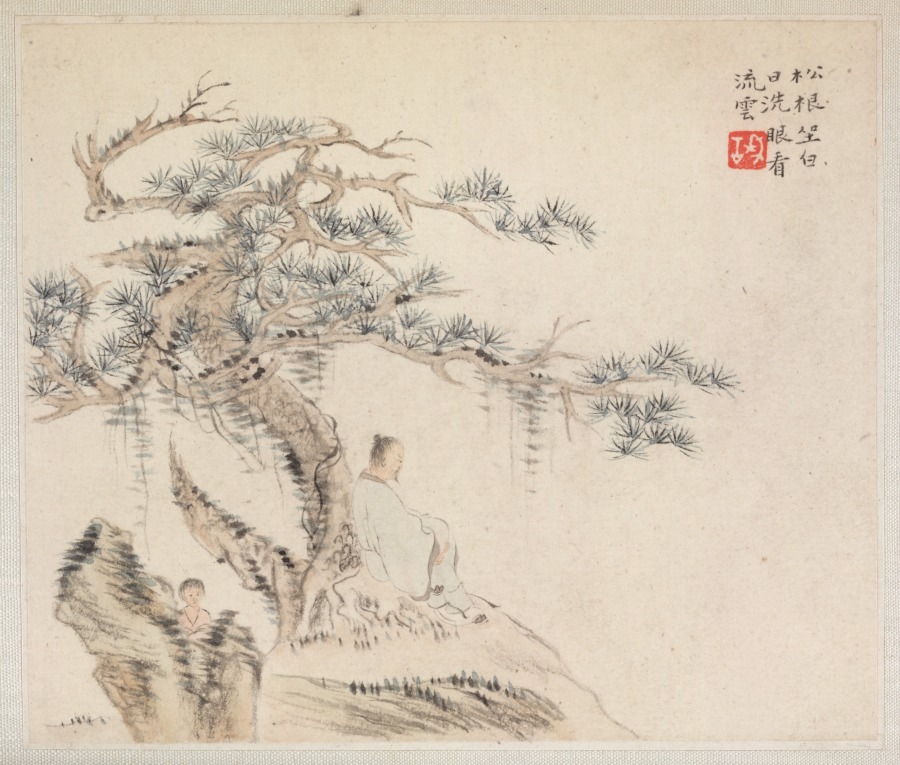
Album of Landscape Painting Illustrating Old Poems
Hua Yan
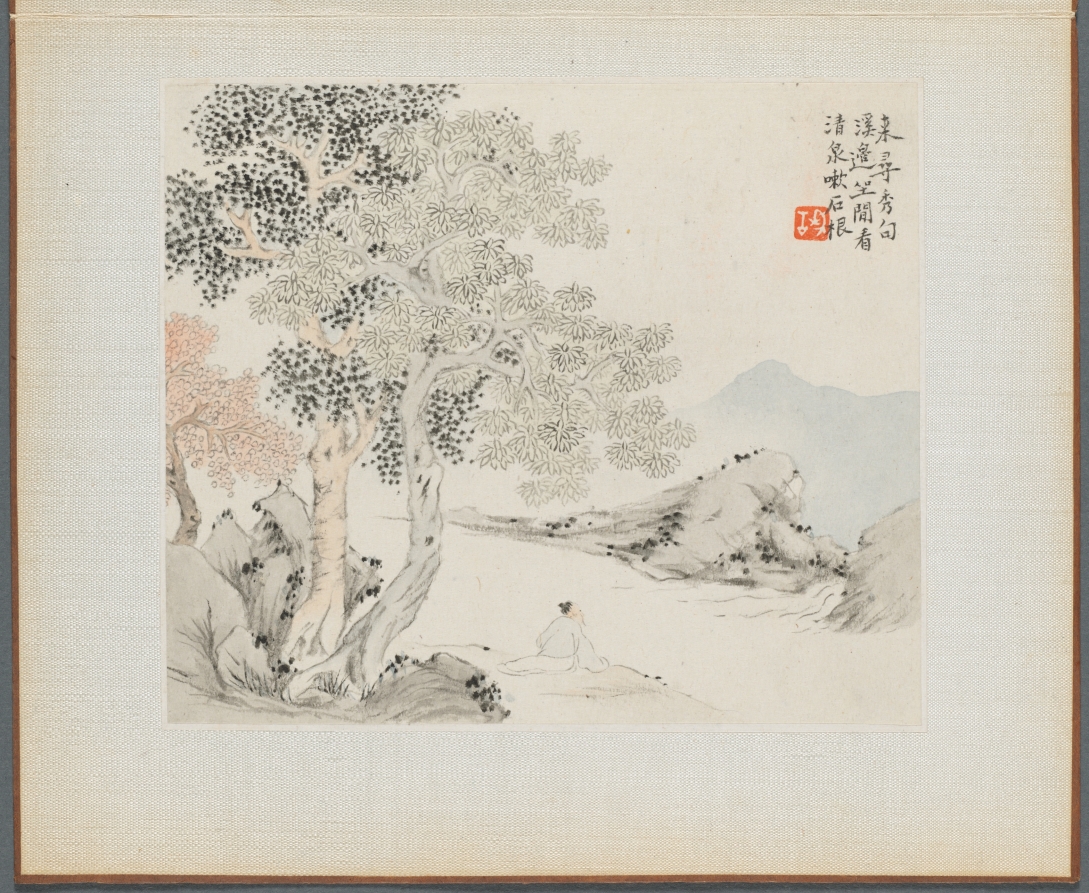
Album of Landscape Paintings Illustrating Old Poems: Three Big Trees, a Stream with an Old Man Sitting on the Bank
Hua Yan
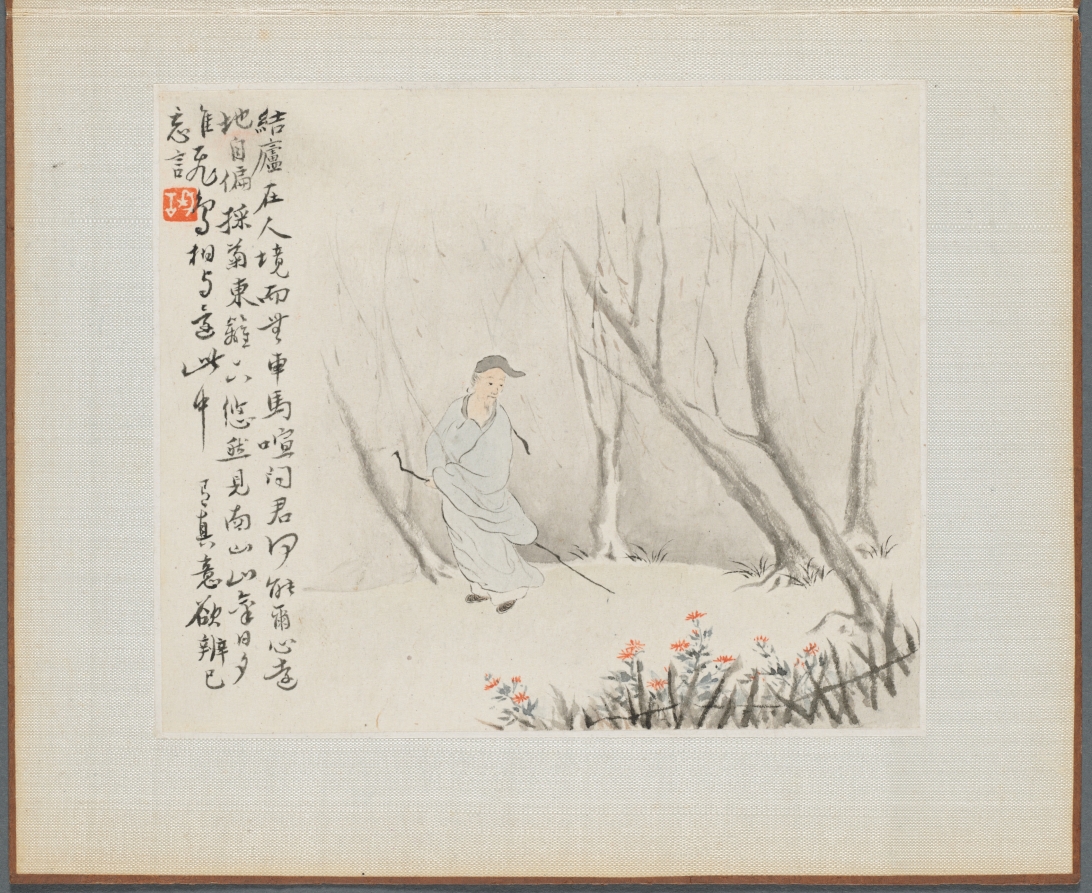
Album of Landscape Paintings Illustrating Old Poems: Man with a Staff Admires Chrysanthemums at a Fence
Hua Yan