Description
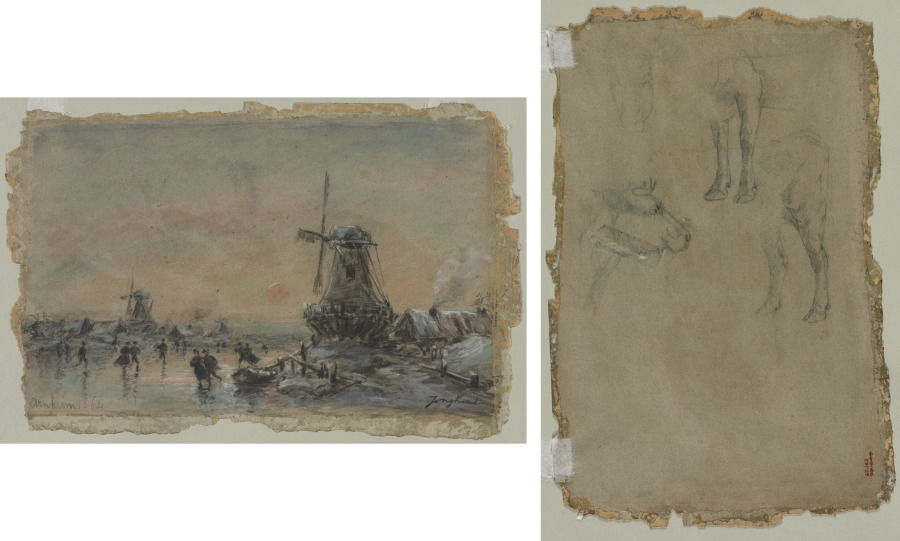
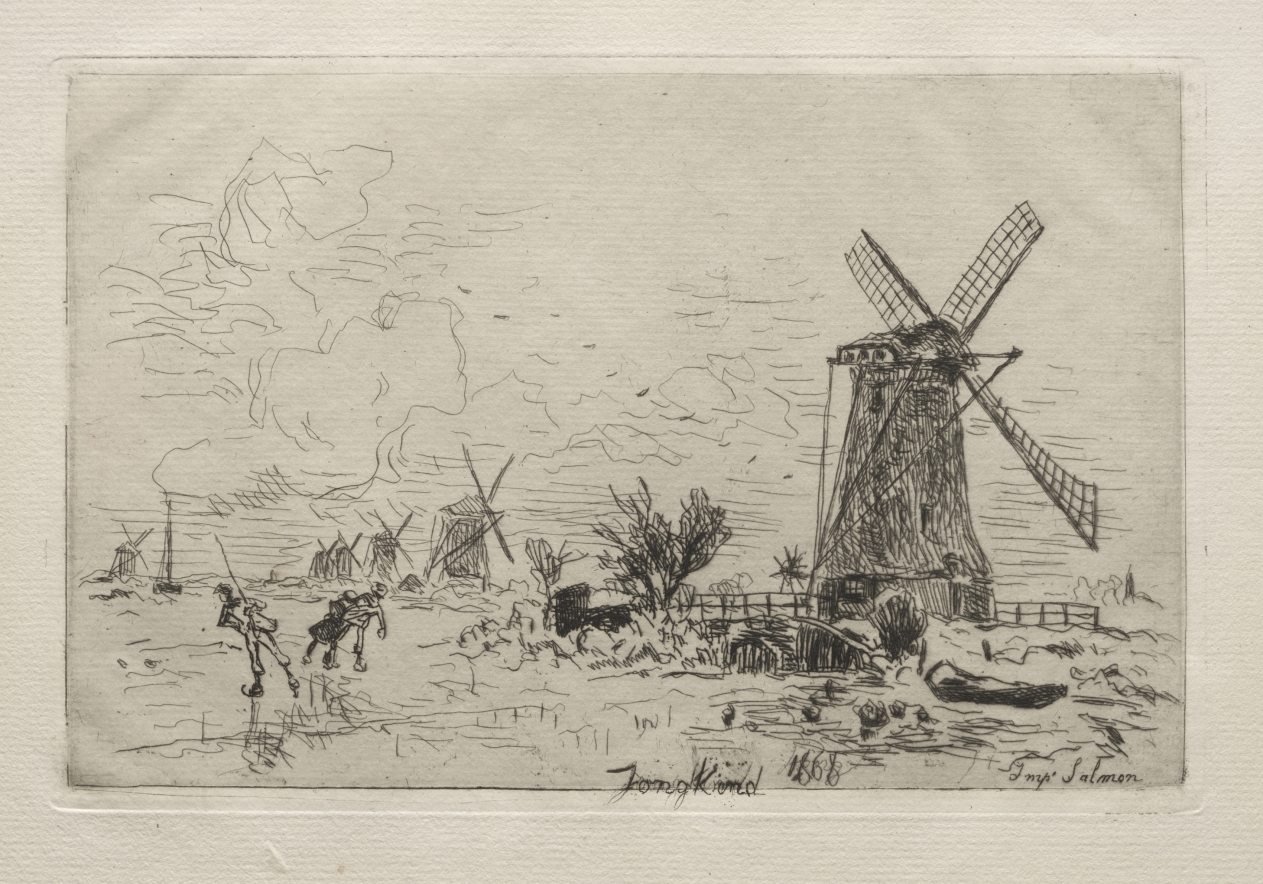
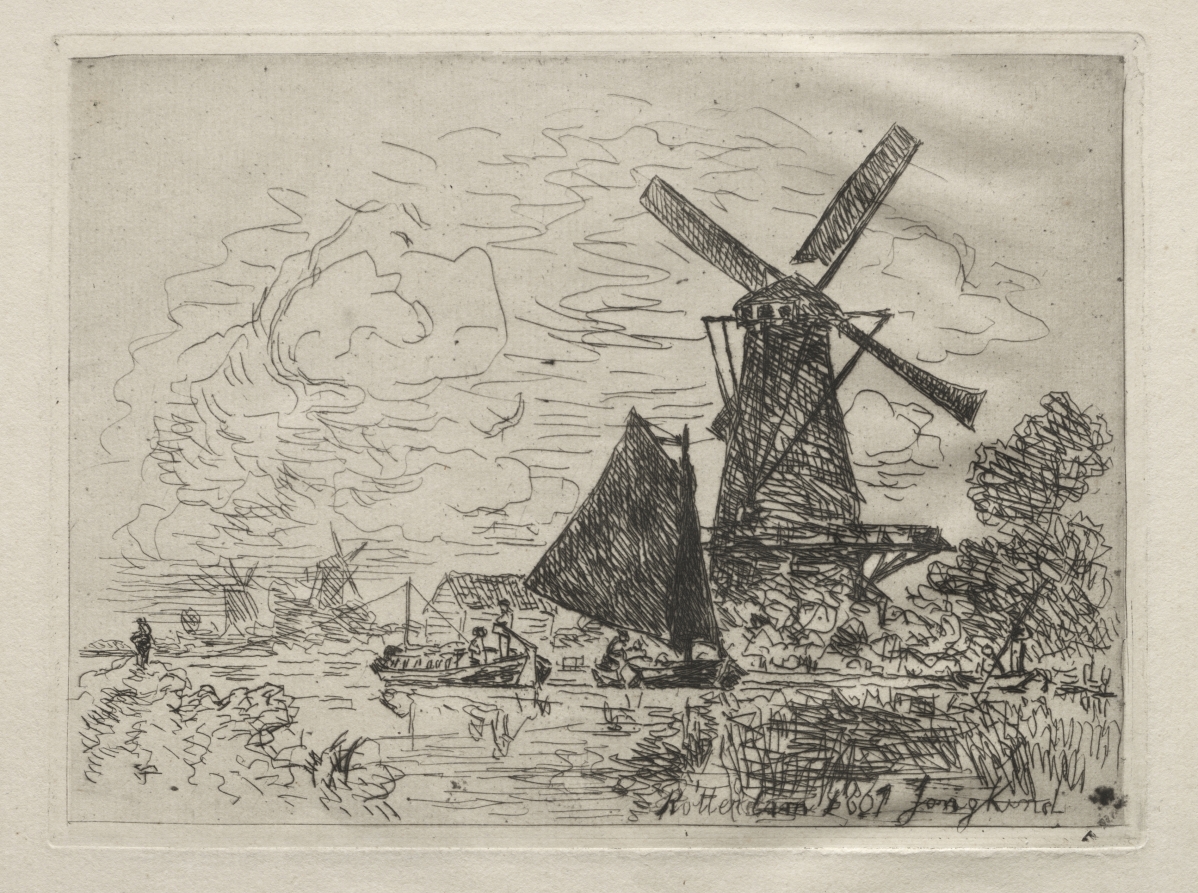
Although born and trained in Holland, Jongkind spent much of his life painting outdoors in France. In this depiction of Bas-Meudon near Paris, the artist applied paint in small patches of bright color to suggest the intensity of outdoor light. Although typcially finished in the studio from open-air sketches, Jongkind's oil paintings achieve a convincing immediacy that greatly impressed the young Claude Monet. The two met in the early 1860s and spent part of a summer painting together along the coast of Normandy. "From that time he was my real master," Monet later acknowledged, "it was to him that I owe the final education of my eye."
Provenance
(Possibly Hotel Drouot, Paris, France, April 12-14, 1883, lot 84, sale Bascle Collection, sold to Paul Dutrimont) (1883); (Galerie George Petit, Paris, France, December 3-4, 1906, sale, Alexandre Blanc Collection, sold to Paul Detrimont, according to annotated catalogue in Frick library) (1906); Samuel Mather [1851-1931], Cleveland, OH, by descent to his daughter, Constance Mather Bishop; Mrs. Robert H. Bishop, Jr., (Constance Mather Bishop) [1889-1969], Novelty, OH, by descent to her son, Dr. Johnathan S. Bishop; Dr. Johathan S. Bishop, Cleveland, OH, given to the Cleveland Museum of Art (-1993); The Cleveland Museum of Art, Cleveland, OH (1993-)
Accession Number
1993.236
Medium
oil on fabric
Dimensions
Framed: 55.6 x 69.5 x 11.1 cm (21 7/8 x 27 3/8 x 4 3/8 in.); Unframed: 34.1 x 48.1 cm (13 7/16 x 18 15/16 in.)
Classification
Painting
Credit Line
Gift of the family of Constance Mather Bishop
Tags
Painting Impressionist & Modern (1851–1900) Oil Painting Dutch Color: Brown Color: Gray
Background & Context
Background Story
Bas-Meudon, on the Seine just west of Paris, was part of the river landscape that Jongkind returned to throughout his career. This oil painting captures the broad, slow river with its characteristic play of light on water, the wooded banks, and the distant horizon — all rendered with Jongkind's distinctive blend of Dutch atmospheric tradition and French painterly modernity. The painting dates from the same period as his most influential work with Monet, and its directness and freshness explain why the younger artist regarded Jongkind as essential.
Cultural Impact
The Seine between Paris and the sea was the cradle of Impressionism. Jongkind, Monet, Sisley, and Renoir all painted its banks, bridges, and boats repeatedly throughout the 1860s and 1870s. Bas-Meudon represents the upstream, suburban stretch — more bucolic than Le Havre's industrial harbor, but no less important for the development of modern landscape painting.
Why It Matters
The Seine at Bas-Meudon is Jongkind at his most influential: a river scene that treats light, water, and atmosphere as the real subjects, with topography merely the occasion for painting.