Description
By the 1500s, visits to historic and scenic sites in the lower Yangzi delta stimulated an increase of printed illustrated travel books. Topographical depictions of local scenery flourished.
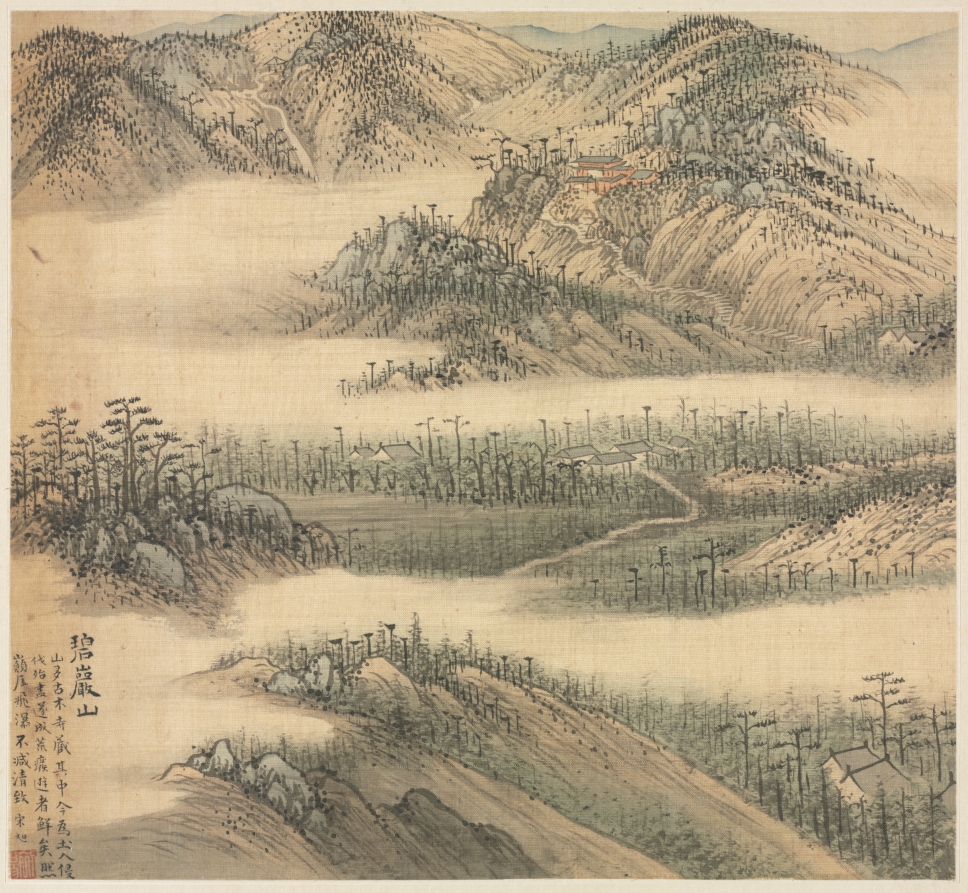
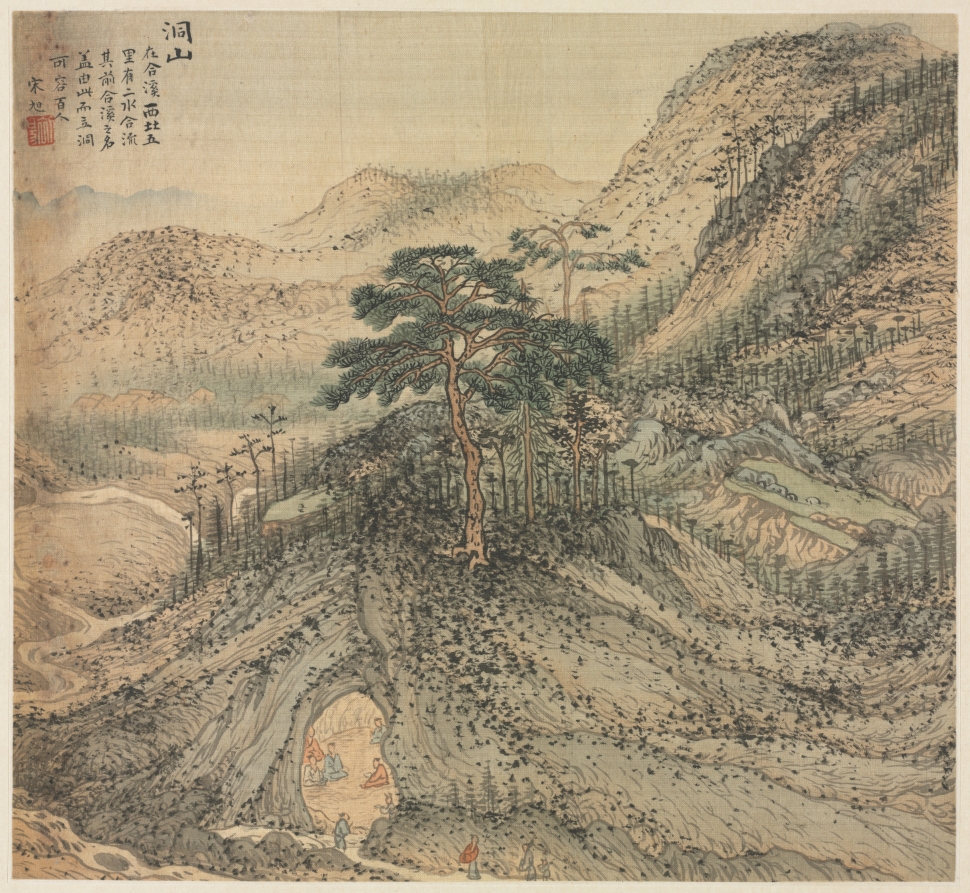
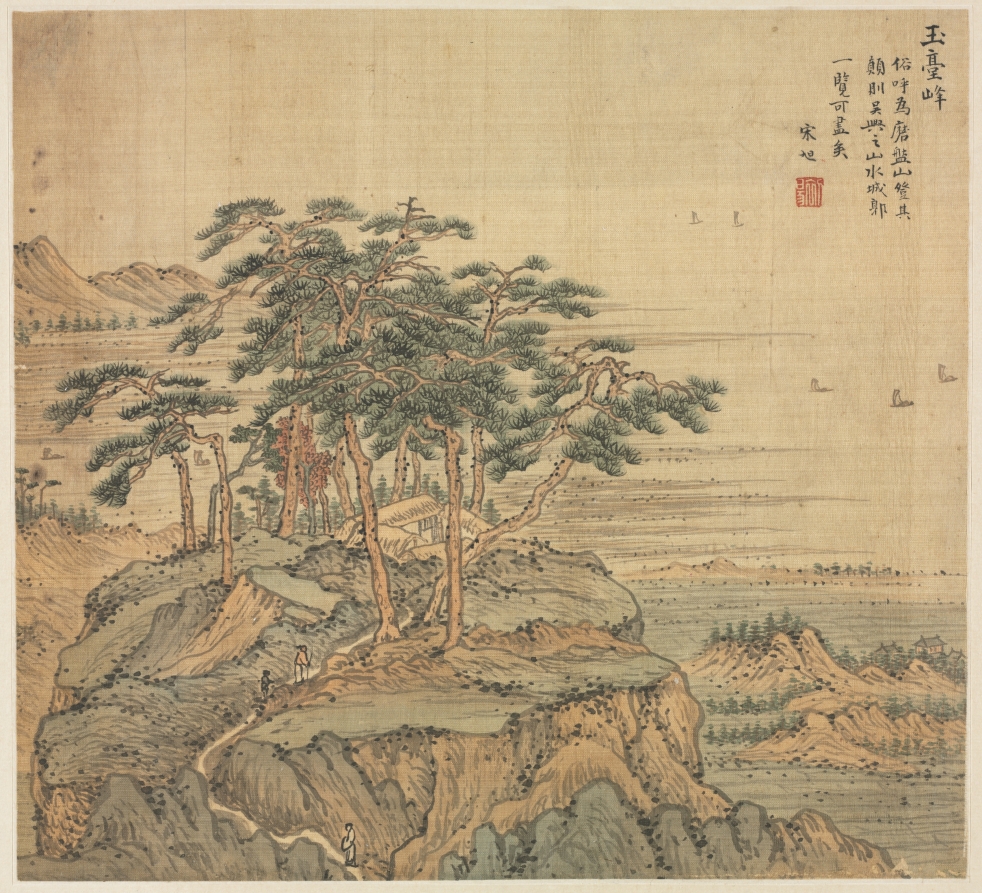
Leaves from this album illustrates sites around Lake Tai of the two adjacent counties Changxing and Wuxing (modern Huzhou). Song Xu, who lived intermittently in Jiaxing and Songjiang, must have passed through Wuxing by boat and thus knew the region.
The paintings are inscribed with gazetteerlike notations, suggesting that the album was produced for clients as commemorative works, a travel guide, or for “armchair travel” (woyou) in one’s mind.
Leaves from this album illustrates sites around Lake Tai of the two adjacent counties Changxing and Wuxing (modern Huzhou). Song Xu, who lived intermittently in Jiaxing and Songjiang, must have passed through Wuxing by boat and thus knew the region.
The paintings are inscribed with gazetteerlike notations, suggesting that the album was produced for clients as commemorative works, a travel guide, or for “armchair travel” (woyou) in one’s mind.
Provenance
(Kaikodo America Inc., New York, NY, sold to the Cleveland Museum of Art) (?–1998); The Cleveland Museum of Art, Cleveland, OH (1998–)
Accession Number
1998.78.1
Medium
Album leaf; ink and color on silk
Dimensions
Sheet: 26.4 x 28.4 cm (10 3/8 x 11 3/16 in.)
Classification
Painting
Credit Line
The Severance and Greta Millikin Purchase Fund
Tags
Painting Renaissance (1400–1599) Ink Silk Painting Chinese Color: White Color: Gray
Background & Context
Background Story
Song Xu (active late 16th century) was a Ming dynasty painter known for his landscape album leaves depicting specific mountains and scenic locations. This album leaf from around 1588 shows Xintang, identified as an Immortal's Peak — a site in the Chinese landscape tradition associated with Daoist transcendence and the belief that certain mountains were dwelling places of immortals. Song Xu's treatment combines topographic specificity with the conventions of Chinese landscape painting: the peak is recognizable as a particular place, but it is also a symbol of the spiritual aspiration that mountains have always represented in Chinese culture.
Cultural Impact
Album leaves depicting specific mountains were a major genre in Ming dynasty painting, serving as both artistic works and visual records of famous sites. Song Xu's approach is characteristic of the late Ming: more detailed and colorful than the monochrome preferences of earlier literati painters, reflecting the period's interest in the empirical observation of nature alongside traditional landscape conventions.
Why It Matters
Xintang is Song Xu mapping the sacred geography of China: specific mountains as specific spiritual sites, each peak a meeting point between earth and heaven. The album format transforms landscape painting from grand statement into intimate knowledge.