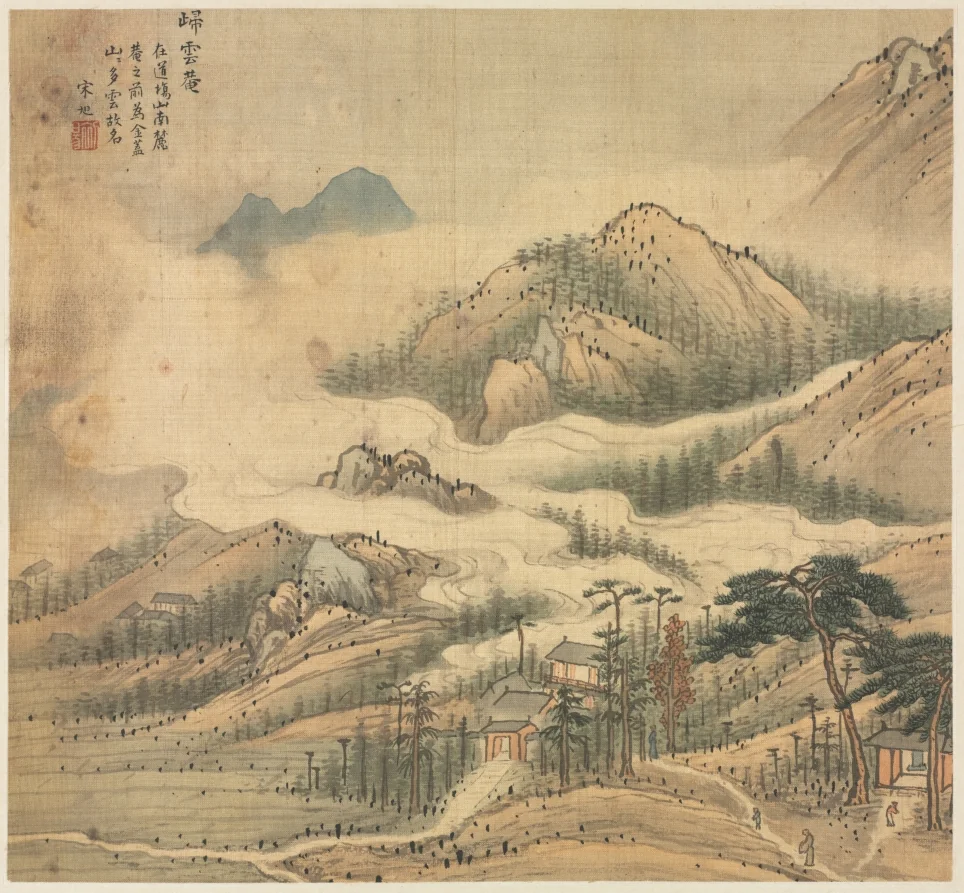
Description
By the 1500s, visits to historic and scenic sites in the lower Yangzi delta stimulated an increase of printed illustrated travel books. Topographical depictions of local scenery flourished.
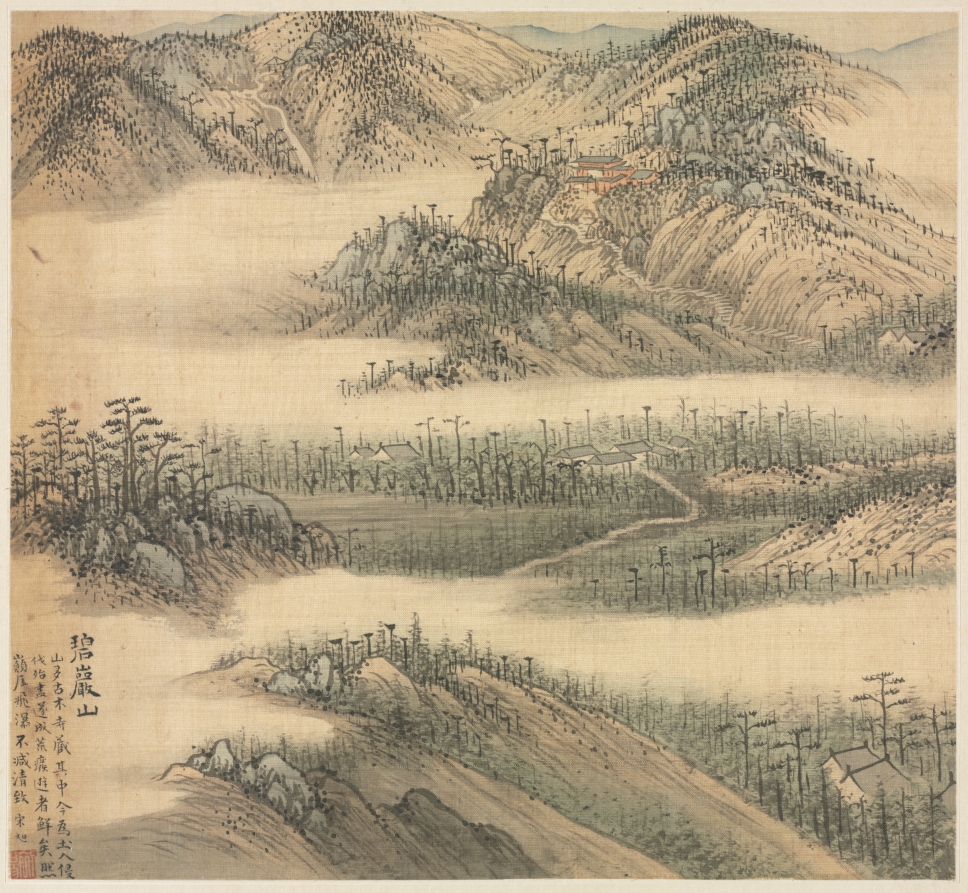
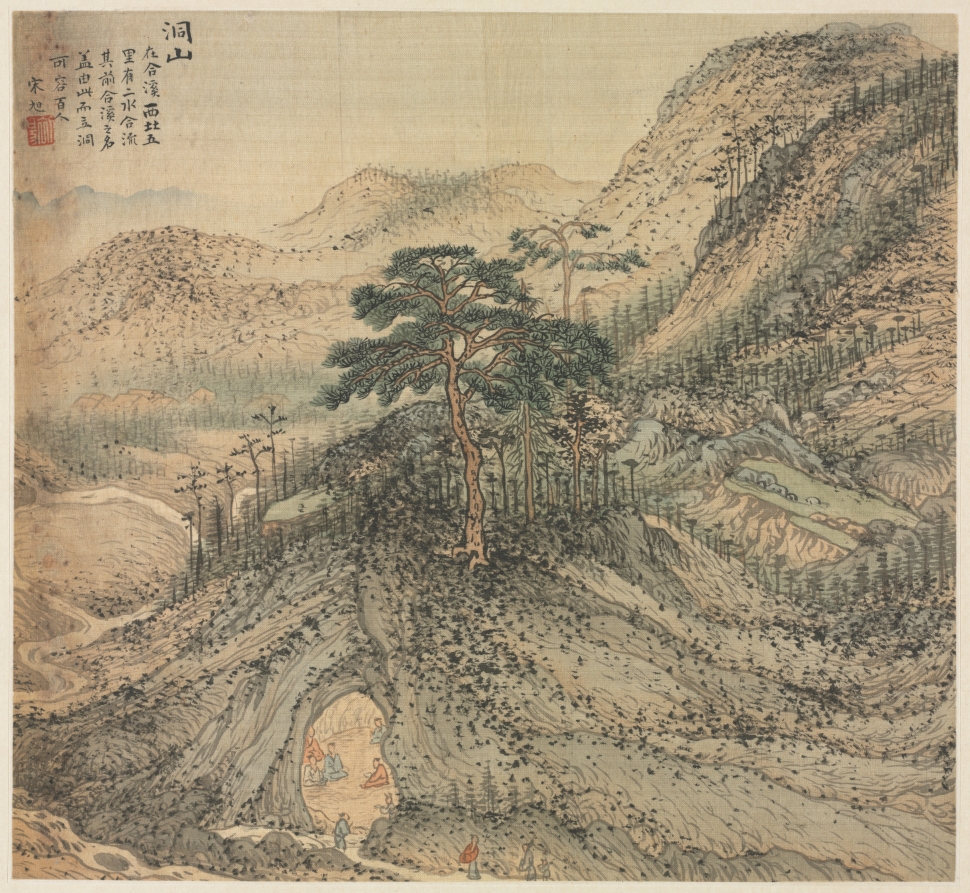
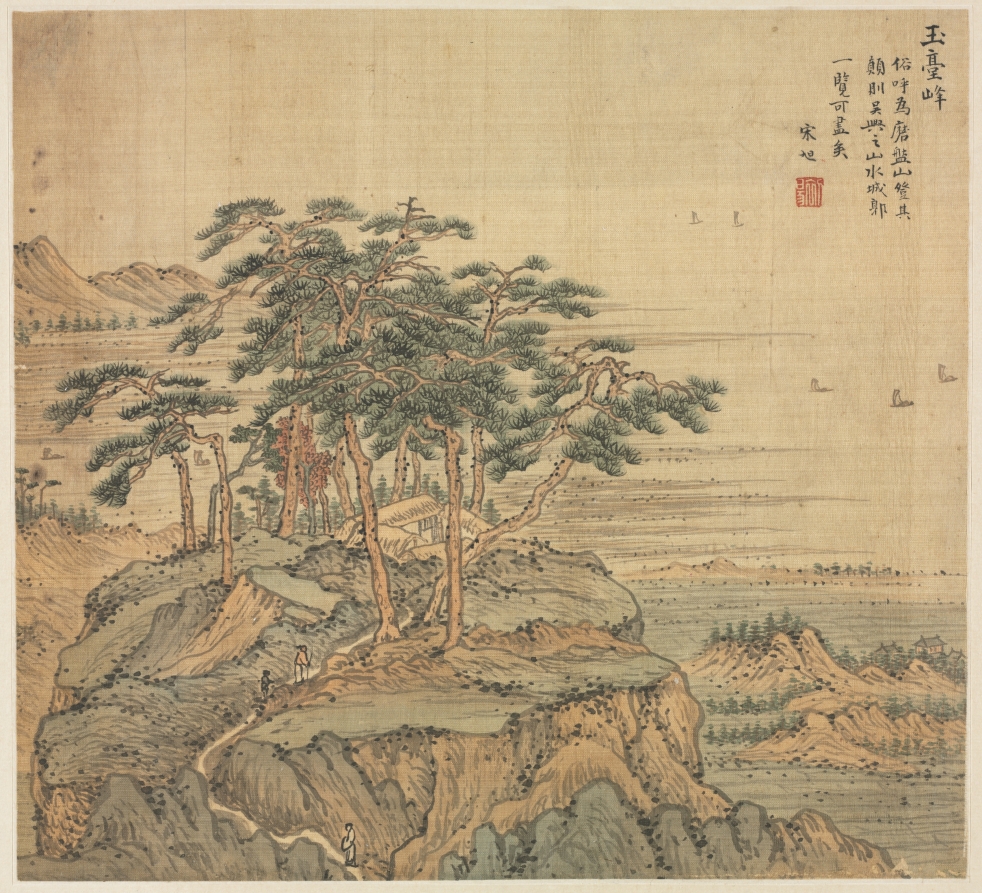
Leaves from this album illustrates sites around Lake Tai of the two adjacent counties Changxing and Wuxing (modern Huzhou). Song Xu, who lived intermittently in Jiaxing and Songjiang, must have passed through Wuxing by boat and thus knew the region.
The paintings are inscribed with gazetteerlike notations, suggesting that the album was produced for clients as commemorative works, a travel guide, or for “armchair travel” (woyou) in one’s mind.
Leaves from this album illustrates sites around Lake Tai of the two adjacent counties Changxing and Wuxing (modern Huzhou). Song Xu, who lived intermittently in Jiaxing and Songjiang, must have passed through Wuxing by boat and thus knew the region.
The paintings are inscribed with gazetteerlike notations, suggesting that the album was produced for clients as commemorative works, a travel guide, or for “armchair travel” (woyou) in one’s mind.
Provenance
(Kaikodo America Inc., New York, NY, sold to the Cleveland Museum of Art) (?–1998); The Cleveland Museum of Art, Cleveland, OH (1998–)
Accession Number
1998.78.11
Medium
Album leaf; ink and color on silk
Dimensions
Sheet: 26.4 x 28.4 cm (10 3/8 x 11 3/16 in.)
Classification
Painting
Credit Line
The Severance and Greta Millikin Purchase Fund
Tags
Painting Renaissance (1400–1599) Ink Silk Painting Chinese Color: White
Background & Context
Background Story
The Guiyun Shrine (Shrine of the Returning Clouds) is a religious site nestled in a mountain landscape, and Song Xu's album leaf treats architecture and nature as inseparable elements of a single composition. The shrine buildings are integrated into the mountain setting, partially obscured by trees and rock formations, following the Chinese principle that sacred architecture should harmonize with rather than dominate its natural surroundings. The returning clouds of the title suggest Daoist associations — clouds as vehicles of immortals, shrines as gateways between the human and spirit worlds.
Cultural Impact
Shrines and temples in mountain settings were central to Chinese religious landscape painting. The shrine is not merely a building but a node in the sacred network that connects peaks, caves, streams, and the spirit world. Song Xu's treatment respects both the architectural details of the shrine and the natural setting that gives it meaning.
Why It Matters
The Guiyun Shrine is where human purpose and natural beauty converge — a building that exists because the mountain made it necessary. Song Xu paints the convergence with the precision of a topographer and the sensitivity of a believer.