Description
By the 1500s, visits to historic and scenic sites in the lower Yangzi delta stimulated an increase of printed illustrated travel books. Topographical depictions of local scenery flourished.
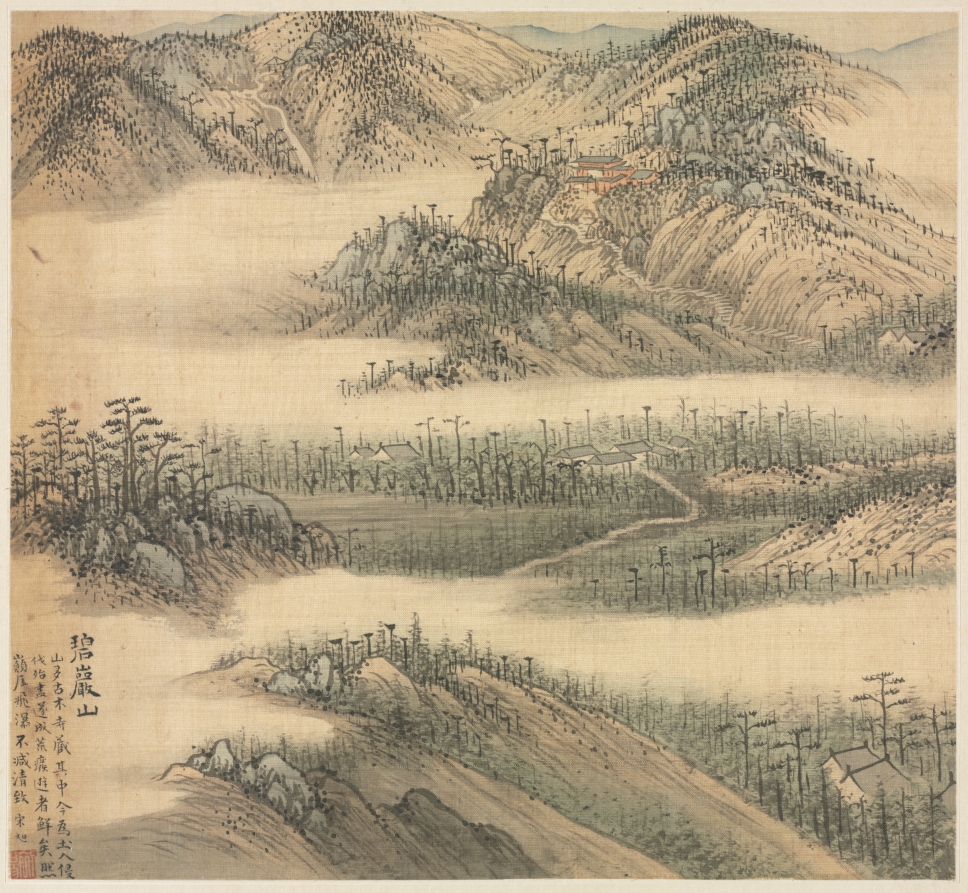
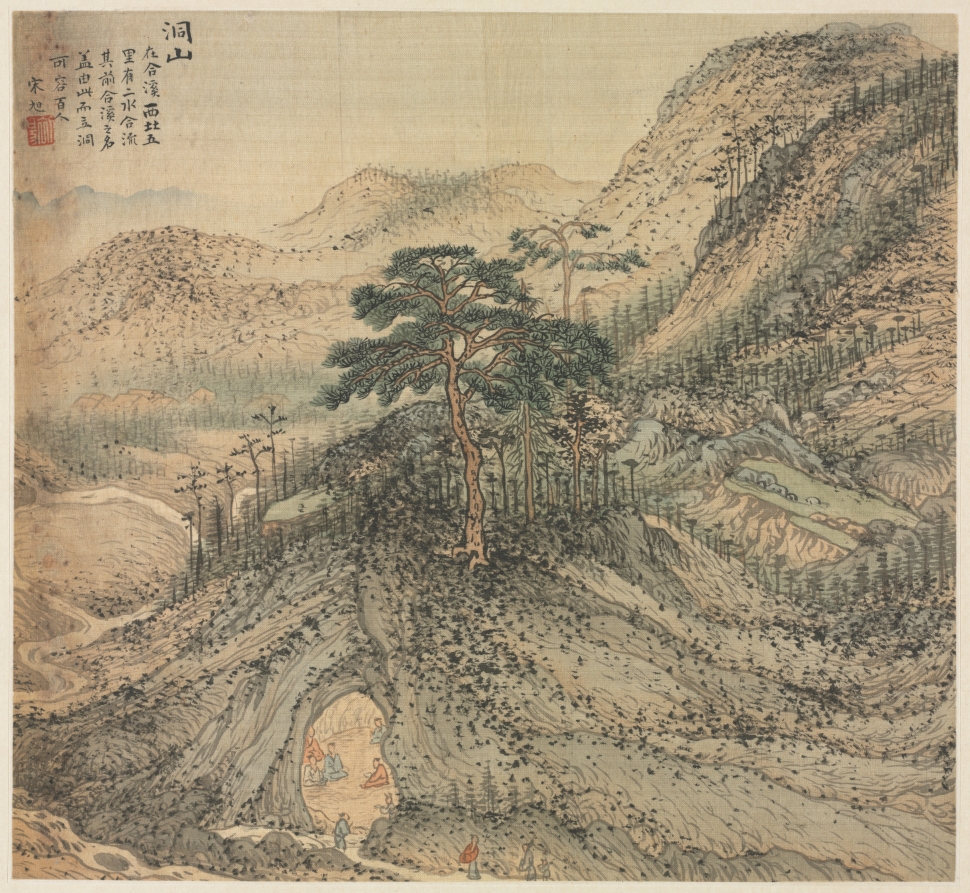
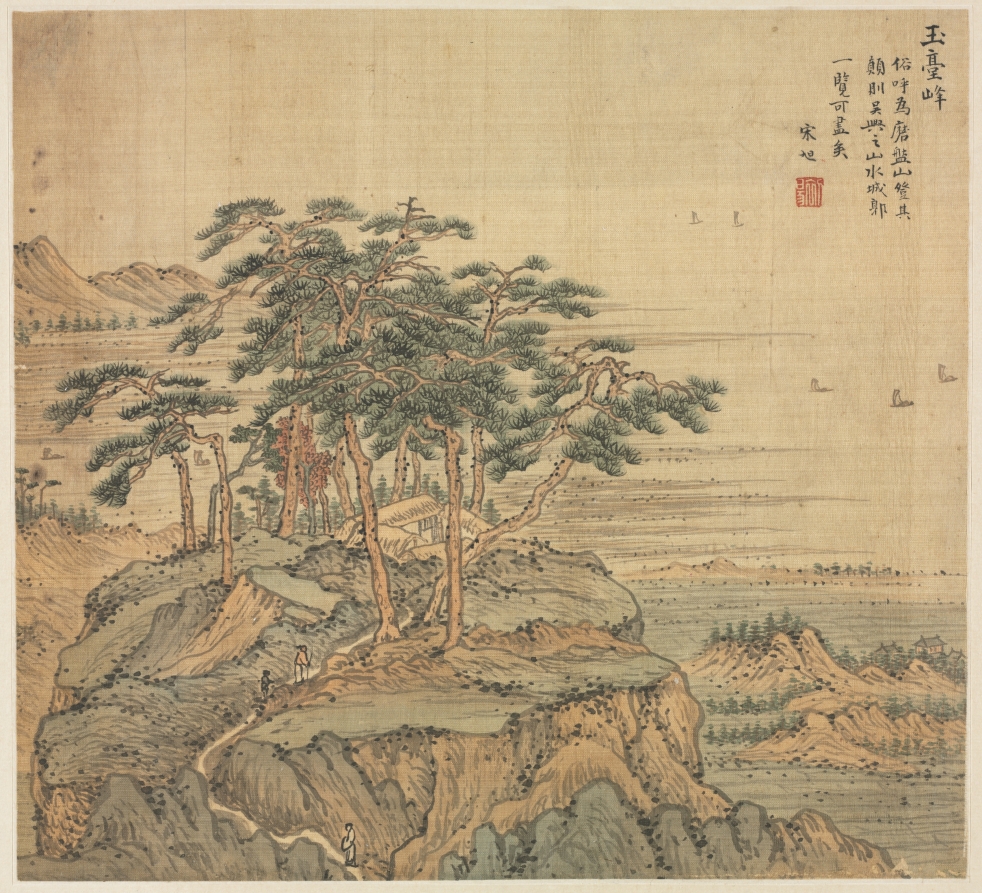
Leaves from this album illustrates sites around Lake Tai of the two adjacent counties Changxing and Wuxing (modern Huzhou). Song Xu, who lived intermittently in Jiaxing and Songjiang, must have passed through Wuxing by boat and thus knew the region.
The paintings are inscribed with gazetteerlike notations, suggesting that the album was produced for clients as commemorative works, a travel guide, or for “armchair travel” (woyou) in one’s mind.
Leaves from this album illustrates sites around Lake Tai of the two adjacent counties Changxing and Wuxing (modern Huzhou). Song Xu, who lived intermittently in Jiaxing and Songjiang, must have passed through Wuxing by boat and thus knew the region.
The paintings are inscribed with gazetteerlike notations, suggesting that the album was produced for clients as commemorative works, a travel guide, or for “armchair travel” (woyou) in one’s mind.
Provenance
(Kaikodo America Inc., New York, NY, sold to the Cleveland Museum of Art) (?–1998); The Cleveland Museum of Art, Cleveland, OH (1998–)
Accession Number
1998.78.12
Medium
Album leaf; ink and color on silk
Dimensions
Sheet: 26.4 x 28.4 cm (10 3/8 x 11 3/16 in.)
Classification
Painting
Credit Line
The Severance and Greta Millikin Purchase Fund
Tags
Painting Renaissance (1400–1599) Ink Silk Painting Chinese Color: Brown
Background & Context
Background Story
Xianding, another of the Immortal's Peaks in Song Xu's geographic album, shares the Daoist associations of the Xintang leaf but presents a different mountain with a distinct character. Where Xintang may emphasize verticality and transcendence, Xianding offers a different profile and atmosphere — each peak in the album having its own personality within the shared framework of ink and color on silk. The album format allows Song Xu to create a catalogue of mountain types, each one specific and recognizable, while maintaining a consistent visual style that binds the series together.
Cultural Impact
The duplication of 'Immortal's Peak' as a title in Song Xu's album reflects the Chinese understanding that multiple peaks could be sacred, each with its own immortal and its own story. The album becomes not just a collection of views but a spiritual atlas — a guide to the Daoist geography of a region where the boundary between natural and supernatural is porous.
Why It Matters
Xianding demonstrates that Song Xu's album is both a geographic record and a spiritual map. Each peak is a real place and a supernatural site simultaneously, and the album format allows the viewer to travel through this sacred geography page by page.