Description
By the 1500s, visits to historic and scenic sites in the lower Yangzi delta stimulated an increase of printed illustrated travel books. Topographical depictions of local scenery flourished.
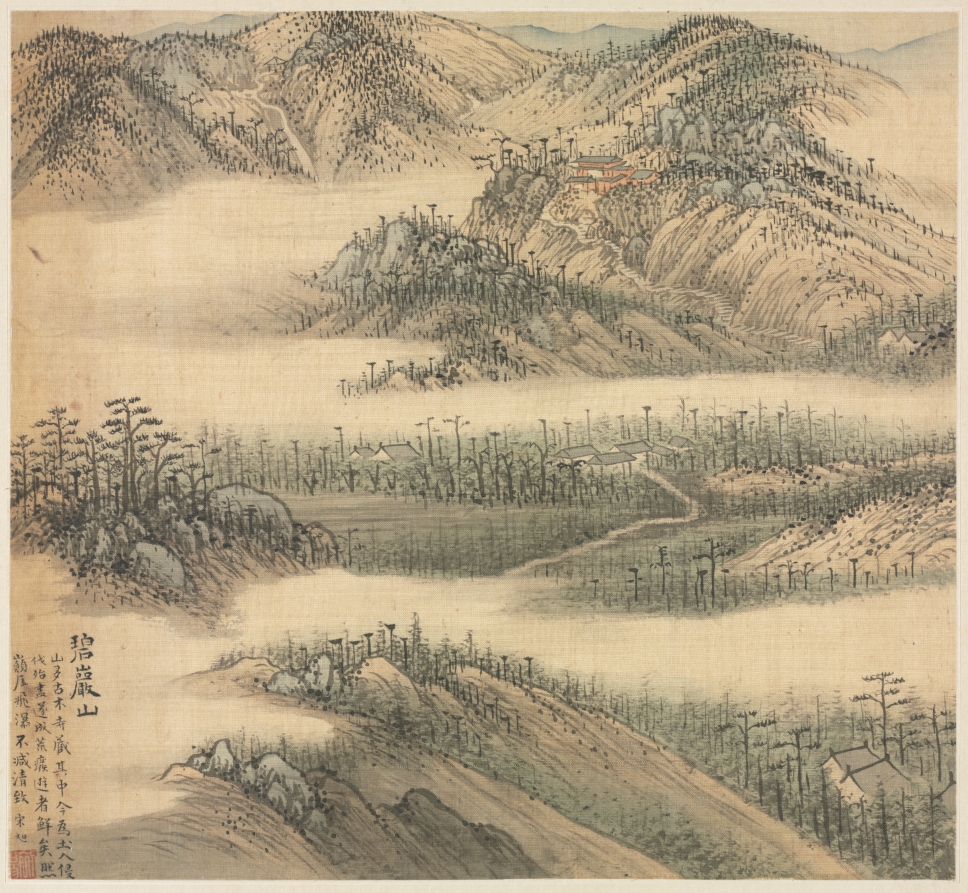
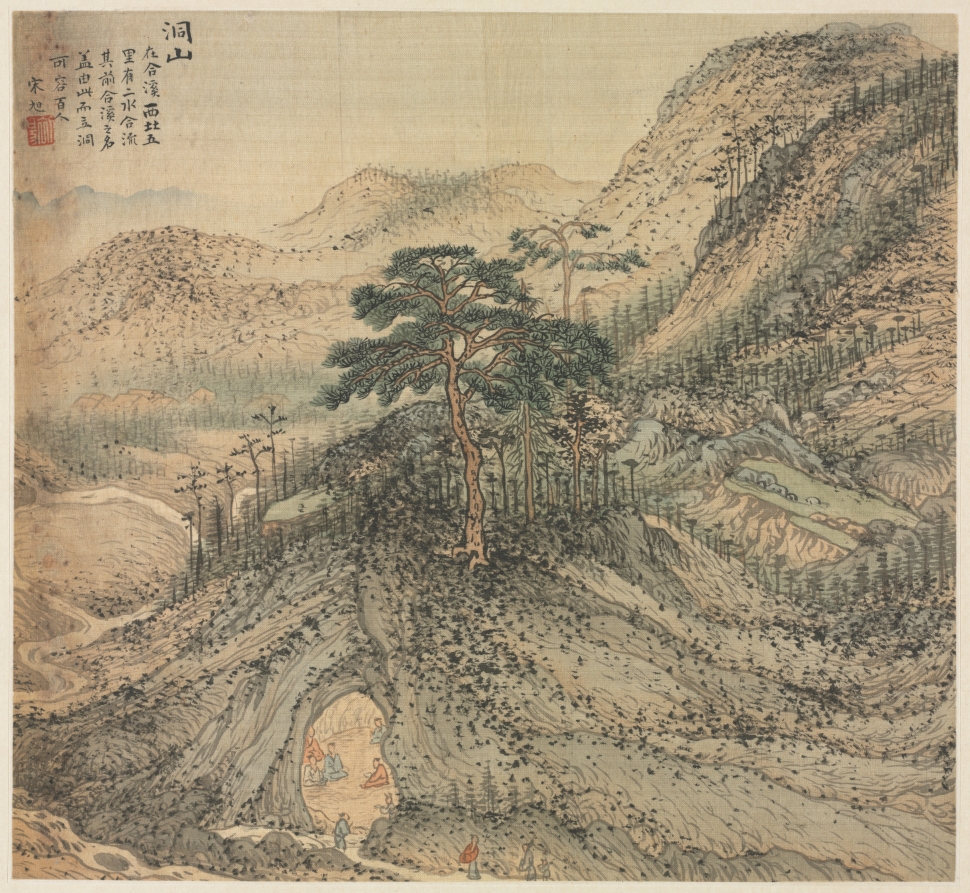
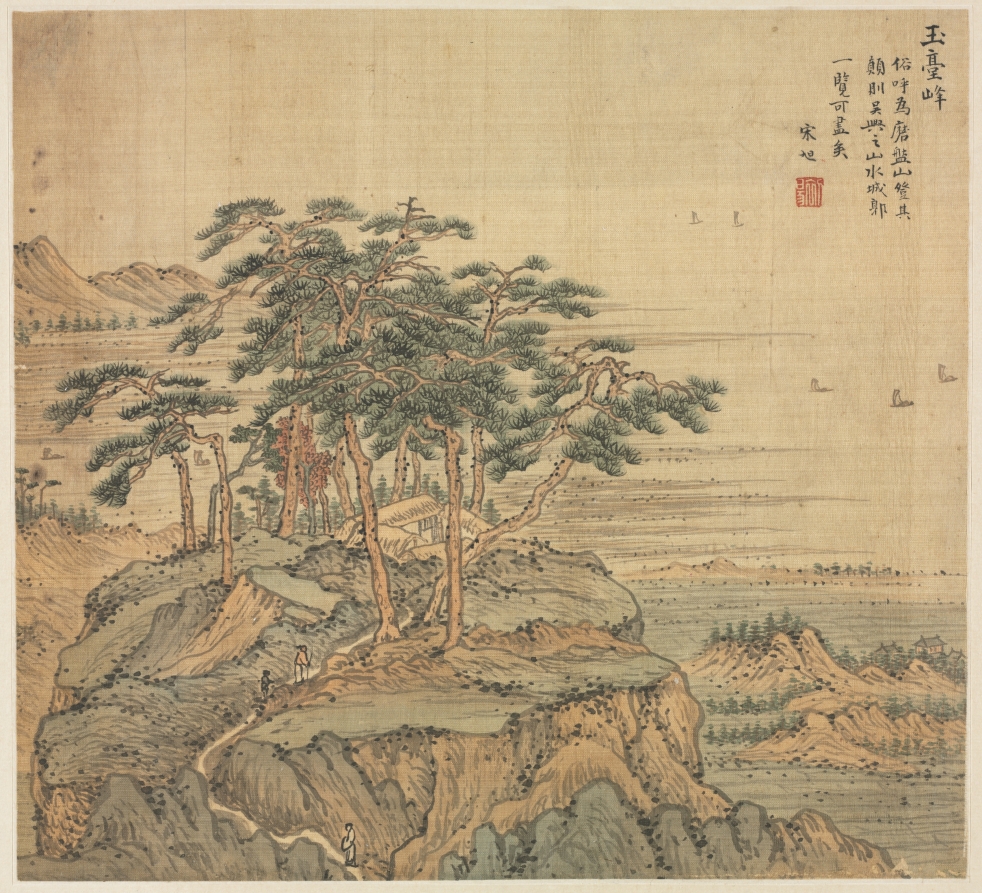
Leaves from this album illustrates sites around Lake Tai of the two adjacent counties Changxing and Wuxing (modern Huzhou). Song Xu, who lived intermittently in Jiaxing and Songjiang, must have passed through Wuxing by boat and thus knew the region.
The paintings are inscribed with gazetteerlike notations, suggesting that the album was produced for clients as commemorative works, a travel guide, or for “armchair travel” (woyou) in one’s mind.
Leaves from this album illustrates sites around Lake Tai of the two adjacent counties Changxing and Wuxing (modern Huzhou). Song Xu, who lived intermittently in Jiaxing and Songjiang, must have passed through Wuxing by boat and thus knew the region.
The paintings are inscribed with gazetteerlike notations, suggesting that the album was produced for clients as commemorative works, a travel guide, or for “armchair travel” (woyou) in one’s mind.
Provenance
(Kaikodo America Inc., New York, NY, sold to the Cleveland Museum of Art) (?–1998); The Cleveland Museum of Art, Cleveland, OH (1998–)
Accession Number
1998.78.17
Medium
Album leaf; ink and color on silk
Dimensions
Sheet: 26.4 x 28.4 cm (10 3/8 x 11 3/16 in.)
Classification
Painting
Credit Line
The Severance and Greta Millikin Purchase Fund
Tags
Painting Renaissance (1400–1599) Ink Silk Painting Chinese Color: Yellow
Background & Context
Background Story
Bilang Lake (Green Wave Lake) complements the Baoyang Lake leaf in Song Xu's album, offering a second water-centered composition that emphasizes the horizontal dimension. Where Baoyang Lake may be serene and reflective, Bilang Lake — as its name suggests — presents water in motion, with waves and wind creating patterns on the surface. The lake's shores are populated with trees and perhaps buildings, providing the vertical elements that structure the composition and give scale to the water's expanse.
Cultural Impact
Two lake scenes in a single album is unusual and suggests that Song Xu's geographic project was comprehensive, documenting not just peaks and shrines but the full range of landscape features in the region. The inclusion of Bilang Lake alongside Baoyang Lake shows the artist's commitment to representing different states of water — calm and turbulent — within the same album.
Why It Matters
Bilang Lake provides another essential contrast to the vertical peaks. In Chinese landscape theory, mountains (shan) and water (shui) are the two fundamental elements, and an album that included only peaks would be incomplete. The lake scenes give the album its Daoist balance.