Description
By the 1500s, visits to historic and scenic sites in the lower Yangzi delta stimulated an increase of printed illustrated travel books. Topographical depictions of local scenery flourished.
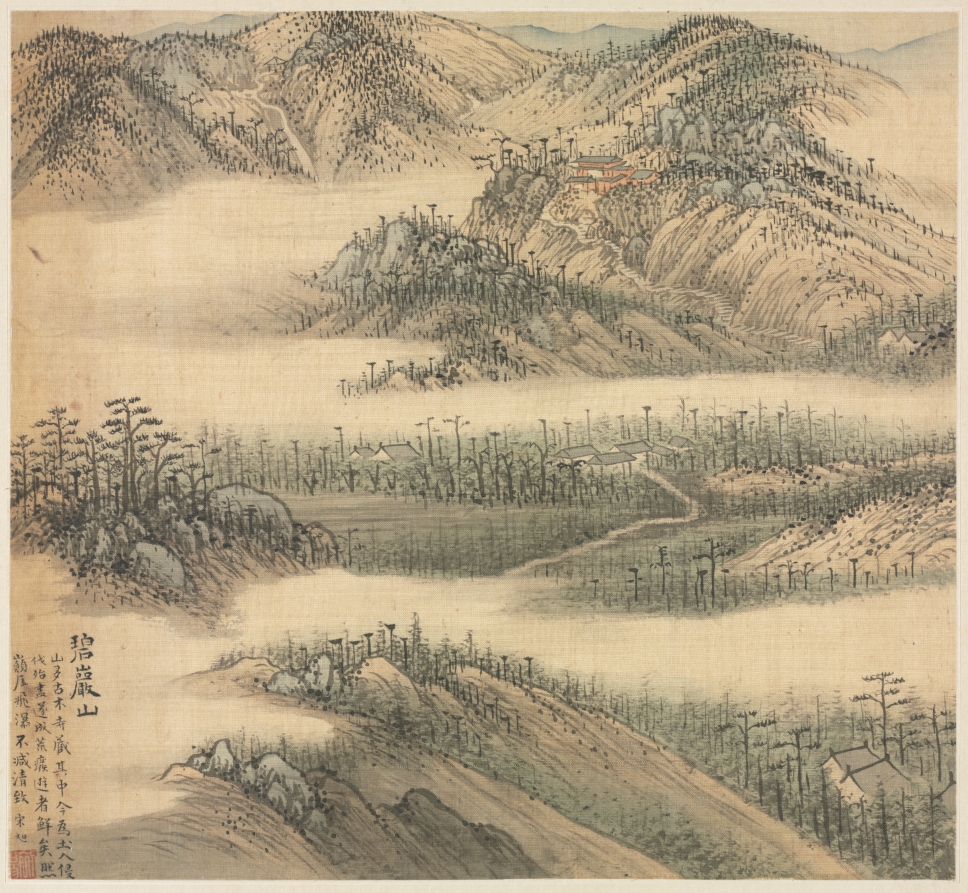
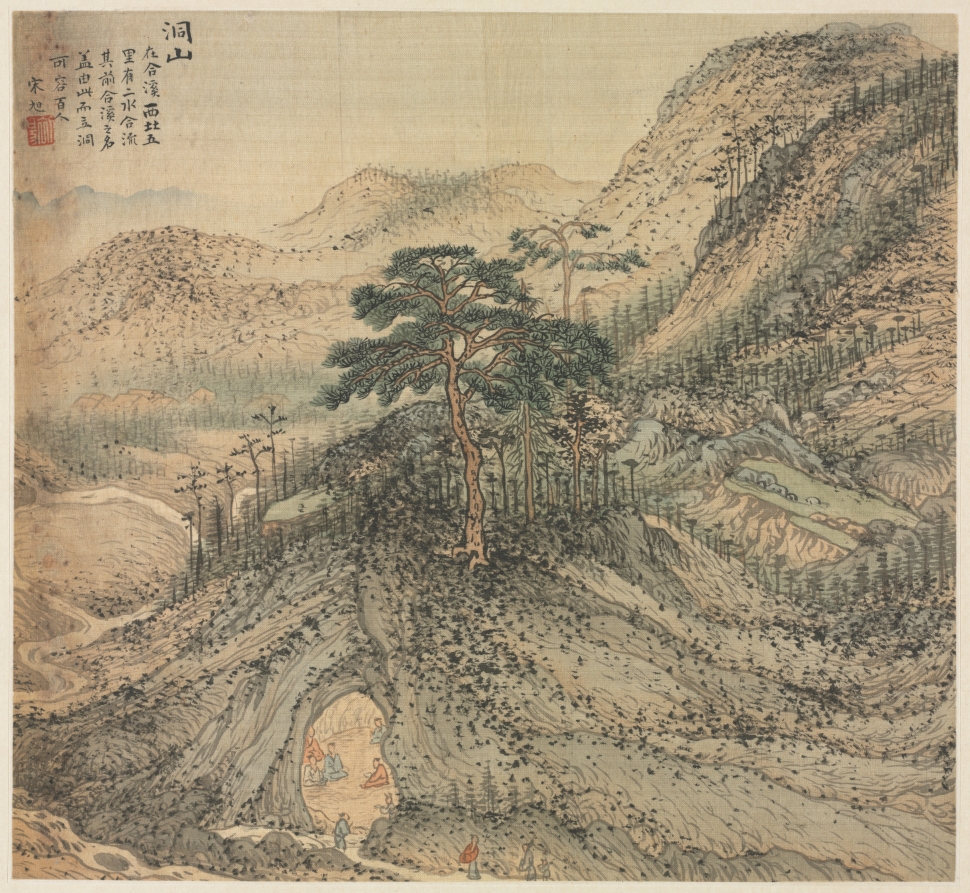
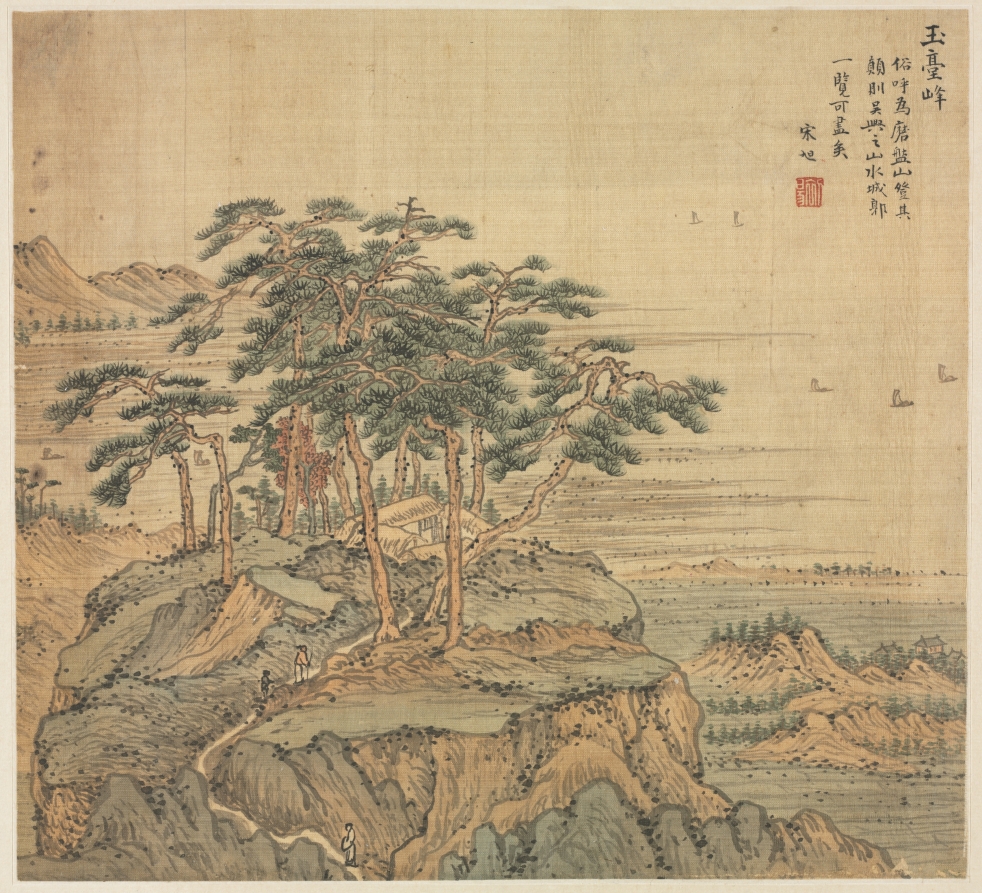
Leaves from this album illustrates sites around Lake Tai of the two adjacent counties Changxing and Wuxing (modern Huzhou). Song Xu, who lived intermittently in Jiaxing and Songjiang, must have passed through Wuxing by boat and thus knew the region.
The paintings are inscribed with gazetteerlike notations, suggesting that the album was produced for clients as commemorative works, a travel guide, or for “armchair travel” (woyou) in one’s mind.
Leaves from this album illustrates sites around Lake Tai of the two adjacent counties Changxing and Wuxing (modern Huzhou). Song Xu, who lived intermittently in Jiaxing and Songjiang, must have passed through Wuxing by boat and thus knew the region.
The paintings are inscribed with gazetteerlike notations, suggesting that the album was produced for clients as commemorative works, a travel guide, or for “armchair travel” (woyou) in one’s mind.
Provenance
(Kaikodo America Inc., New York, NY, sold to the Cleveland Museum of Art) (?–1998); The Cleveland Museum of Art, Cleveland, OH (1998–)
Accession Number
1998.78.18
Medium
Album leaf; ink and color on silk
Dimensions
Sheet: 26.4 x 28.4 cm (10 3/8 x 11 3/16 in.)
Classification
Painting
Credit Line
The Severance and Greta Millikin Purchase Fund
Tags
Painting Renaissance (1400–1599) Ink Silk Painting Chinese Color: White
Background & Context
Background Story
Xiaomei is identified as a specific location in Song Xu's geographic album, named after one of the notable sites in the region. The album leaf format — small, intimate, designed for close viewing — is perfectly suited to Xiaomei's scale: not a grand peak or a vast lake, but a smaller scenic spot that rewards careful attention. Song Xu's brushwork adjusts to the subject's modest scale, using fine lines and subtle color gradations rather than the bold strokes and dramatic compositions reserved for major peaks.
Cultural Impact
The inclusion of smaller, less famous sites alongside major mountains and lakes was a feature of the best Ming dynasty geographic albums. These minor sites often contain the most personal observations — the artist is less constrained by tradition and free to record what he actually saw. Xiaomei may be a minor peak, a stream, or a scenic viewpoint, but in Song Xu's treatment it receives the same careful attention as the famous mountains.
Why It Matters
Xiaomei proves that Song Xu's geographic album is not just a collection of famous views but a genuine landscape record. The small, the local, and the overlooked receive the same careful attention as the grand and famous — this is what distinguishes a geographic album from a tourist souvenir.