Description
By the 1500s, visits to historic and scenic sites in the lower Yangzi delta stimulated an increase of printed illustrated travel books. Topographical depictions of local scenery flourished.
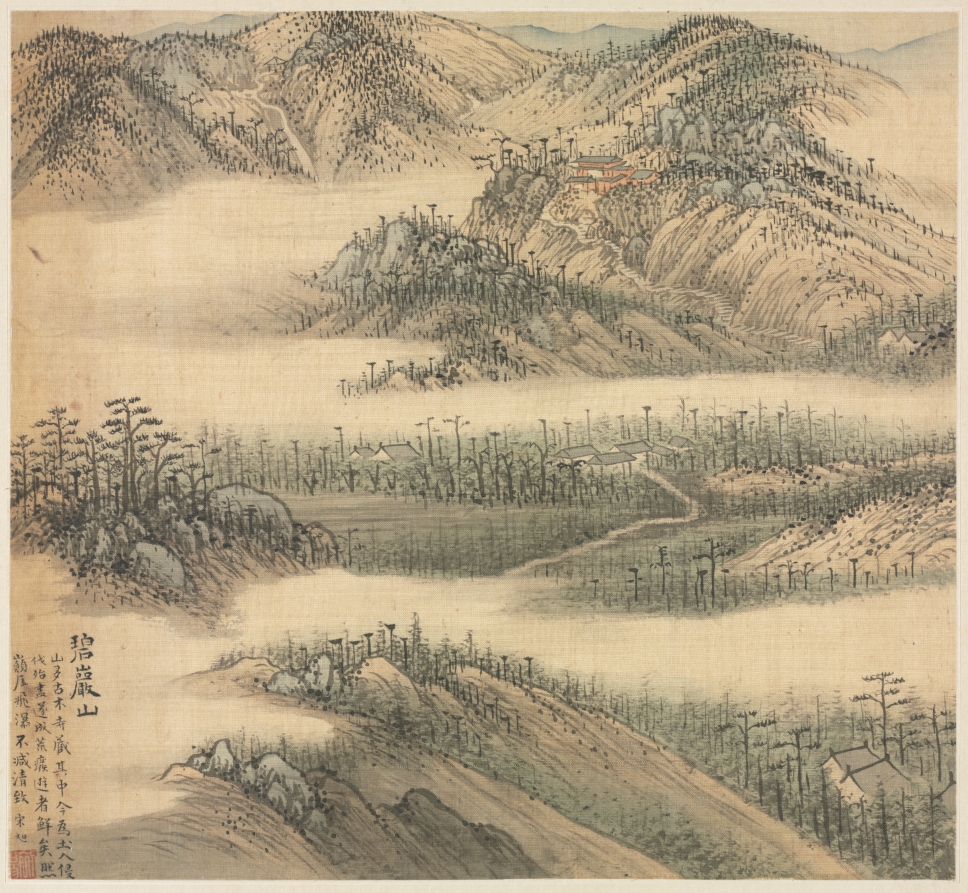
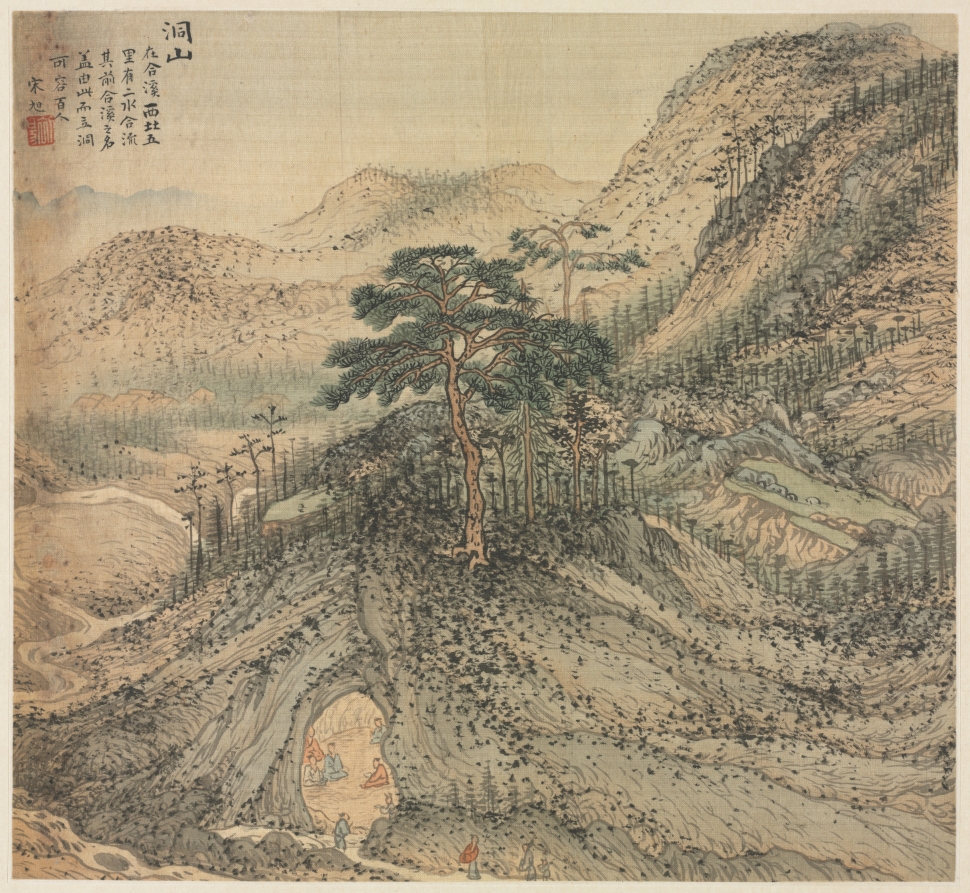
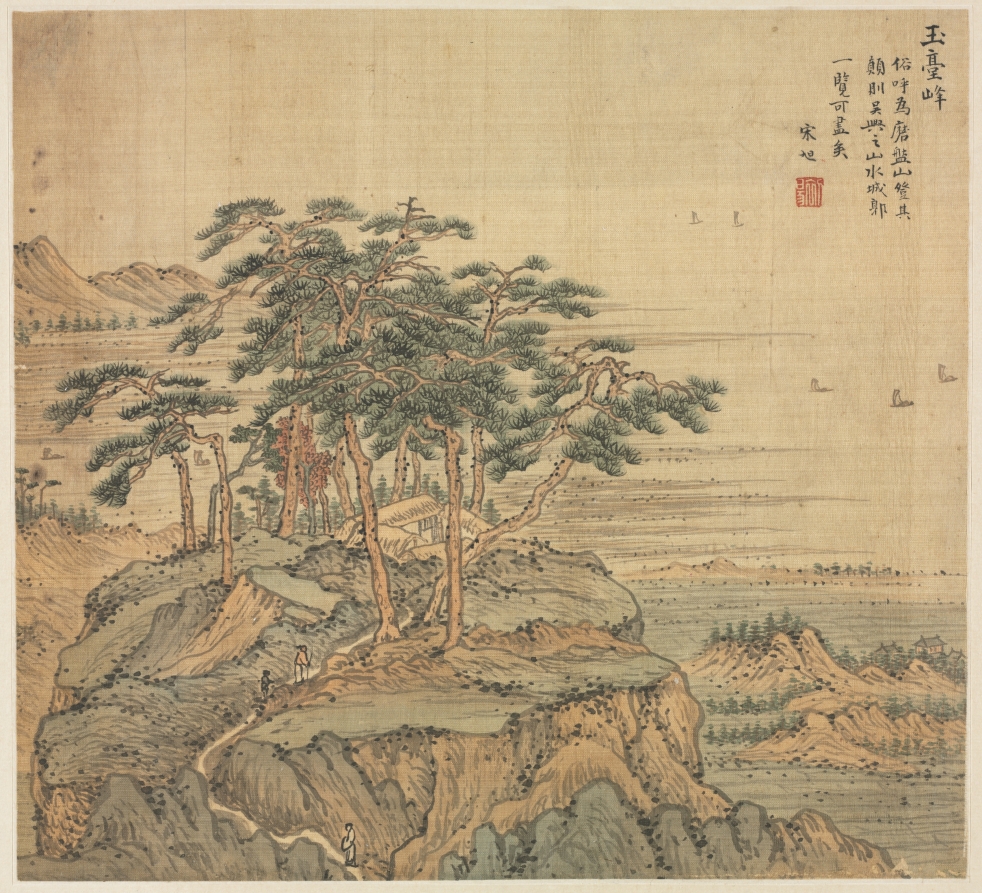
Leaves from this album illustrates sites around Lake Tai of the two adjacent counties Changxing and Wuxing (modern Huzhou). Song Xu, who lived intermittently in Jiaxing and Songjiang, must have passed through Wuxing by boat and thus knew the region.
The paintings are inscribed with gazetteerlike notations, suggesting that the album was produced for clients as commemorative works, a travel guide, or for “armchair travel” (woyou) in one’s mind.
Leaves from this album illustrates sites around Lake Tai of the two adjacent counties Changxing and Wuxing (modern Huzhou). Song Xu, who lived intermittently in Jiaxing and Songjiang, must have passed through Wuxing by boat and thus knew the region.
The paintings are inscribed with gazetteerlike notations, suggesting that the album was produced for clients as commemorative works, a travel guide, or for “armchair travel” (woyou) in one’s mind.
Provenance
(Kaikodo America Inc., New York, NY, sold to the Cleveland Museum of Art) (?–1998); The Cleveland Museum of Art, Cleveland, OH (1998–)
Accession Number
1998.78.2
Medium
Album leaf; ink and color on silk
Dimensions
Sheet: 26.4 x 28.4 cm (10 3/8 x 11 3/16 in.)
Classification
Painting
Credit Line
The Severance and Greta Millikin Purchase Fund
Tags
Painting Renaissance (1400–1599) Ink Silk Painting Chinese Color: Gray
Background & Context
Background Story
Mount Phoenix (Fenghuang) is one of the most auspicious place names in Chinese geography, associated with the mythical phoenix that appears only in times of peace and good governance. Song Xu's depiction of this peak carries the full weight of its symbolic name: the mountain is rendered with particular elegance, its profile suggesting the swooping form of the mythical bird even if the name is purely topographic. The use of color on silk allows for a richer depiction than monochrome ink would provide, with the phoenix-mountain's distinctive features highlighted through careful pigment application.
Cultural Impact
Mountains named after the phoenix appear throughout China, reflecting the deep cultural association between landscape and auspicious symbolism. In the context of Song Xu's late Ming album, Mt. Fenghuang carries an additional layer of meaning: the phoenix represents the hope of renewal and good governance — a politically charged symbol in a dynasty that would collapse within decades of this painting's creation.
Why It Matters
Mt. Fenghuang is the symbolic peak of Song Xu's album — a mountain named for the bird of good governance in a dynasty that needed it. The painting is simultaneously a topographic record and a quiet expression of hope.