Description
By the 1500s, visits to historic and scenic sites in the lower Yangzi delta stimulated an increase of printed illustrated travel books. Topographical depictions of local scenery flourished.
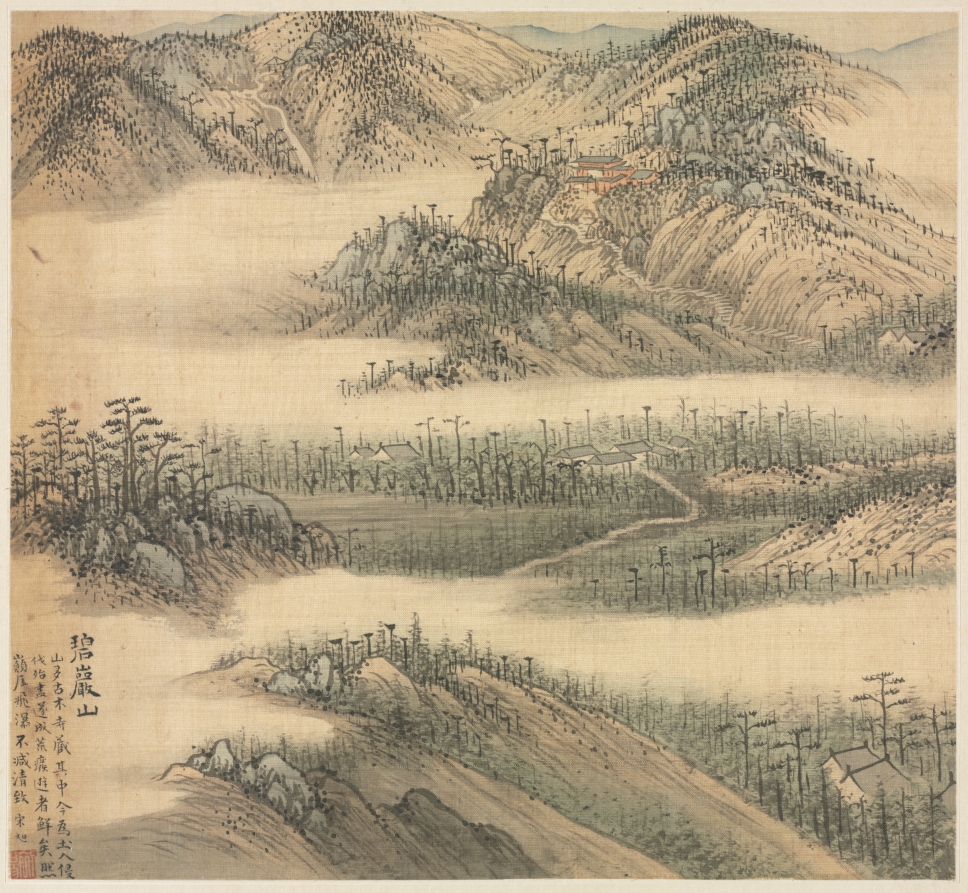
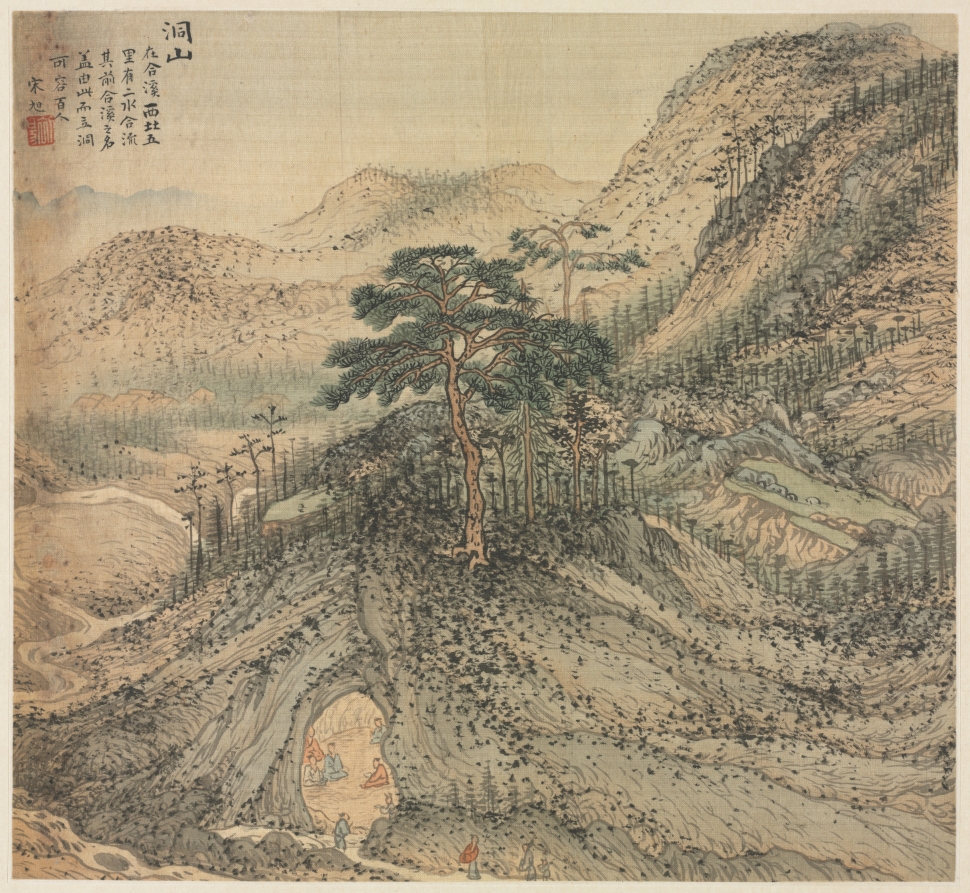
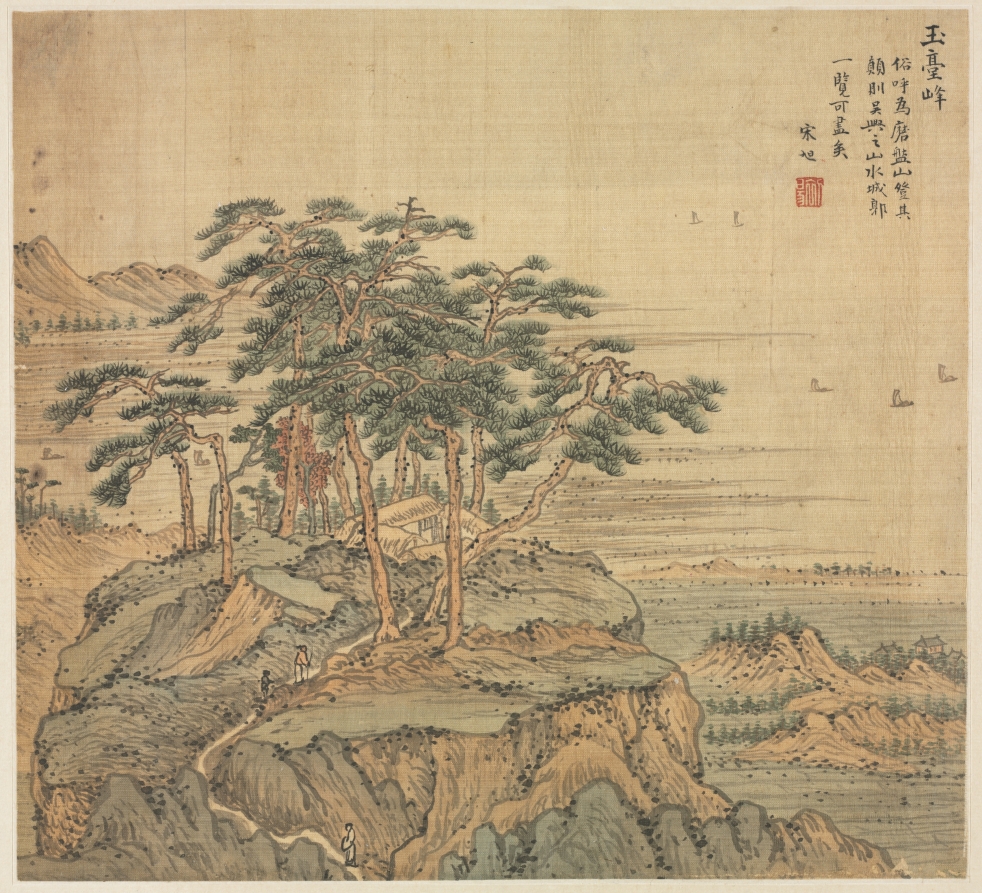
Leaves from this album illustrates sites around Lake Tai of the two adjacent counties Changxing and Wuxing (modern Huzhou). Song Xu, who lived intermittently in Jiaxing and Songjiang, must have passed through Wuxing by boat and thus knew the region.
The paintings are inscribed with gazetteerlike notations, suggesting that the album was produced for clients as commemorative works, a travel guide, or for “armchair travel” (woyou) in one’s mind.
Leaves from this album illustrates sites around Lake Tai of the two adjacent counties Changxing and Wuxing (modern Huzhou). Song Xu, who lived intermittently in Jiaxing and Songjiang, must have passed through Wuxing by boat and thus knew the region.
The paintings are inscribed with gazetteerlike notations, suggesting that the album was produced for clients as commemorative works, a travel guide, or for “armchair travel” (woyou) in one’s mind.
Provenance
(Kaikodo America Inc., New York, NY, sold to the Cleveland Museum of Art) (?–1998); The Cleveland Museum of Art, Cleveland, OH (1998–)
Accession Number
1998.78.3
Medium
Album leaf; ink and color on silk
Dimensions
Sheet: 26.4 x 28.4 cm (10 3/8 x 11 3/16 in.)
Classification
Painting
Credit Line
The Severance and Greta Millikin Purchase Fund
Tags
Painting Renaissance (1400–1599) Ink Silk Painting Chinese Color: Gray
Background & Context
Background Story
Mt. Wuzhan completes Song Xu's survey of named peaks in the geographic album, presenting another distinctive mountain profile rendered with the same combination of topographic specificity and artistic interpretation that characterizes the entire series. By this point in the album, the viewer has accumulated a mental map of the region — its peaks, lakes, shrines, and scenic viewpoints — and Mt. Wuzhan adds another landmark to this imagined topography. The album format transforms geographic knowledge into an aesthetic experience, allowing the viewer to travel through the landscape page by page.
Cultural Impact
The final leaves of a geographic album often present less prominent sites, but their inclusion is what makes the album comprehensive rather than selective. Mt. Wuzhan may not be as famous as Lushan or as symbolically charged as Mt. Fenghuang, but its presence in the album affirms Song Xu's commitment to documenting the full range of the region's landscape features.
Why It Matters
Mt. Wuzhan reminds us that Song Xu's album is a geographic survey, not a highlight reel. Every peak matters, whether famous or obscure, because each one contributes to the complete picture of a region's landscape identity.