Description
By the 1500s, visits to historic and scenic sites in the lower Yangzi delta stimulated an increase of printed illustrated travel books. Topographical depictions of local scenery flourished.
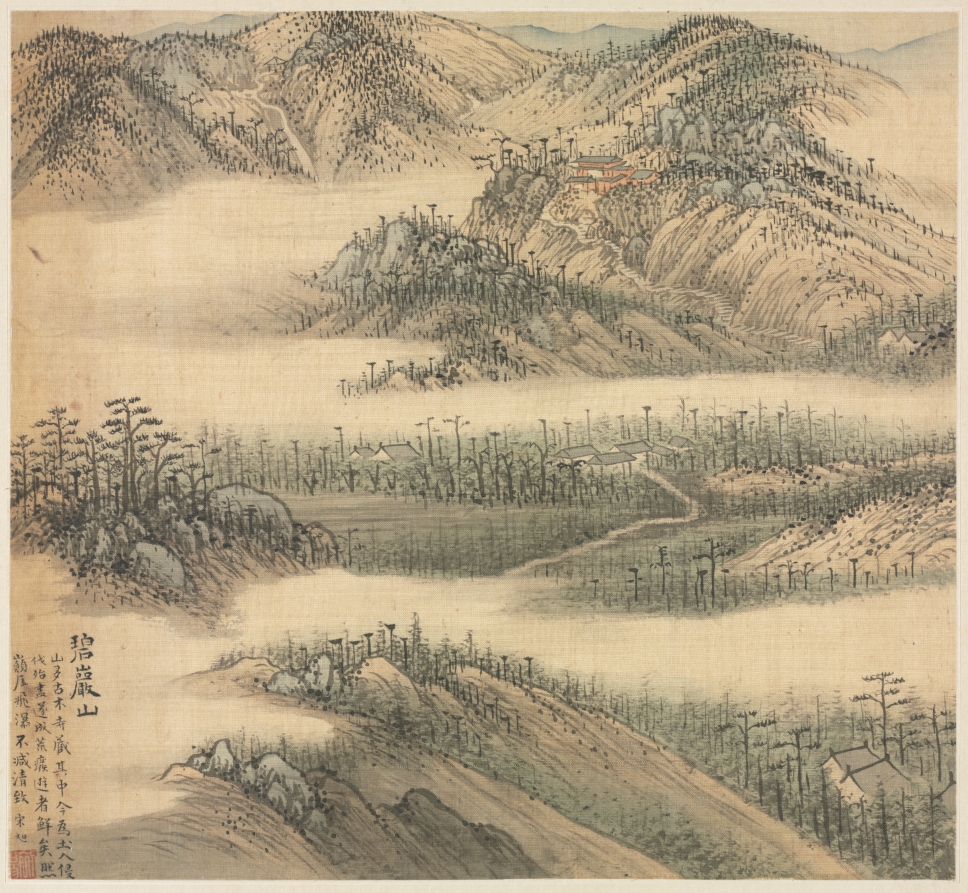
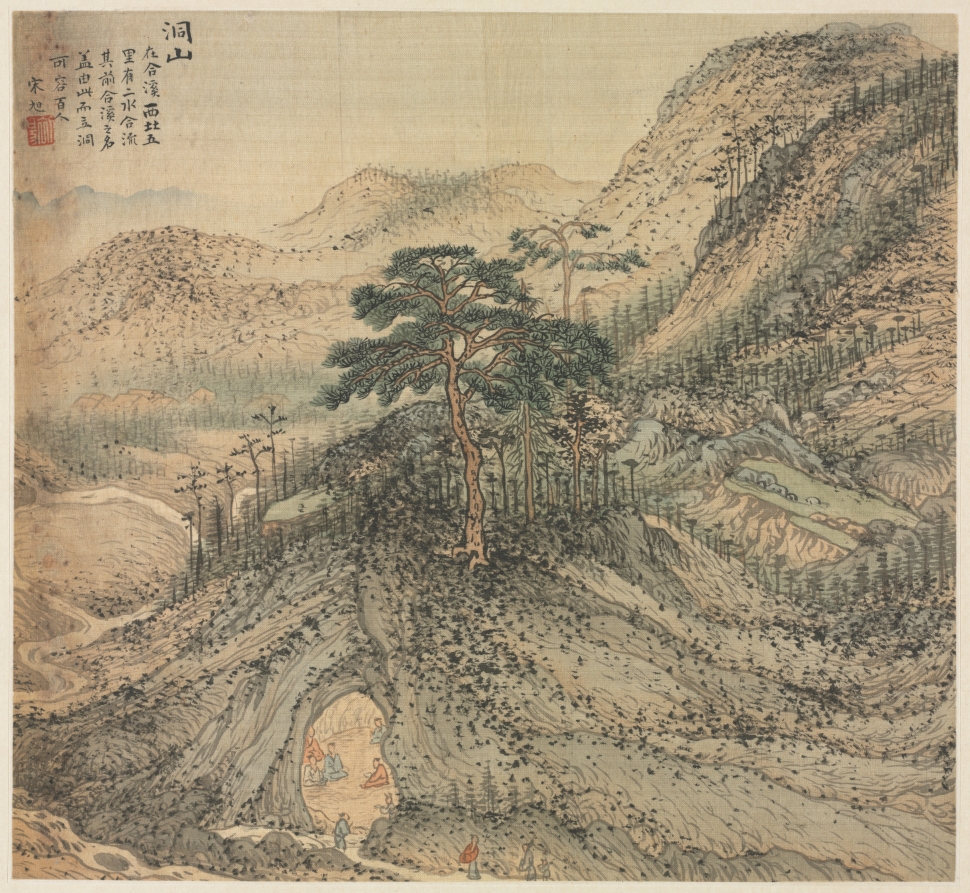
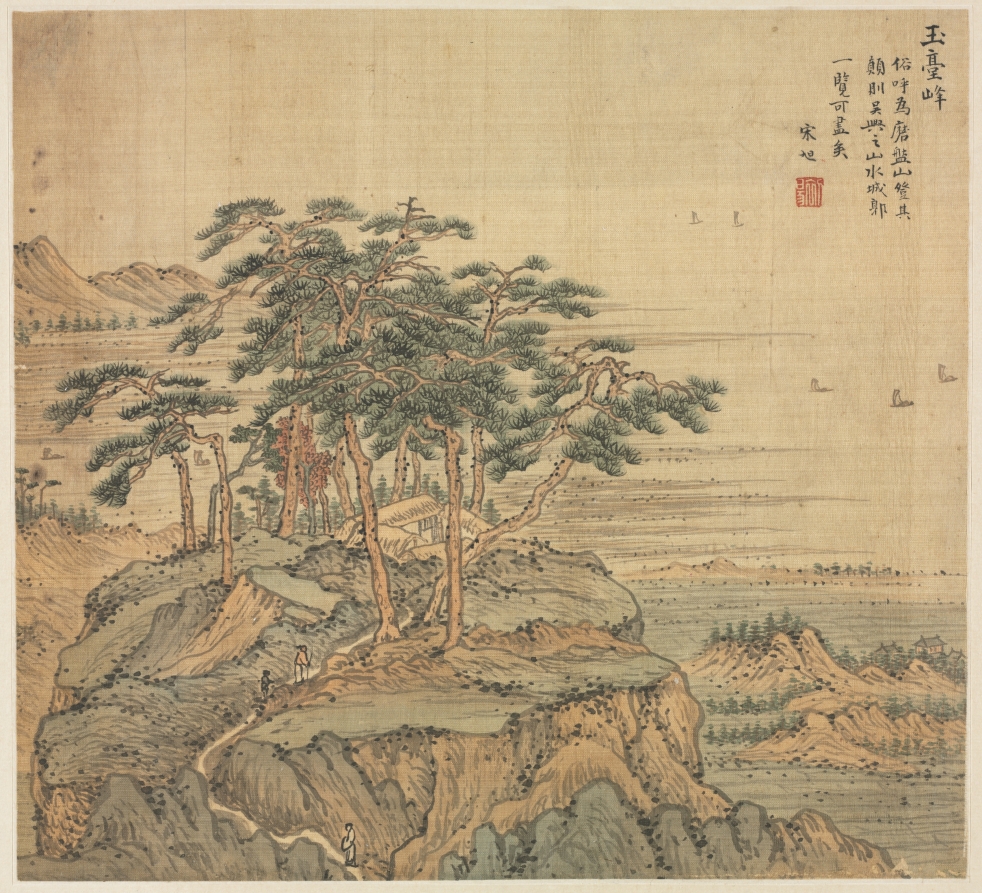
Leaves from this album illustrates sites around Lake Tai of the two adjacent counties Changxing and Wuxing (modern Huzhou). Song Xu, who lived intermittently in Jiaxing and Songjiang, must have passed through Wuxing by boat and thus knew the region.
The paintings are inscribed with gazetteerlike notations, suggesting that the album was produced for clients as commemorative works, a travel guide, or for “armchair travel” (woyou) in one’s mind.
Leaves from this album illustrates sites around Lake Tai of the two adjacent counties Changxing and Wuxing (modern Huzhou). Song Xu, who lived intermittently in Jiaxing and Songjiang, must have passed through Wuxing by boat and thus knew the region.
The paintings are inscribed with gazetteerlike notations, suggesting that the album was produced for clients as commemorative works, a travel guide, or for “armchair travel” (woyou) in one’s mind.
Provenance
(Kaikodo America Inc., New York, NY, sold to the Cleveland Museum of Art) (?–1998); The Cleveland Museum of Art, Cleveland, OH (1998–)
Accession Number
1998.78.9
Medium
Album leaf; ink and color on silk
Dimensions
Sheet: 26.4 x 28.4 cm (10 3/8 x 11 3/16 in.)
Classification
Painting
Credit Line
The Severance and Greta Millikin Purchase Fund
Tags
Painting Renaissance (1400–1599) Ink Silk Painting Chinese Color: White Color: Gray
Background & Context
Background Story
Hexi — identified as a river crossing, stream, or riverside location — provides another variation on the water theme in Song Xu's geographic album. Where the lake scenes presented still or gently moving water, Hexi introduces the element of flowing water and the human activity associated with river crossings: bridges, boats, or fording points. The composition likely includes architectural elements (bridges or buildings) and human figures (travelers crossing or resting by the water), adding narrative dimension to the landscape.
Cultural Impact
River crossings were among the most important functional and symbolic sites in Chinese landscape geography. They marked boundaries between regions, they required engineering (bridges, ferries), and they provided narrative subjects (the solitary traveler crossing a stream, a standard motif in Chinese landscape painting). Song Xu's Hexi combines topographic documentation with this narrative tradition.
Why It Matters
Hexi is where the landscape becomes a story: travelers cross, bridges connect, and water becomes a passage rather than a barrier. In Song Xu's geographic album, it is the point where documentation becomes narrative.