Provenance
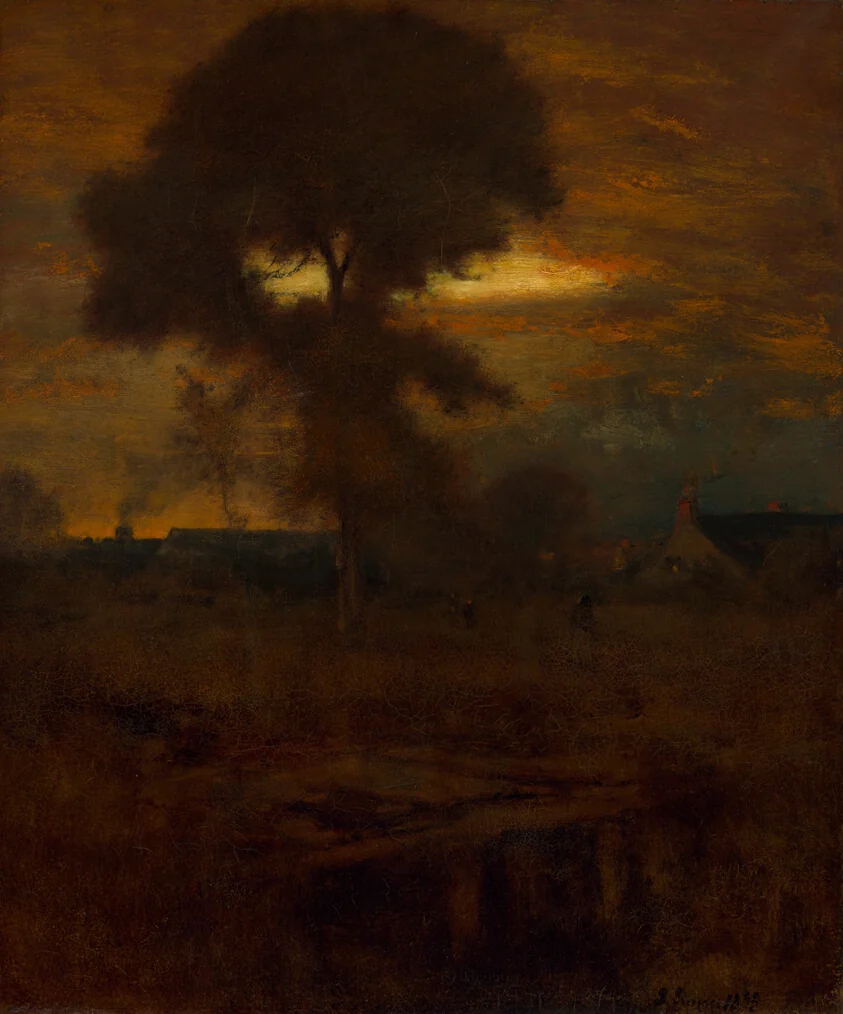
Estate of the artist (sale, Fifth Avenue Art Galleries, New York [George Inness executor's sale], February 12-14, 1895, no. 52, as Afterglow), Charles L. Hutchinson, Chicago, acquired at auction 1895, to 1911; Edward B. Butler, Chicago, 1911; given to the Art Institute of Chicago, 1911.
Accession Number
65170
Medium
Oil on canvas
Dimensions
76.5 × 64.1 cm (30 1/8 × 25 1/4 in.)
Classification
Painting
Credit Line
Edward B. Butler Collection
Background & Context
Background Story
George Inness's "Afterglow" (1893) is an oil on canvas that captures the lingering light in the sky after the sun has set. The afterglow—the warm, colored light that remains in the western sky after sunset—was a subject of particular significance for Inness, representing the persistence of beauty and spirit even after the apparent end of the day. The painting shows the sky illuminated with the warm colors of the afterglow: pinks, oranges, golds, and soft purples, the landscape below falling into shadow. Inness's handling is exceptionally soft and atmospheric, the sky and landscape merging in a continuum of glowing color. The palette is extraordinarily rich, the afterglow colors modulated with subtle variations. This painting dates from the final year of Inness's life, when his technique had achieved its maximum expressiveness and his spiritual vision was at its most intense. The afterglow becomes a metaphor for the persistence of spirit beyond the limits of physical existence, a vision of hope and transcendence.
Cultural Impact
Inness's afterglow paintings represent the ultimate expression of his Tonalist vision, pushing the representation of light and atmosphere to the point where the physical landscape seems to dissolve into pure spirit.
Why It Matters
This painting of the afterglow captures the lingering beauty of light after sunset, the warm colors and dissolving forms creating a vision of nature as a threshold to the spiritual realm.