Accession Number
76149
Medium
Lithograph in blue, orange, and black on white wove paper
Dimensions
Image: 40 × 29.8 cm (15 3/4 × 11 3/4 in.); Sheet: 56.5 × 45 cm (22 1/4 × 17 3/4 in.)
Classification
lithograph
Credit Line
Gift of Hedi and Carl Schniewind
Background & Context
Background Story
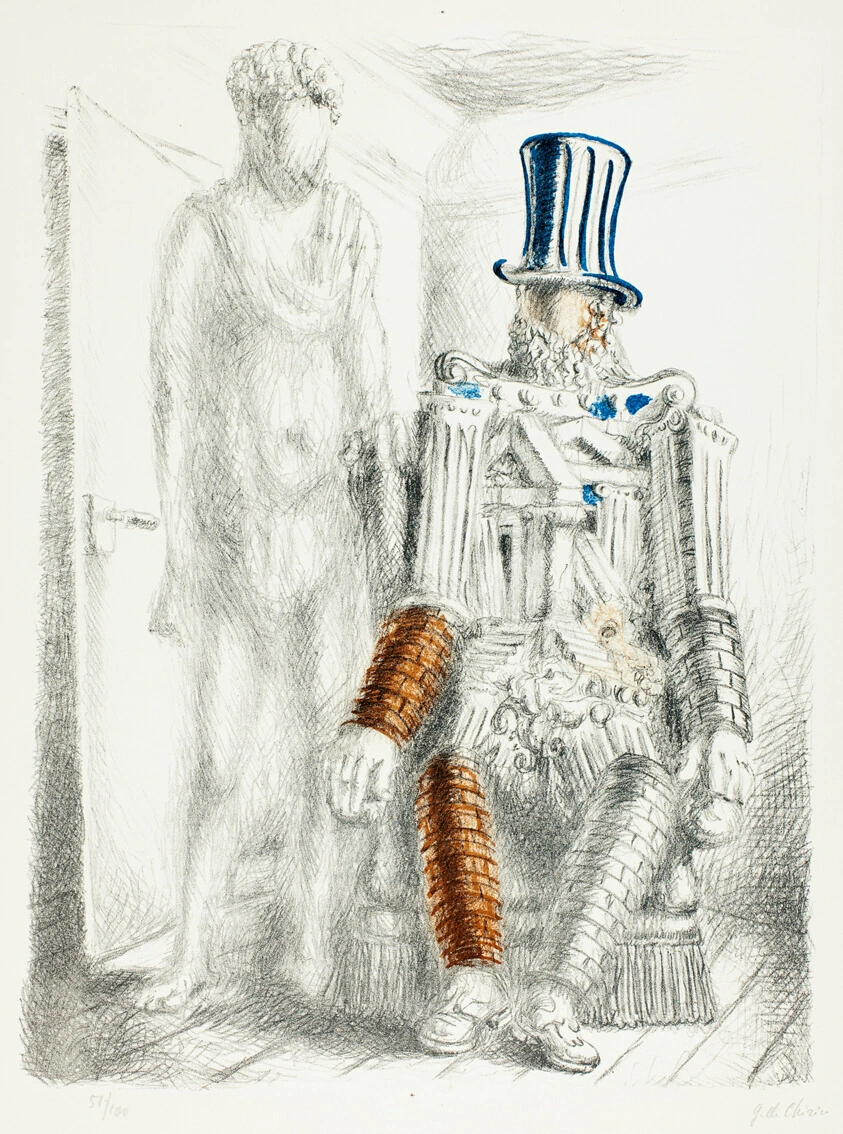
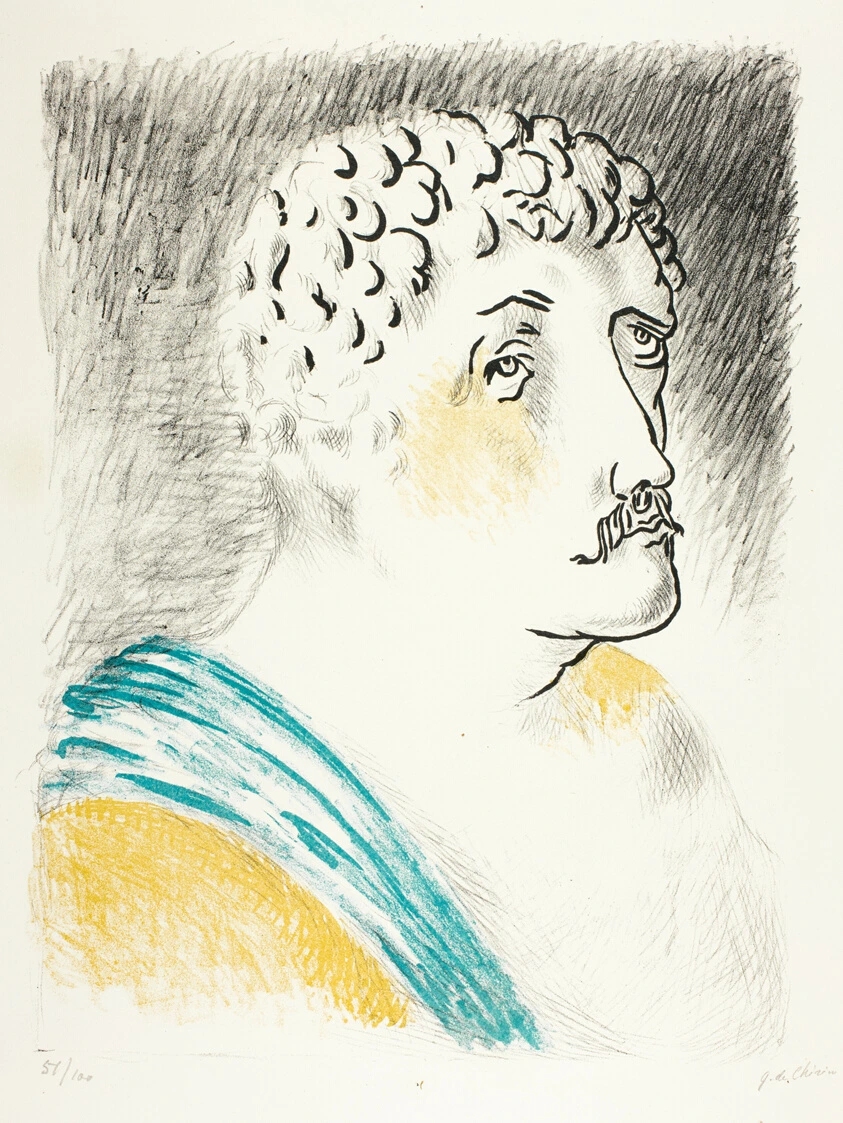
"The Archaeologists IV, Plate three from Metamorposis" is a 1929 lithograph in blue, orange, and black that belongs to de Chirico's "Metamorposis" series, a portfolio of prints that explored the theme of transformation—metamorphosis—through the juxtaposition of classical imagery and modernist color, creating works that hover between archaeology and dream. The composition shows archaeologists—those figures who dig into the earth to recover the past—rendered in the flat, bold colors of lithography with a graphic simplicity that contradicts the scholarly complexity of their vocation. The blue, orange, and black palette is deliberately artificial: these are not the colors of earth and stone but the colors of the printing process, the modern industrial palette that de Chirico employed to distance his images from naturalistic representation. The 1929 date places this work in the period of de Chirico's most systematic printmaking activity, when he was producing portfolios and individual prints that disseminated his painted compositions to a wider audience and established his reputation as a graphic artist of considerable skill. Art historians have connected this series to the broader tradition of the illustrated book in European art, from the mythological etchings of Picasso to the surrealist portfolios of Max Ernst, noting that de Chirico's treatment is more classically referential, more archaeologically specific than these contemporaries. The title "Metamorposis" itself is significant: the neologism suggests both metamorphosis and the posis or positioning of the artist in relation to tradition, a transformation that is also a repositioning. The work also demonstrates de Chirico's mastery of lithography as a medium for flat color and bold contour: the graphic quality of the prints anticipates the poster art of the mid-twentieth century while maintaining a classical subject matter that anchors the modern technique in historical depth.
Cultural Impact
This 1929 lithograph portfolio explored archaeological metamorphosis through industrial blue-orange-black flatness, using modern printing color to distance classical recovery from naturalism while establishing graphic poster anticipation.
Why It Matters
It matters because de Chirico painted men digging for the past in colors that didn't exist in ancient Rome—proving that even archaeology could be a dream if the blue was bright enough.