Accession Number
76147
Medium
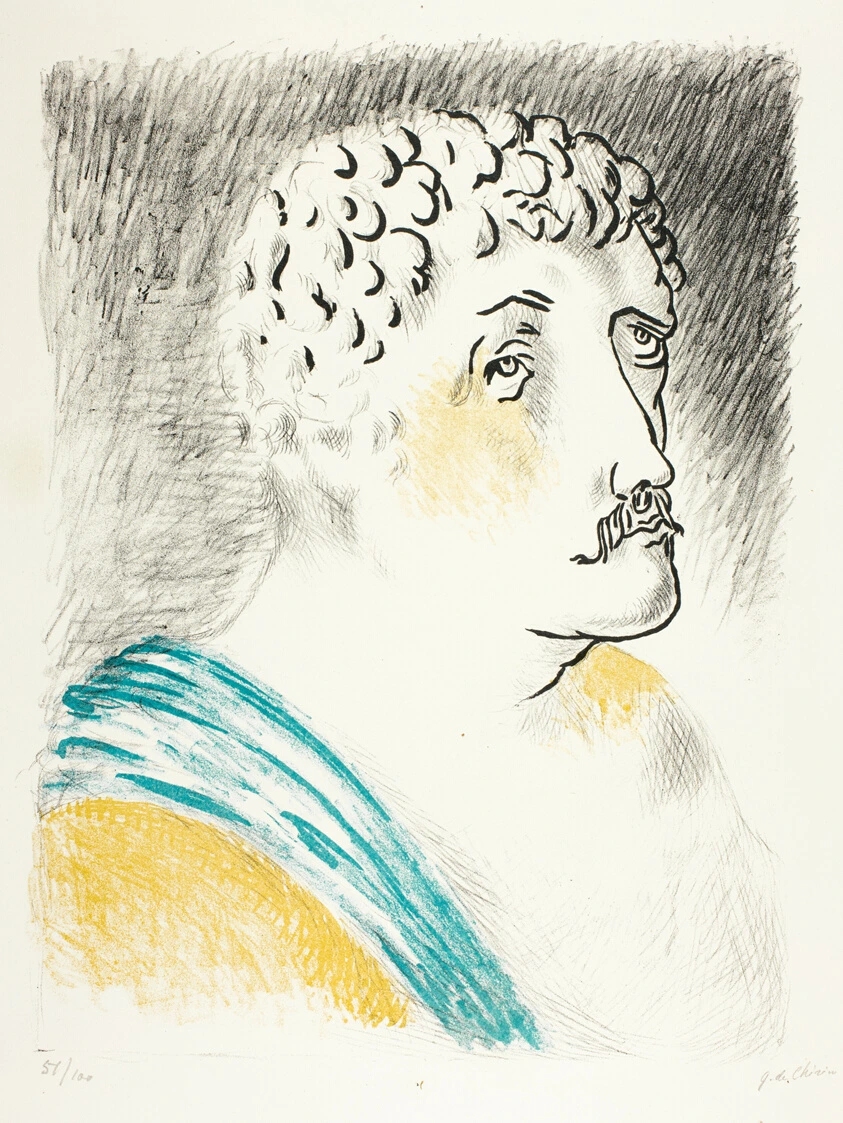
Lithograph in blue, yellow, and black on white wove paper
Dimensions
Image: 41 × 30.2 cm (16 3/16 × 11 15/16 in.); Sheet: 56.5 × 45 cm (22 1/4 × 17 3/4 in.)
Classification
lithograph
Credit Line
Gift of Hedi and Carl Schniewind
Background & Context
Background Story
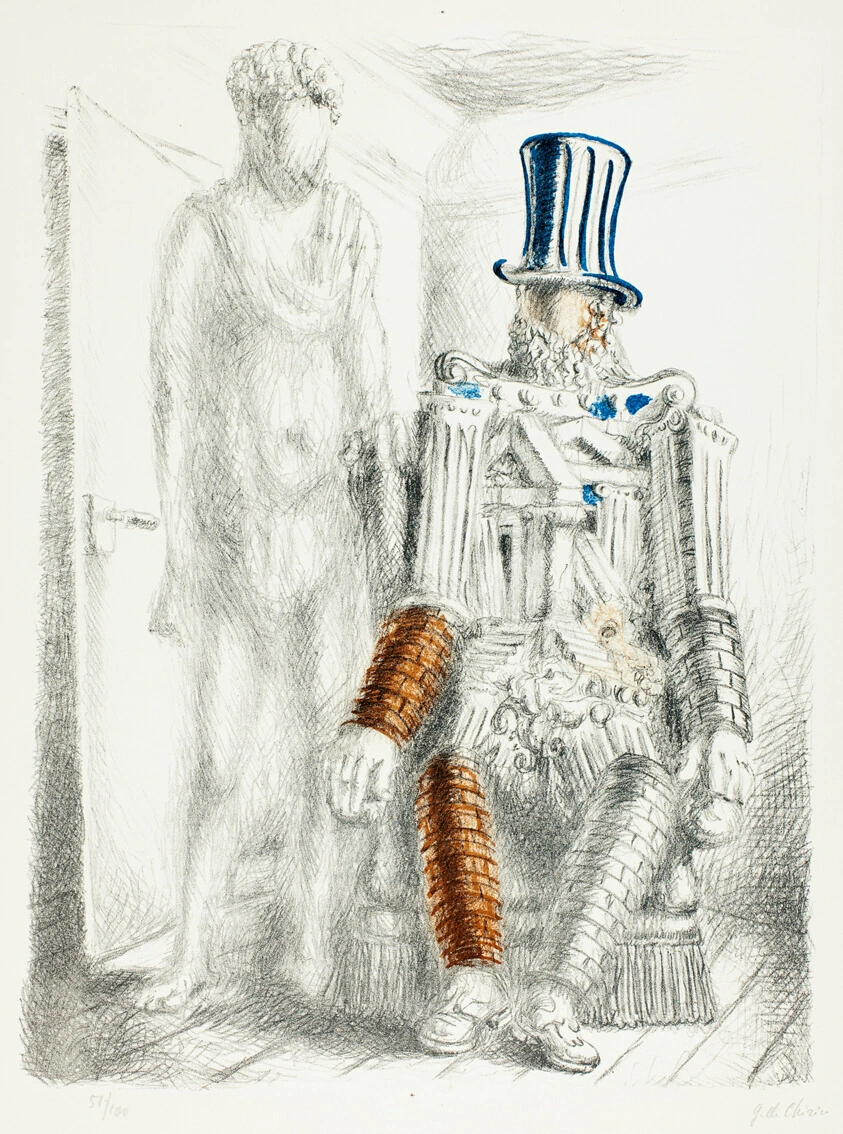
Giorgio de Chiricos Roman Head from 1929 is a color lithograph from his Metamorphosis portfolio that transforms the classical portrait bust into an image of enigmatic stillness and metaphysical dislocation. De Chirico, the founder of the Metaphysical painting movement, spent the late 1920s and 1930s exploring the relationship between classical antiquity and modern irrationality, producing works in which fragments of ancient sculpture float in dreamlike spaces devoid of human presence. The Roman Head is rendered in blue, yellow, and black, a palette that gives the classical portrait the stark, artificial quality of a theatrical prop rather than a work of art, as if the head were a mask or a stage set rather than a portrait of a real person. The lithographic medium, with its capacity for flat, even areas of color and sharp edges, suits de Chiricos Metaphysical style perfectly, producing an image that exists in the ambiguous space between representation and abstraction, the ancient and the modern. The Metamorphosis portfolio, from which this plate comes, takes its title from Ovids mythological epic, suggesting that de Chiricos classical subjects are not merely archaeological but are undergoing a transformation, a metamorphosis from ancient artifact to modern sign that parallels the artists own transformation from the inventor of Metaphysical painting to the neoclassical painter of his later career.
Cultural Impact
De Chiricos lithographs of the late 1920s and 1930s were instrumental in disseminating the Metaphysical aesthetic beyond Italy and influencing the development of Surrealism, especially the dreamlike imagery of Dali, Magritte, and Tanguy. The Roman Head exemplifies the transformation of classical antiquity into a modern sign that defined European modernisms engagement with the ancient world.
Why It Matters
A color lithograph from de Chiricos Metamorphosis portfolio that transforms a Roman portrait bust into an image of Metaphysical dislocation, using a three-color palette of blue, yellow, and black to give the classical subject the artificial quality of a theatrical mask.