Accession Number
1916.1054
Medium
oil on fabric
Dimensions
Unframed: 46.2 x 37.5 cm (18 3/16 x 14 3/4 in.)
Classification
Painting
Credit Line
Gift of Mr. and Mrs. J. H. Wade
Tags
Painting Impressionist & Modern (1851–1900) Oil Painting French Color: Red Color: Orange
Background & Context
Background Story
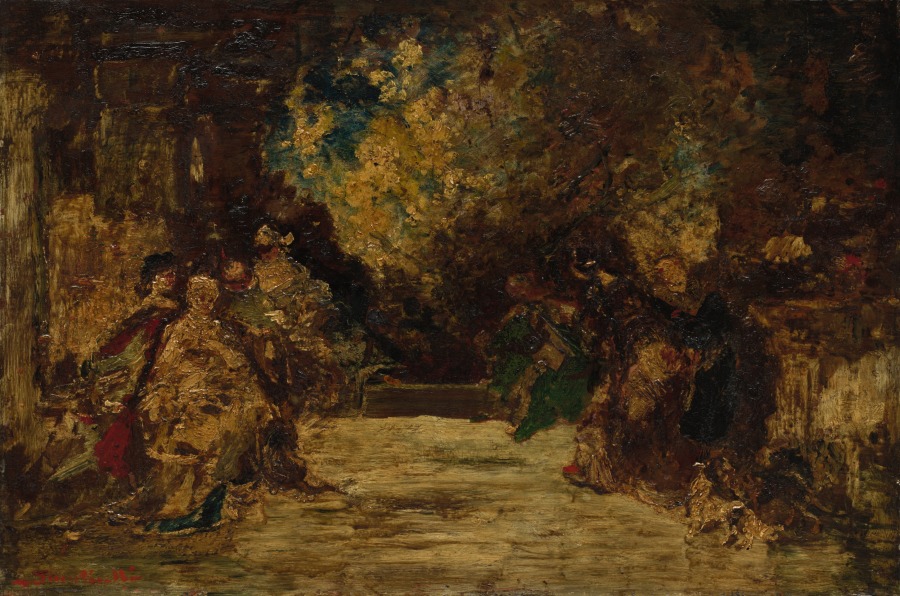
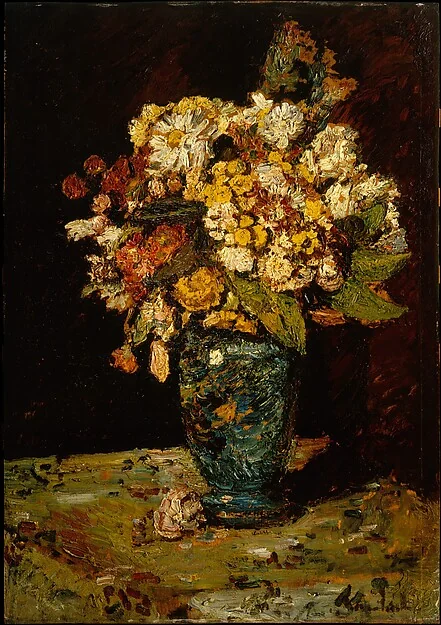
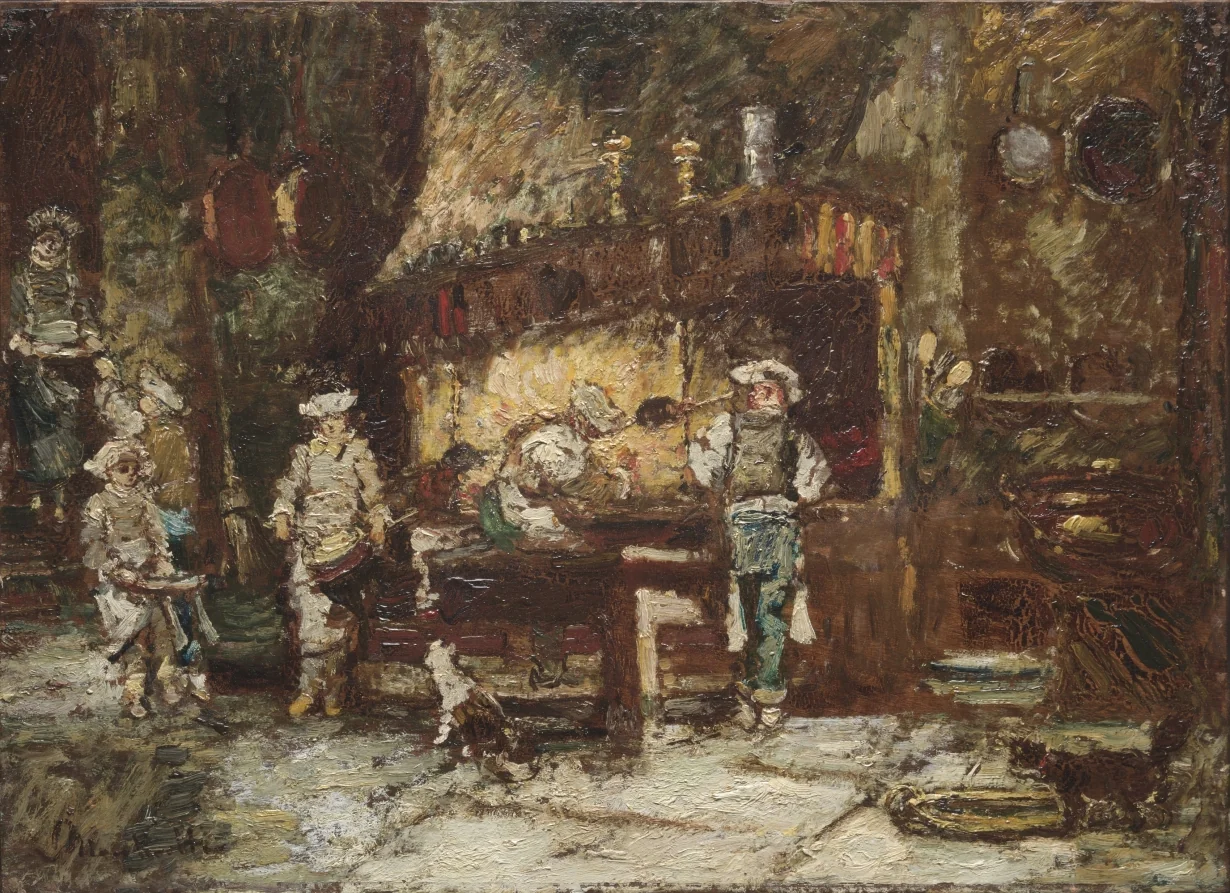
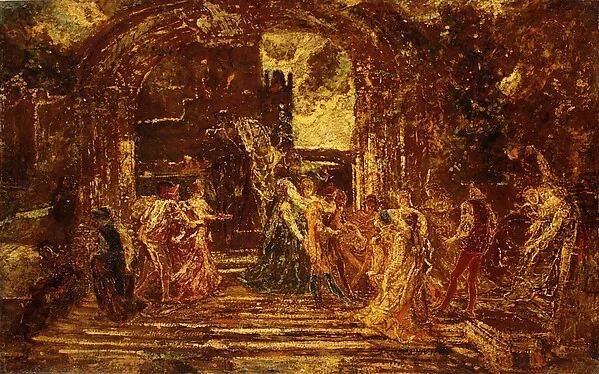
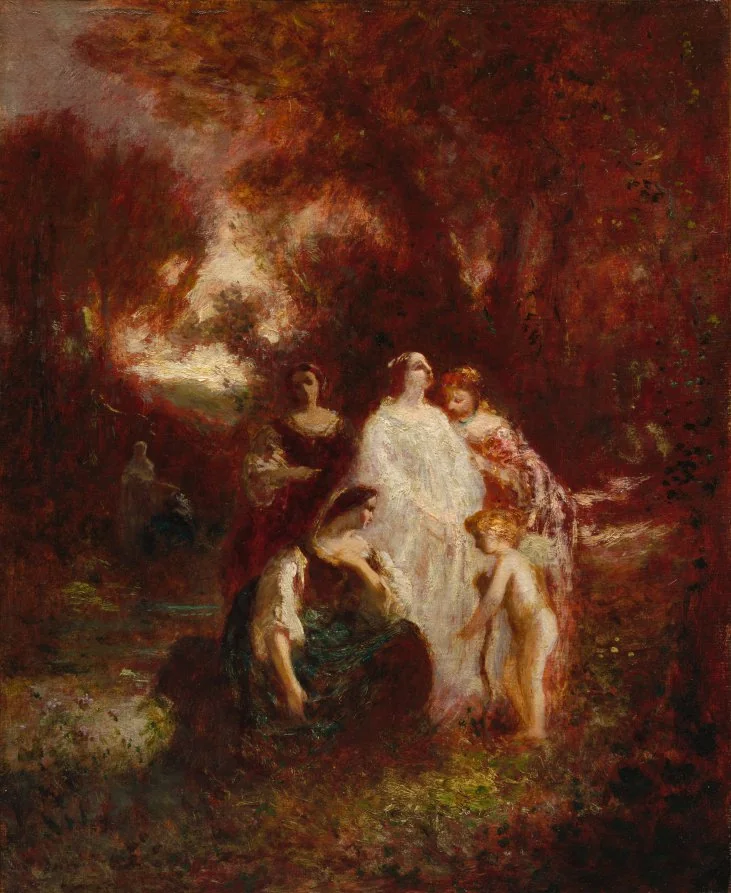
Adolphe Monticelli (1824-1886) was a French painter whose rich, impastoed style made him a crucial precursor of the Post-Impressionists and a direct influence on the young Cézanne, who admired and collected his work. Figures in the Woods, from the late 1850s to early 1860s, shows Monticelli developing the style that would make him distinctive: small figures in a landscape setting rendered with thick, jewel-like paint that dissolves the distinction between figure and ground into a single shimmering surface. The woods are not described but suggested — the dark greens and browns of the forest are built up in thick strokes that create their own light and atmosphere.
Cultural Impact
Monticelli's influence on Cézanne was profound and direct: the young Cézanne met Monticelli in Aix-en-Provence, studied his technique, and collected his paintings. The thick impasto, the small figures embedded in landscape, and the rich, almost edible color that characterize Figures in the Woods are the same qualities that Cézanne would transform into his own revolutionary style. Without Monticelli, the path from Delacroix to Cézanne — and hence to modern painting — would look very different.
Why It Matters
Figures in the Woods is Monticelli's signature style in formation: thick paint, rich color, small figures dissolving into a landscape that is as much paint as it is place. The painting is a direct ancestor of Cézanne, who saw in Monticelli's impasto a path forward from academic tradition to something new.